Chinese Medicine for Child Bloating: When the Spleen Cannot Move Food and Air

9 min read · Eastern body wisdom for families

If your child's belly looks puffy or distended within thirty minutes of eating, Chinese medicine sees this as a Spleen that cannot move food and air smoothly. The Spleen's job is to process food and send it downward. When it is tired, food sits. Air collects. The belly puffs out. Two patterns usually combine. Spleen Qi Deficiency looks like a puffy belly after meals, gas, and heavy reluctance to finish. Liver Qi Stagnation adds belching, hiccups, and bloating that worsens with stress. Warm, easy-to-move foods such as carrot fennel rice soup, cooked radish, and a tiny pinch of tangerine peel may help the Spleen regain its rhythm over one to two weeks.

How Chinese Medicine Sees a Bloated Belly

In a healthy digestive system, food moves. It enters the stomach, gets broken down, and travels downward through the intestines. Nothing sits for long. Bloating is what happens when that forward movement stalls. Food and air collect in the middle, and the belly puffs out like a balloon that cannot deflate.

Chinese medicine attributes this stalling to the Spleen. The Spleen, in TCM theory, is the functional system that turns food into energy and directs it downward. It is not the anatomical spleen. It is closer to the combined digestive and absorptive capacity of the stomach, small intestine, and pancreas. When the Spleen has enough Qi, food moves smoothly and air follows it down. When the Spleen is tired, the system slows. Food ferments. Gas forms. The belly distends.

In Chinese households, the response to a child's bloated belly has been consistent for generations: stop the raw food, stop the cold drinks, and offer something warm, soft, and slightly aromatic. Carrot soup with a pinch of fennel. Millet porridge. Tangerine peel tea. These are not random choices. They all share one quality: they help the Spleen move things downward again. The tradition is built on watching what actually works when a belly is stuck.

Curious which body type you are? Take the free 5-minute quiz.

Take the Free Quiz

Bloating Patterns in Children

Bloating in children is rarely one pattern. The table below covers the four most common combinations. Identifying the closest match helps with food and habit choices.

PatternKey SignsMechanismFood Direction
Spleen Qi DeficiencyPuffy after meals, passes gas, reluctant to finish, tiredSpleen cannot process and move food efficientlyWarm, soft, small meals
Liver Qi StagnationBelching, hiccups, bloating worse with stress or schoolEmotional tension blocks the Spleen's downward flowAromatic relaxants: tangerine peel, fennel
Dampness in the MiddleSticky mouth, heavy limbs, sticky or loose stoolsFluids have collected and are slowing everything downGently drying foods: millet, radish, job's tears
Cold in the MiddlePuffy plus belly button pain, better with warmthCold has slowed the digestive middleWarming foods: ginger, jujube

What Causes a Child's Belly to Bloat

Bloating is rarely caused by one food. It builds from daily patterns that slowly tire the Spleen until it cannot keep up with the volume of food and air it is asked to move.

Eating too fast or while distracted

When a child eats quickly or while watching a screen, two things happen. They swallow more air, which adds to the gas already in the system. And they do not chew enough, which means the Spleen receives food in chunks it has to break down on its own. Both increase the workload on a system that may already be running behind.

Raw and cold foods that slow the Spleen

Raw vegetables are nutritious, but they are also the hardest thing for a Spleen to process. The Spleen has to generate warmth to break them down. Cold drinks do the same thing from the opposite direction: they lower the temperature of the middle. A child who eats a cold salad with ice water is asking the Spleen to do its hardest work under its worst conditions.

Emotional tension at meals

The Liver and Spleen are paired. When a child is anxious about school, pressured at the table, or upset from an argument, Liver Qi tightens. A tight Liver blocks the Spleen's downward flow. The result is bloating that appears within minutes of starting a meal, often with belching or hiccups. The food is not the problem. The tension is.

Dairy in excess

In TCM theory, dairy is damp-forming. That means it produces a heavy, sticky byproduct that further slows the Spleen. A child who drinks large amounts of milk, eats yogurt, and has cheese on the same day is layering dampness on a system that may already be struggling to move fluids. The belly puffs not from the dairy itself but from the dampness it leaves behind.

Late, heavy dinners

The Spleen's fire is lowest in the evening. A heavy dinner at 8 PM asks the system to do its hardest work at its weakest moment. Food sits overnight, ferments, and by morning the child wakes up still puffy. Shifting the largest meal to lunch and keeping dinner warm, light, and early is one of the fastest changes families can make.

Foods That May Help a Child's Spleen Move Again

These foods share one quality: they help the Spleen move food and air downward. Some warm the middle. Some relax tension. Some gently drain dampness. Use them as a starting point and adjust based on what your child accepts.

FoodTCM PropertyHow It May HelpHow to Prepare
CarrotNeutral, sweetGentle Spleen support; soft when cooked; easy for children to acceptDice small into soup
Fennel SeedWarm, aromaticRelaxes the belly and moves gas downwardTiny pinch, crushed, in soup
White Radish (Daikon)Cool, pungentMoves Qi downward; the classic TCM food for bloatingCook thoroughly in soup
Tangerine Peel (Chen Pi)Warm, aromaticMoves Liver Qi and gently warms the SpleenSmall piece in tea or soup
MilletWarm, sweetEasy to digest; asks very little of a tired SpleenCook into soft porridge
Job's Tears (Coix Seed)Cool, sweetGently drains dampness that contributes to puffinessCook into porridge
White RiceNeutral, sweetThe base grain; easy to move through a tired SpleenExtra water, soft texture
Chinese Yam (Shan Yao)Neutral, sweetSupports the Spleen without adding bulk or dampnessSlice into soup
GingerWarm, pungentWarms the middle so the Spleen can move again1 to 2 thin slices in soup

Foods to Pull Back On During a Bloating Phase

These foods are not banned. They are simply the ones most likely to add air, dampness, or cold to a system that is already struggling to move. Most families see a visible difference within a week of pulling them back.

  • Raw vegetables, which the Spleen has to work overtime to break down
  • Dairy in excess, which forms dampness and further slows the Spleen
  • Cold drinks at meals, which slow the Spleen right when it needs to move
  • Fried and greasy foods, which are heavy and stagnate in the middle
  • Beans and legumes in large amounts, which produce gas in a weak Spleen
  • Carbonated drinks, which introduce more air into an already puffy system

Daily Habits That Help the Spleen Move

Food is half the work. The other half is giving the Spleen the conditions it needs to move food and air smoothly. These habits address the most common stalling points.

  1. 1.Eat slowly, chew twenty times per bite. The mouth is the first stage of digestion. Thorough chewing means the Spleen receives food it can actually move, not chunks it has to break down alone.
  2. 2.No screens at the table. Screens pull attention away from digestion. A child watching a tablet often swallows air without noticing and stops chewing halfway through each bite.
  3. 3.Small portions, more often if needed. A tired Spleen handles half a bowl better than a full one. Five small meals often work better than three big ones during a bloating phase.
  4. 4.Light movement after meals, not lying down. A 5 to 10 minute walk after eating helps the Spleen move food downward. Lying down right after meals is one of the most common causes of evening bloating.
  5. 5.Set consistent meal and snack times. The Spleen likes rhythm. A child who eats at the same times each day has a Spleen that is ready when food arrives. Irregular timing catches it off guard.
  6. 6.Warm water with meals, never cold. Warm water supports the Spleen's movement. Cold water stops it. This is the single easiest swap most families can make.
  7. 7.Dinner by 6 PM, light and warm. The Spleen's fire is lowest in the evening. An early, light, warm dinner gives the system time to process before sleep.

A Family Routine: Carrot Fennel Rice Soup

This is the soup Chinese families reach for when a child's belly is puffy after meals. Carrots are gentle and sweet. Fennel relaxes the middle and moves gas downward. Rice gives the Spleen an easy base to work with. The whole soup asks very little of a tired system.

What you need

  • 1/4 cup white rice
  • 1 medium carrot, peeled and diced small
  • 4 cups water or mild vegetable broth
  • Tiny pinch of fennel seed, about 1/4 teaspoon
  • Optional: 1/2 tsp mild soy sauce or a pinch of salt

How to make it

  1. 1. Rinse rice until the water runs clear.
  2. 2. Crush fennel seed lightly using a mortar or the back of a spoon.
  3. 3. Combine rice, carrot, fennel, and water in a pot.
  4. 4. Bring to a boil, then reduce to low heat.
  5. 5. Simmer for 30 minutes, stirring occasionally.
  6. 6. When rice and carrot are very soft, add a pinch of salt or soy sauce.
  7. 7. Serve warm. Mash the carrot slightly for younger children.

When and how much

  • As a light dinner, 4 to 5 days in a row
  • Half a bowl for ages 2 to 5, full bowl for older kids
  • Always warm, never cold
  • Avoid raw vegetables and cold drinks during this phase

What to expect

  • First 3 days: visibly less puffiness after meals
  • After 1 week: less gas, better appetite
  • After 2 to 3 weeks: more settled digestion overall
  • Continue 2 to 3 times per week as the child grows
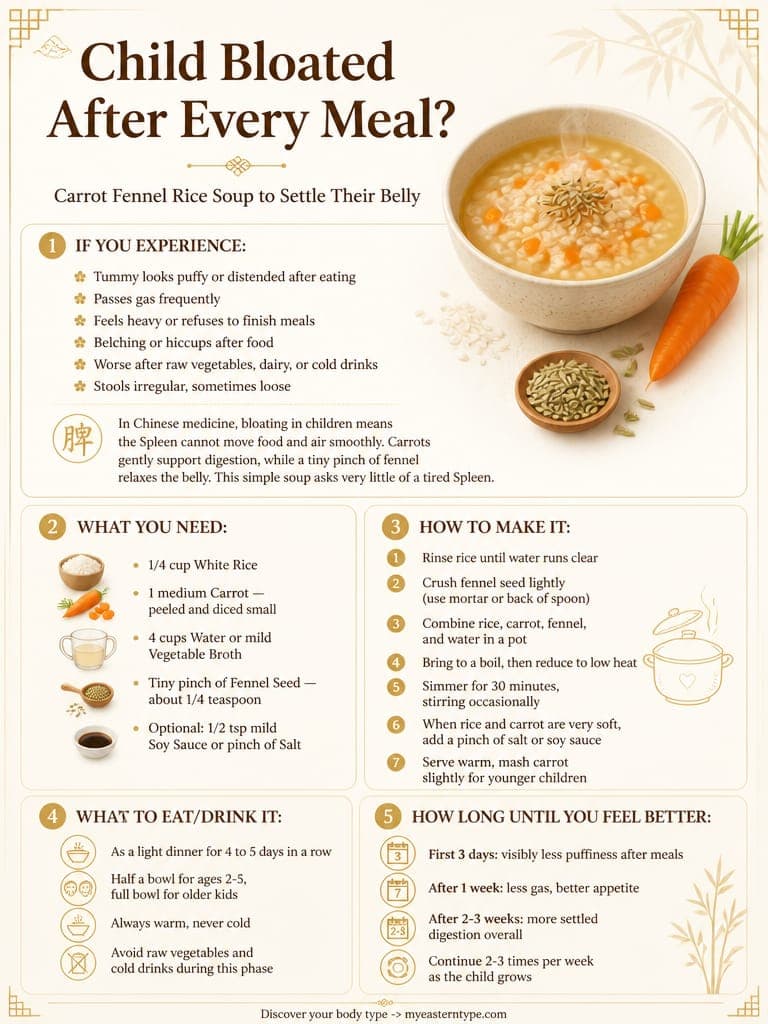
Chinese medicine for child bloating - carrot fennel rice soup recipe card

Save This Recipe for Later

Pin this recipe to your Chinese medicine or family wellness board so you can find it when your child needs it. Then take our free 5-minute body type quiz to see which constitution runs in your family.

When to See a Doctor

This page describes traditional Chinese dietary philosophy. It is not medical advice and is not a substitute for evaluation by a licensed healthcare provider. Talk to your pediatrician if your child shows any of the following:

  • Severe or worsening abdominal pain
  • Blood in the stool or black, tarry stools
  • Persistent vomiting
  • Unexplained weight loss or failure to grow
  • Bloating that does not improve with diet changes
  • A belly that is firm or tender to the touch

Curious which body type you are? Take the free 5-minute quiz.

Take the Free Quiz

Frequently Asked Questions

Why does my child's belly puff up right after eating?+
In Chinese medicine, this means the Spleen cannot move food and air downward fast enough. Food sits in the middle, air collects, and the belly distends. The puffiness is usually visible within thirty minutes of a meal and tends to settle after an hour or two as the Spleen slowly catches up.
Is bloating in children always a sign of food intolerance?+
Not necessarily. Food intolerance is one possible cause, but in Chinese medicine, bloating more often reflects a Spleen that is temporarily too tired to keep up. The same food may cause bloating on a day when the child is tired or stressed, and cause no bloating on a day when they are rested. The pattern is functional, not always a fixed intolerance.
Can stress at school really cause bloating?+
Yes, and it is one of the most common triggers. The Liver and Spleen are closely connected in TCM theory. When a child is anxious, pressured, or upset, Liver Qi tightens and blocks the Spleen's downward flow. The result is bloating that appears within minutes of starting a meal, often with belching or hiccups.
How long until I see improvement with warm soups and habit changes?+
Most families see visibly less puffiness within the first three days of pulling back on cold and raw foods. Gas and appetite usually improve within a week. More settled digestion overall tends to take two to three weeks of consistent warm meals and regular meal times.
Which body type is most linked to bloating in children?+
The Qi Deficient body type is most commonly associated with a Spleen that struggles to move food efficiently. Constitution tends to run in families. A free 5-minute body type quiz can help you see whether this matches your own constitution, which often offers useful context for your child's digestive patterns.

Related Reading for Families

Discover Your Eastern Type

Take our free 5-minute assessment to explore which body type best matches your current wellness patterns.

Take the Free Quiz
EastType
10 Foods Your Body Type Will Love
A Practical Chinese Medicine Guide
Chinese medicine identifies 9 body types. Each type has foods that suit it well. This guide covers 10 ingredients used in Chinese medicine traditions for centuries.
myeasterntype.com
1
Ginger
Also known as: Sheng Jiang (Chinese), Shoga (Japanese), Adrak (Hindi), Khing (Thai)

Ginger is the most widely used warming food in Chinese medicine. If your hands and feet tend to run cold, or if you feel heavy and slow after meals, ginger may be one of the simplest things you can add to your daily routine.

Who It Suits

Cold Sensitivity and Low Vitality body types (people who tend to run cold, feel fatigued, or have slow digestion).

What It May Help With
Warming the body from the inside
Supporting digestion after heavy or cold meals
Reducing that heavy, sluggish feeling after eating
How to Use
Slice 3 to 4 thin pieces of fresh ginger and steep in hot water for 5 minutes. Drink this in the morning, 20 minutes before breakfast.
Add grated ginger to soups, stews, and stir-fries.
Avoid ginger late at night if you tend to feel hot when trying to sleep.
Simple HabitReplace your first glass of cold water in the morning with a cup of warm ginger water. This single change can make a noticeable difference in how your digestion feels throughout the day.
2
Goji Berries
Also known as: Wolfberries, Gou Qi Zi (Chinese), Kuko no Mi (Japanese), Boxthorn Berries

Goji berries are small, sweet, red dried fruits that look similar to raisins but have a distinct tart-sweet flavor. In Chinese medicine, they are associated with eye health, liver support, and healthy aging.

Who It Suits

Internal Heat body types (people who tend to feel warm at night, have dry skin, or wake up between 1 AM and 3 AM). Also suitable for people concerned about eye strain from screens.

What It May Help With
Supporting eye comfort during long screen hours
Nourishing the body's cooling and moistening functions
Providing a gentle energy source without caffeine
How to Use
Eat a small handful (about 15 to 20 berries) as a snack.
Add to oatmeal, yogurt, or trail mix.
Steep in hot water with chrysanthemum flowers for a gentle tea.
Simple HabitKeep a small jar of goji berries at your desk. Eat 10 to 15 berries around 3 PM, when afternoon energy dips tend to hit. They provide a mild, steady energy without the crash that comes with sugar or caffeine.
3
Red Dates (Jujube)
Also known as: Chinese Dates, Hong Zao (Chinese), Natsume (Japanese), Injeol (Korean)

Red dates are dried jujube fruits, not related to the Middle Eastern dates you find in most Western supermarkets. They are sweet, slightly chewy, and have been used in Chinese medicine for thousands of years to support calm sleep and steady energy.

Who It Suits

Low Vitality and Stuck Energy body types (people who feel chronically tired, anxious, or have trouble falling asleep).

What It May Help With
Supporting calm and restful sleep
Providing a gentle, steady source of energy
Settling an anxious or overactive mind
How to Use
Simmer 5 to 6 pitted red dates in water for 15 minutes. Drink the liquid as tea before bed.
Add to rice porridge (congee) for a nourishing breakfast.
Eat 2 to 3 dates as an afternoon snack.
Simple HabitBrew a small pot of red date tea in the evening. Let it steep while you wind down, and drink it 30 minutes before bed. Many people notice calmer, more settled sleep within the first week.
4
Black Sesame Seeds
Also known as: Hei Zhi Ma (Chinese), Kuro Goma (Japanese), Gingili (Indian)

Black sesame seeds look like tiny dark pearls and have a rich, nutty, slightly smoky flavor. In Chinese medicine, their dark color connects them to the body's deepest energy reserves. They are associated with healthy hair, skin, and the body's foundational vitality.

Who It Suits

Internal Heat and Blood Stasis body types (people concerned about hair thinning, dry skin, premature aging, or dark circles under the eyes).

What It May Help With
Supporting hair strength and skin moisture
Nourishing the body's deepest energy reserves
Providing healthy fats and minerals
How to Use
Grind 2 tablespoons of black sesame seeds and mix with a small amount of honey. Eat one spoonful each morning.
Sprinkle on rice, noodles, salads, or avocado toast.
Use black sesame paste (similar to tahini but made from black sesame) as a spread on toast.
Simple HabitBuy a small bag of pre-roasted black sesame seeds. Keep it next to your salt shaker. Sprinkle on everything savory. This is one of the easiest ingredients to integrate into Western meals.
5
Mung Beans
Also known as: Lu Dou (Chinese), Ryokuto (Japanese), Moong Dal (Hindi), Green Gram (English)

Mung beans are small, green legumes that cook quickly and have a mild, slightly sweet flavor. In Chinese medicine, they are considered one of the most cooling foods available. They are traditionally eaten during hot summer months to help the body manage internal heat.

Who It Suits

Damp Heat body types (people who tend to feel hot and sticky, have oily skin, breakouts, or acid reflux). Also suitable for anyone during hot weather.

What It May Help With
Supporting the body's natural cooling processes
Helping the body process and eliminate excess fluids
Soothing skin inflammation from the inside
How to Use
Simmer 1 cup of mung beans in 4 cups of water for 30 minutes until soft. Add a little rock sugar for a simple sweet soup.
Sprout mung beans at home for fresh, crunchy bean sprouts (takes 2 to 3 days in a jar).
Cook mung bean soup once a week during summer months.
Simple HabitDuring hot weather, replace one meal per week with a simple bowl of mung bean soup. It is light, cooling, and easy to digest. People who tend to break out in summer often notice their skin calms down within 2 to 3 weeks of eating mung beans regularly.
6
Walnuts
Also known as: He Tao (Chinese), Kurumi (Japanese), Akhrot (Hindi), Nuez (Spanish)

Walnuts look like tiny brains, and in Chinese medicine, this visual resemblance is taken seriously. Walnuts are associated with brain function, memory, and the body's deepest warmth reserves. They are also one of the most accessible ingredients on this list.

Who It Suits

Cold Sensitivity and Internal Heat body types concerned about memory, focus, or lower back discomfort. Also suitable for older adults.

What It May Help With
Supporting memory and mental clarity
Warming and strengthening the lower back and knees
Providing omega-3 fatty acids
How to Use
Eat 5 to 8 walnuts per day as a snack. Chew thoroughly.
Add chopped walnuts to oatmeal or yogurt.
Simmer walnuts in porridge with red dates for a nourishing breakfast.
Simple HabitKeep a small container of walnuts where you work. Eat 5 pieces at 10 AM and 5 pieces at 3 PM. The steady supply of healthy fats supports focus and sustained energy without the spike-and-crash of sugary snacks.
7
Chinese Yam
Also known as: Shan Yao (Chinese), Nagaimo (Japanese), Ma (Korean), Mexican Yam

Chinese yam is a long, cylindrical root with a pale interior. When raw, it feels slippery and slightly sticky when cut. When cooked, it becomes tender and mildly sweet. In Chinese medicine, it is one of the most recommended foods for people with sensitive digestion.

Who It Suits

Heavy and Sluggish body types (people who bloat after meals, feel heavy and tired, or have irregular digestion). Also suitable for anyone recovering from illness.

What It May Help With
Strengthening digestive function over time
Supporting steady, consistent energy levels
Reducing bloating and heaviness after meals
How to Use
Peel, slice, and stir-fry with a little salt and sesame oil for a simple side dish.
Cut into chunks and add to soups or stews.
Slice thinly and steam for 15 minutes. Drizzle with a little honey.
Simple HabitIf you have a sensitive stomach that reacts to raw vegetables, try replacing raw salads with steamed Chinese yam twice a week. Its gentle, starchy nature gives your digestive system a break while still providing nutrients.
8
Chrysanthemum Flowers
Also known as: Ju Hua (Chinese), Kikka (Japanese), Gul-e-Daudi (Hindi)

Dried chrysanthemum flowers are brewed into a light, floral tea that has been consumed in East Asia for centuries. The tea is golden-colored, delicate in flavor, and naturally caffeine-free. In Chinese medicine, chrysanthemum is associated with cooling internal heat, especially in the head and eyes.

Who It Suits

Internal Heat and Stuck Energy body types (people who get headaches, eye strain, feel hot and irritable, or have trouble sleeping). Also ideal for office workers who stare at screens all day.

What It May Help With
Soothing tired, dry, or strained eyes
Cooling the head and reducing tension headaches
Supporting calm focus without caffeine
How to Use
Steep 8 to 10 dried chrysanthemum flowers in hot water for 5 minutes. Drink as is or add a few goji berries.
Drink in the afternoon instead of coffee or green tea.
Can be enjoyed cold in summer with a touch of honey.
Simple HabitReplace your afternoon coffee with chrysanthemum tea for one week. Many people notice their afternoon energy feels more stable and their eyes feel less strained by the end of the workday. You can find dried chrysanthemum flowers at most Asian grocery stores or online.
9
Longan
Also known as: Dragon's Eye, Gui Yuan (Chinese), Ryugan (Japanese), Lamyai (Thai)

Dried longan is a small, round, dark brown fruit that looks like a tiny pearl when shelled. It gets its English name, "Dragon's Eye," from the fresh fruit, which has a dark seed visible through the translucent white flesh. Dried longan is sweet, warm in nature, and has been used in Chinese medicine to support calm energy and restful sleep.

Who It Suits

Low Vitality body types (people who feel chronically tired, anxious, or have trouble sleeping due to an overactive mind).

What It May Help With
Supporting calm, settled energy during the day
Helping quiet an overactive mind at night
Providing a gentle, non-stimulating source of sweetness
How to Use
Simmer 10 to 15 dried longan in water for 10 minutes. Drink the tea before bed.
Add to rice porridge along with red dates for a nourishing breakfast.
Eat 5 to 6 pieces as a sweet snack.
Simple HabitIf you tend to snack on sweets in the evening, replace candy or chocolate with 8 to 10 dried longan pieces. They satisfy the sweet craving while supporting calm, restful sleep.
10
Lotus Seeds
Also known as: Lian Zi (Chinese), Hasu no Mi (Japanese), Bikh (Hindi)

Lotus seeds are small, ivory-colored seeds harvested from the seed pod of the lotus flower. They have a mild, slightly sweet, and slightly nutty flavor. In Chinese medicine, they are associated with calm, steady energy and clear thinking. They are one of the key ingredients in traditional East Asian desserts and savory dishes alike.

Who It Suits

Stuck Energy and Heavy and Sluggish body types (people who overthink, feel mentally scattered, or have trouble concentrating).

What It May Help With
Supporting mental calm and clear focus
Helping settle an overactive, racing mind
Supporting steady, even-keeled energy
How to Use
Soak dried lotus seeds overnight, then simmer in water for 30 minutes until tender. Add rock sugar for a simple sweet soup.
Add cooked lotus seeds to soups and stews.
Find canned lotus seeds at Asian grocery stores for convenience.
Simple HabitIf your mind races at night and prevents you from sleeping, try a small bowl of lotus seed soup as an evening snack. Its calming quality may help quiet mental chatter and support more settled sleep.
How to Start

You do not need to buy all 10 ingredients today. Here is a simple way to begin:

1Take the EastType quiz to learn your body type.
2Pick 2 ingredients from this guide that suit your type.
3Start with one habit from the "Simple Habit" section of each food.
4Give it 2 to 3 weeks. Notice how your body responds.
5Adjust from there. Chinese medicine is about consistent, small adjustments, not dramatic overhauls.
Where to Find These Ingredients
Asian grocery stores (look for H Mart, 99 Ranch, Mitsuwa, or local equivalents)
Online (Amazon, iHerb, Asian food specialty sites)
Health food stores (ginger, walnuts, and goji berries are widely available)
Regular supermarkets (ginger, walnuts, and mung beans are usually in stock)

Most of these ingredients cost between $3 and $10 and last for weeks or months. Chinese medicine eating does not need to be expensive.

A Final Note

This guide is for educational and wellness purposes only. It is not medical advice. If you have specific health concerns, food allergies, or are taking medication, consult a qualified healthcare provider before making dietary changes.

Individual responses to foods vary. The information in this guide reflects traditional Chinese medicine principles, which focus on patterns and tendencies rather than medical diagnoses.

Listen to your body. Start small. Be consistent. That is the Chinese medicine way.
Ready to Find Your Body Type?
Take the free 5-minute quiz and get personalized food suggestions tailored to your constitution.
myeasterntype.com