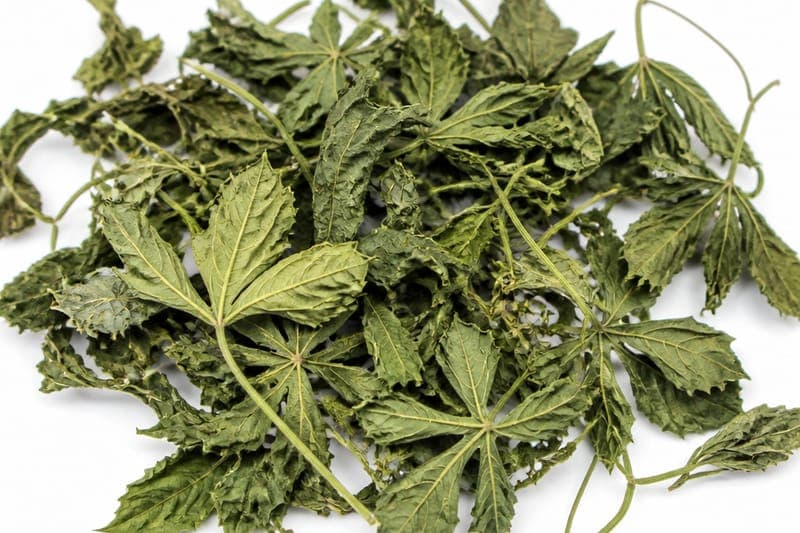
Gynostemma
jiao gu lan · jiao gu lan
Gynostemma pentaphyllum (Thunb.) Makino
Quick Answer
Qi deficiency with damp-heat is the primary TCM explanation for tiredness that comes with a foggy, heavy body feeling and a tendency to overheat, and Gynostemma is the cooling alternative to ginseng that may help rebuild energy without feeding the warmth or deepening the dampness.
Curious which body type you are? Take the free 5-minute quiz.
Take the Free Quiz →Summary
A leafy vine nicknamed the herb of immortality in the mountainous regions where people reportedly live unusually long lives. In Chinese medicine, jiaogulan gently builds energy, clears heat, and supports the heart, making it a cooling alternative to ginseng for those who find warming tonics too stimulating.
TCM Properties
| Botanical Name | Gynostemma pentaphyllum (Thunb.) Makino |
| Category | Qi Tonic |
| Temperature | Cool |
| Taste | Bitter, sweet |
| Channels Entered | Lung, Spleen, Heart |
| Classical Source | Jiuhuang Bencao (1406 CE) |
| Safety Rating | Non-toxic |
Key Concept
Gynostemma(绞股蓝)
Jiaogulan is like a cool, steady breeze in a room that is both stuffy and overheated: it gently clears the heat and the damp heaviness at once, while rebuilding energy through a cooling pathway that warming tonics like ginseng cannot offer. This is why mountain cultures called it the herb of immortality.
What This Herb Does
Gently tonifies Qi and builds steady energy
Jiaogulan is sometimes called southern ginseng because, like ginseng, it supports the body's energy reserves. The difference is its cooling nature. Where ginseng warms and can overstimulate, jiaogulan builds energy more gently, which suits people who feel drained but also tend to run warm or get irritable with strong tonics.
Clears heat and cools internal inflammation
Many energy tonics are warm, which can feed the low-grade heat that builds from stress, poor sleep, or rich food. Jiaogulan's cool, bitter edge clears that heat while it rebuilds, so it does not leave you feeling revved up or overheated the way some warming tonics can.
Supports the heart and healthy circulation
In TCM, the Heart governs both blood circulation and the spirit. Jiaogulan enters the Heart channel and is traditionally used to support steady circulation and a calm, settled chest. Modern research on its adaptative compounds has drawn attention to this area, which aligns with its traditional heart affinity.
Transforms mild dampness and lightens the body
Unlike cloying tonics that can leave you feeling heavy, jiaogulan has a slight drying, lightening quality. For people whose fatigue comes with a heavy, damp body feeling, this makes it better tolerated than richer tonics that only add to the sluggishness.
Commonly Used For
Qi Deficient types who are tired but run warm or overheat easily
TCM Interpretation: Classic Qi Deficiency responds well to tonics, but warming tonics like ginseng can aggravate someone who also carries heat. Jiaogulan rebuilds energy through a cooling pathway, which suits the depleted-but-warm pattern far better.
Why Gynostemma Helps: It addresses the fatigue without adding the warmth that would trigger irritability, poor sleep, or breakouts in someone already running hot.
Heavy fatigue with a foggy, damp body feeling
TCM Interpretation: When tiredness comes with heaviness, foggy thinking, and a body that feels weighed down, dampness is tangled with the deficiency. A pure tonic would feed the dampness too.
Why Gynostemma Helps: Jiaogulan's slight drying quality means it supports energy without deepening the heaviness, which is why it is often better tolerated than rich tonics in damp-fatigue patterns.
Long-term stress recovery and resilience
TCM Interpretation: Prolonged stress drains the Qi and smolders as low-grade heat. Recovery calls for something that rebuilds without adding fuel to that heat.
Why Gynostemma Helps: Its adaptative, cooling nature supports the body's resilience through sustained stress in a way that warming stimulants cannot, which is central to its reputation as a longevity herb.
Which fatigue type tolerates gynostemma best?
Gynostemma suits fatigue patterns that warming tonics would worsen. Check which one matches you.
| If This Sounds Like You | The Signal | Start Here |
|---|---|---|
| Tired but run warm or overheat easily, where ginseng causes irritability or poor sleep | Qi deficiency with internal heat, where warming tonics backfire | Brew jiaogulan as a daily tea; its cooling nature rebuilds energy without adding the warmth that triggers breakouts or restlessness. |
| Heavy fatigue with a foggy, weighed-down body feeling | Dampness tangled with Qi deficiency, where a pure tonic would feed the dampness | Drink jiaogulan tea through the day; its slight drying quality lightens the dampness while supporting steady energy, which rich tonics cannot do. |
| Long-term stress recovery with low-grade heat and exhaustion | Prolonged stress draining Qi while smoldering as heat | Use jiaogulan consistently for several weeks; its cooling, adaptive nature supports resilience through sustained stress without the stimulation of caffeine. |
Which Body Types Benefit Most
Not sure which type you are? Take the free 5-minute quiz.
Related Symptom Guides
Related Wellness Articles
How to Use
Steep 2 to 3g of dried jiaogulan leaves in hot water at about 80 to 85 degrees Celsius for 5 to 7 minutes. Drink 1 to 2 cups daily. It has a naturally slightly bitter taste with a sweet aftertaste. Blends well with chrysanthemum or goji to soften the bitterness.
Dosage: 2 to 6g per day as tea.
Preparation Notes: Avoid fully boiling water, which makes the tea overly bitter. Water around 80 to 85 degrees Celsius gives a smoother, sweeter cup. The leaves can be re-steeped two to three times, with the best flavor often on the second steep.
Dietary Advice
For depleted types who overheat easily, jiaogulan fits well into a pattern of cooling, nourishing foods such as cucumber, mung bean, and pear, alongside adequate rest. Avoid pairing it with heavy stimulants like coffee, which work against the steady, cooling rebuild it supports. Consistency over weeks matters more than high doses.
Food Pairings
Cautions
- ⚠Generally safe as a daily food-grade tea
- ⚠May lower blood sugar and blood pressure, so use caution with related medications
- ⚠Avoid during pregnancy and breastfeeding without professional guidance
- ⚠Large amounts on an empty stomach may cause mild nausea
- ⚠Discontinue before scheduled surgery due to possible blood-thinning effects
Frequently Asked Questions
Why is jiaogulan called the herb of immortality?+
Is jiaogulan a replacement for ginseng?+
Does jiaogulan contain caffeine?+
Which body type benefits most from jiaogulan?+
Related Herbs
Discover Your Eastern Type
Take our free 5-minute assessment to explore which body type best matches your current wellness patterns.
Take the Free Quiz→This article is for informational and educational purposes only and is not medical advice. Always consult a qualified healthcare professional before using any herb, especially if you are pregnant, nursing, or taking medication.