Chinese Medicine for Energy: 3 Herbal Teas by Body Type
Chinese medicine does not treat fatigue with stimulants. Instead, it identifies which type of energy your body is lacking and uses specific herbs to rebuild it. Three common body types may respond to different herbal tea formulas, each targeting a distinct root cause of chronic tiredness.
Quick Answer
The most common TCM pattern behind chronic low energy is Qi Deficient, where the Spleen cannot generate enough usable energy from food and you feel tired no matter how much you rest or eat. This body type often comes with bloating after meals, a soft voice, and easy sweating. Two more patterns can also be associated with fatigue: Yang Deficient, where low internal fire leaves you tired and cold at the same time, and Yin Deficient, where internal heat burns through your reserves and leaves you wired but exhausted. Each pattern may respond to a different food-grade herbal tea that rebuilds the specific energy system involved. Identifying which system is depleted is the fastest way to choose the right formula.

Quick Comparison: Which Formula for Which Type?
Not sure which formula to try? Start here.
| Formula | Best For | Key Herbs | Prep Time | Taste |
|---|---|---|---|---|
| Ginseng | Qi Deficient | Ginseng, Red Dates, Goji Berries | 25 minutes | Mild, slightly sweet, and earthy |
| Astragalus | Yang Deficient | Astragalus, Fresh Ginger, Red Dates | 30 minutes | Mildly sweet with a gentle warming spice from the ginger |
| American Ginseng | Yin Deficient | American Ginseng, Ophiopogon, Goji Berries | 15 minutes | Light, clean, and slightly sweet with a cooling sensation |
Curious which body type you are? Take the free 5-minute quiz.
Take the Free Quiz →Why Chinese Medicine Sees Weight Differently
Western medicine and Chinese medicine are not opposites. They look at the same body from different angles. Understanding both perspectives helps you make better choices for your body.
| Topic | Western Medicine | Chinese Medicine |
|---|---|---|
| Root cause of fatigue | Poor sleep, nutrient deficiencies, thyroid imbalance, or stress | Qi Deficiency, Yang Deficiency, or Yin Deficiency depending on which energy system is depleted |
| View of energy | Calories converted to ATP through cellular metabolism | Qi is the vital force that powers digestion, circulation, and thinking. It must be generated daily from food and rest |
| Primary solution | Caffeine, B vitamins, iron supplements, or more sleep | Strengthen the Spleen to produce more Qi, warm the Kidney to sustain Yang, or nourish Yin to prevent internal heat from burning out |
| Role of caffeine | A useful stimulant that blocks adenosine receptors | Borrows energy from tomorrow to spend today. Long-term use deepens Qi deficiency without replenishing the source |
| Role of digestion | Breaks down food into absorbable nutrients | The Spleen transforms food into Qi and Blood. A weak Spleen means less energy no matter how much you eat |
| Why afternoon crashes happen | Blood sugar dip after a high-carb meal | Spleen Qi is too weak to sustain energy output through the afternoon. The body literally runs out of fuel between 1 and 3 PM |
Three Body Types That Commonly Struggle With Weight
In Chinese medicine, there is no universal weight loss formula. The right approach depends on your body type. Here are the three most common patterns:
TCM Perspective
The Spleen is too weak to transform food into usable Qi. You eat, but your body cannot efficiently convert it into energy. The result is a battery that never fully charges, no matter how much you rest or eat.
Plain English
Your digestive system is underpowered. You absorb nutrients inefficiently, so you feel tired despite eating well. Your cells receive less usable fuel, and your body conserves energy by making you feel sluggish.
Common Signs
A Simple Analogy
Imagine a phone with a degraded battery. You charge it all night, but by noon it is already at 30 percent. The problem is not the charger. It is the battery itself losing its capacity to hold energy.
TCM Perspective
The Kidney Yang, the body's internal fire, is too low. Without enough warmth, every metabolic process slows down. You feel tired and cold at the same time, because your body is literally running on low heat.
Plain English
Your basal metabolic rate runs low. Circulation to the extremities is reduced to protect core warmth. Your body prioritizes survival over energy output, leaving you feeling chronically cold and exhausted.
Common Signs
A Simple Analogy
Think of a furnace running low on fuel. The house stays barely warm, and every room far from the heater feels freezing. Adding more wood does not help if the furnace itself is too weak to burn it efficiently.
TCM Perspective
Yin is the body's cooling and moistening principle. When Yin is depleted, the body runs hot and dry. You feel tired not from lack of energy, but from internal heat constantly burning through your reserves. It is like an engine overheating.
Plain English
Your body is in a state of low-grade inflammation and overstimulation. Cortisol and stress hormones stay elevated, preventing deep rest. You feel wired but exhausted, unable to fully wind down even when tired.
Common Signs
A Simple Analogy
Picture a car engine running hot with low coolant. The engine works, but the lack of cooling fluid causes it to overheat and wear out faster. The solution is not more fuel. It is coolant and rest.
Ginseng & Jujube Recovery Tea
人参大枣茶|Ren Shen Da Zao Cha
Classical Source: Adapted from Si Jun Zi Tang (Four Gentlemen Decoction) in Tai Ping Hui Min He Ji Ju Fang (1085)
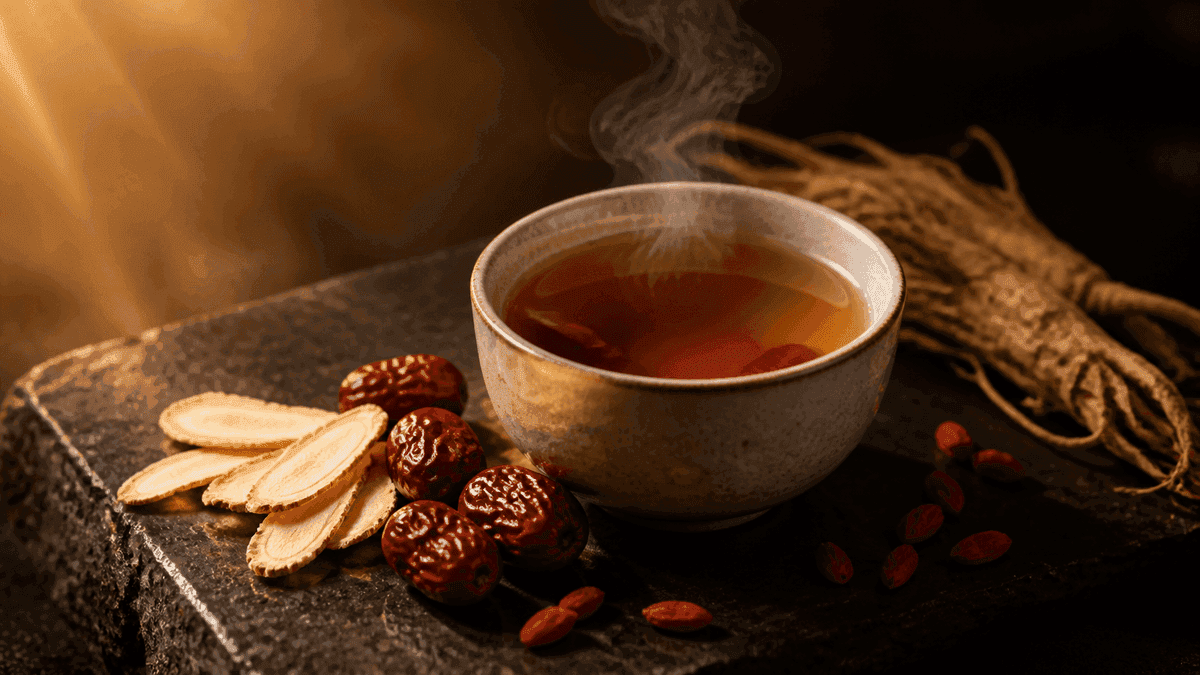
This tea directly replenishes Qi using two of Chinese medicine's most trusted tonics. Ginseng builds the core energy reservoir while jujube dates nourish the Blood that carries Qi throughout the body. Together they restore the Spleen's ability to generate daily energy.
Ingredients
| Ingredient | Amount | Role | Why This Herb |
|---|---|---|---|
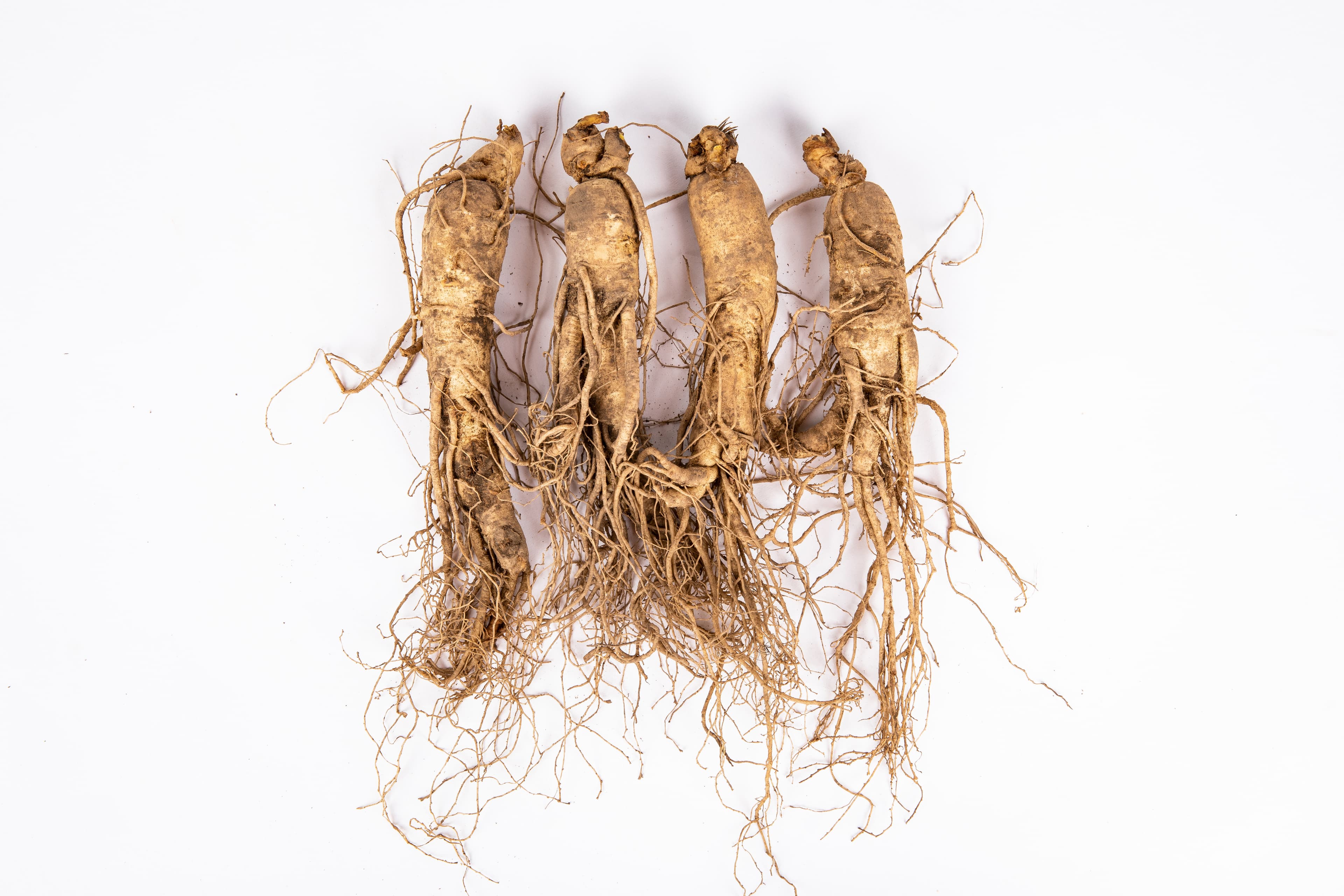 Ginseng(人参)→ Ginseng(人参)→ | 3g (about 5-6 thin slices) | Primary | The foremost Qi tonic in Chinese medicine. Ginseng rebuilds the body's core energy reservoir and strengthens the Spleen's ability to transform food into usable Qi. |
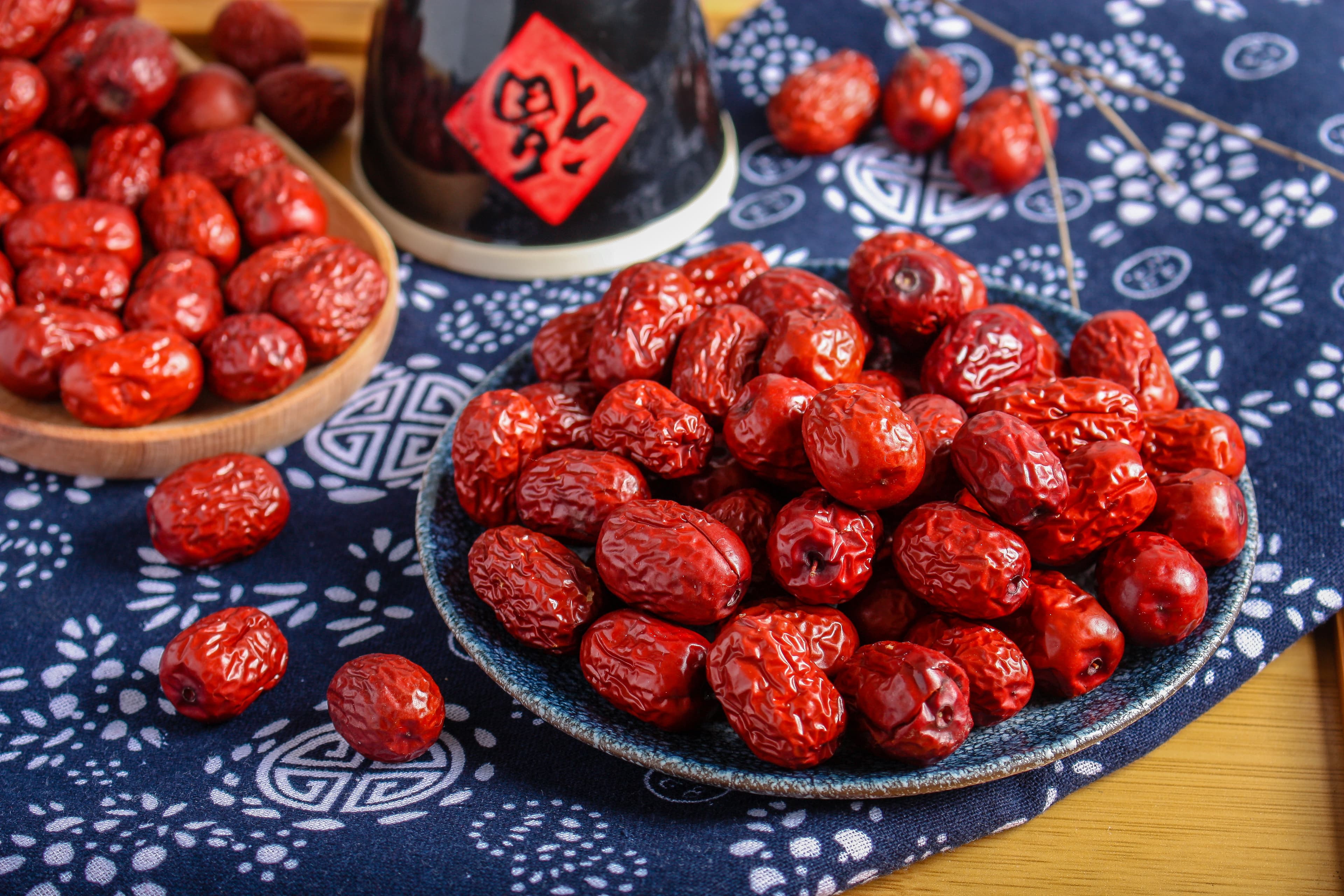 Red Dates (Jujube)(大枣)→ Red Dates (Jujube)(大枣)→ | 5 pieces, pitted | Support | Nourishes Blood and harmonizes the formula. Red dates add natural sweetness and help the body absorb the ginseng more gently. |
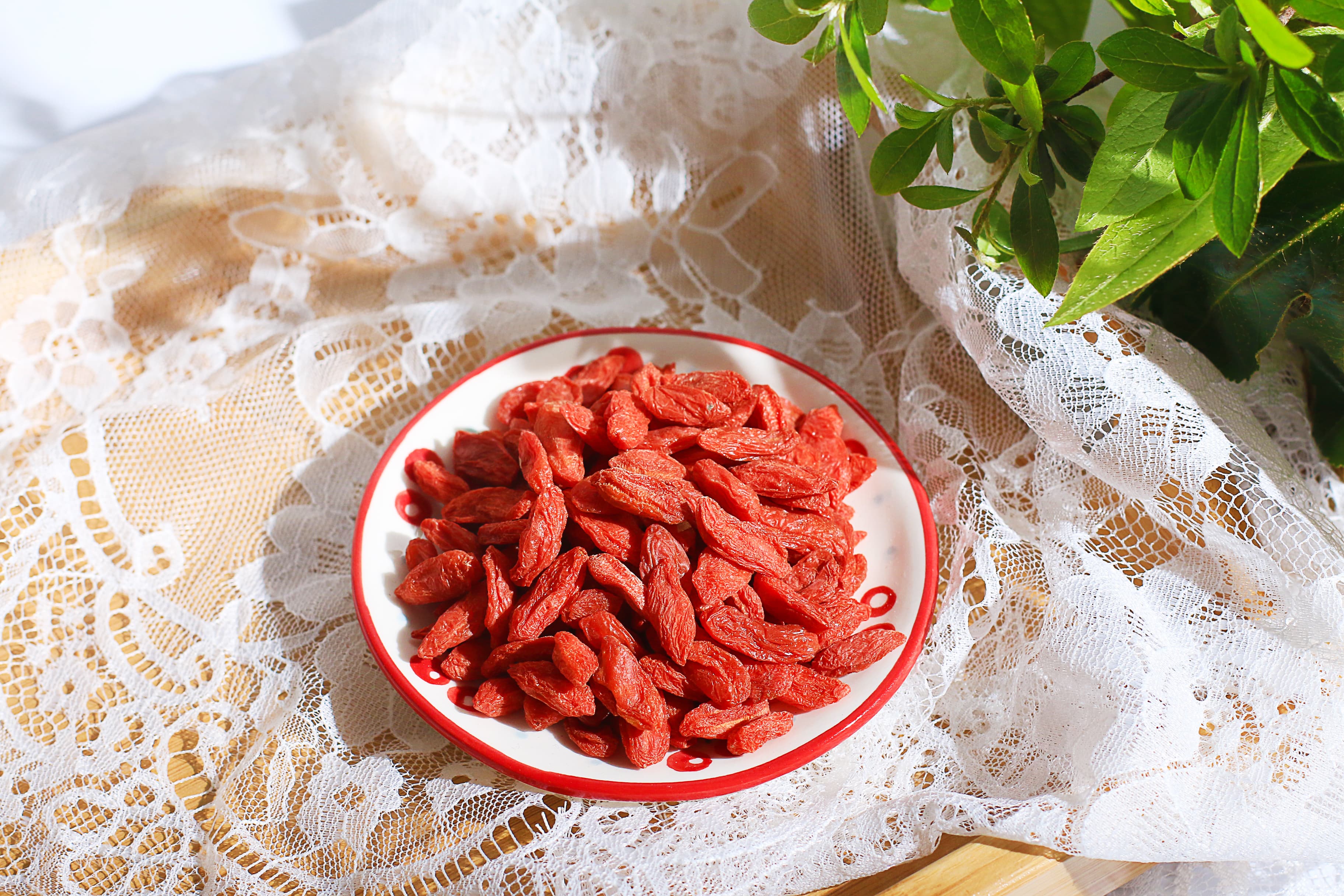 Goji Berries(构枞)→ Goji Berries(构枞)→ | 10 pieces | Harmony | Gently nourishes Liver and Kidney Yin, preventing the warming ginseng from causing dryness. Adds a pleasant sweetness. |
How to Make It
- 1Rinse ginseng slices and red dates briefly under cool water.
- 2Place all ingredients in a small pot with 500ml (2 cups) of fresh water.
- 3Bring to a boil over medium heat (about 5 minutes).
- 4Reduce to low heat, cover, and simmer for 15 minutes.
- 5Turn off heat and let sit for 5 minutes.
- 6Strain into a cup. The tea should be a warm amber color.
How to Take
Drink one cup (250ml) warm, in the morning on an empty stomach or 30 minutes before breakfast. This timing aligns with the body's natural Qi production cycle.
How Long
Drink daily for 3 consecutive weeks, then pause for 1 week. Most people notice steadier morning energy within 5-7 days. Deeper changes in stamina typically require 4-6 weeks of consistent use.
Taste
Mild, slightly sweet, and earthy. The ginseng adds a subtle bitterness that is balanced by the natural sweetness of red dates and goji berries.
Yield
500ml (2 cups) | Prep time: 25 minutes
Who Should Avoid This
- !Not suitable during acute colds, flu, or fever. Ginseng can trap external pathogens inside the body.
- !Avoid coffee within 2 hours of drinking this tea. Caffeine may counteract the Qi-building effect.
- !If you experience headaches, irritability, or insomnia, reduce ginseng to 1-2 slices.
- !Not recommended for those with high blood pressure without consulting a doctor.
- !This formula is warming. If you already feel hot and restless, choose Formula 3 instead.
Astragalus & Ginger Warming Tea
黄芪生姜茶|Huang Qi Sheng Jiang Cha
Classical Source: Adapted from Bu Zhong Yi Qi Tang (Tonify the Middle and Augment Qi Decoction) by Li Dongyuan, Pi Wei Lun (1249)
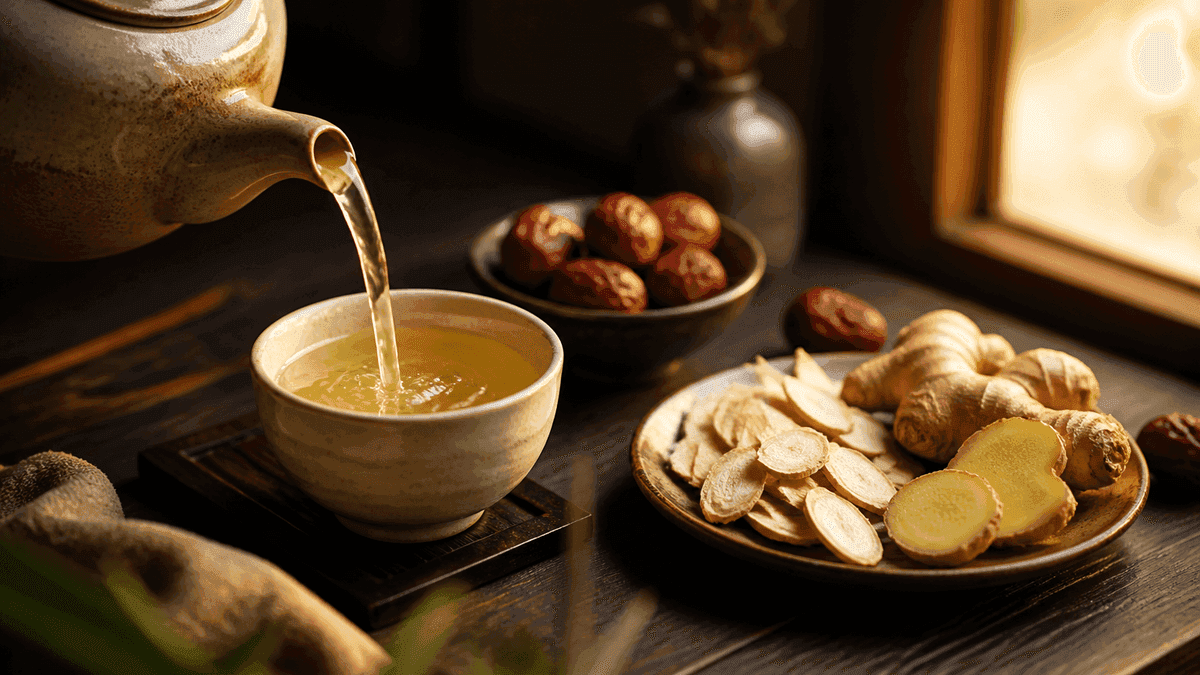
This warming tea combines astragalus, the premier Qi and Yang tonic, with fresh ginger to kindle the body's internal fire. It is designed for people whose fatigue comes with coldness. The astragalus builds defensive Qi while ginger warms the Spleen and stomach, restoring the metabolic heat needed to sustain energy.
Ingredients
| Ingredient | Amount | Role | Why This Herb |
|---|---|---|---|
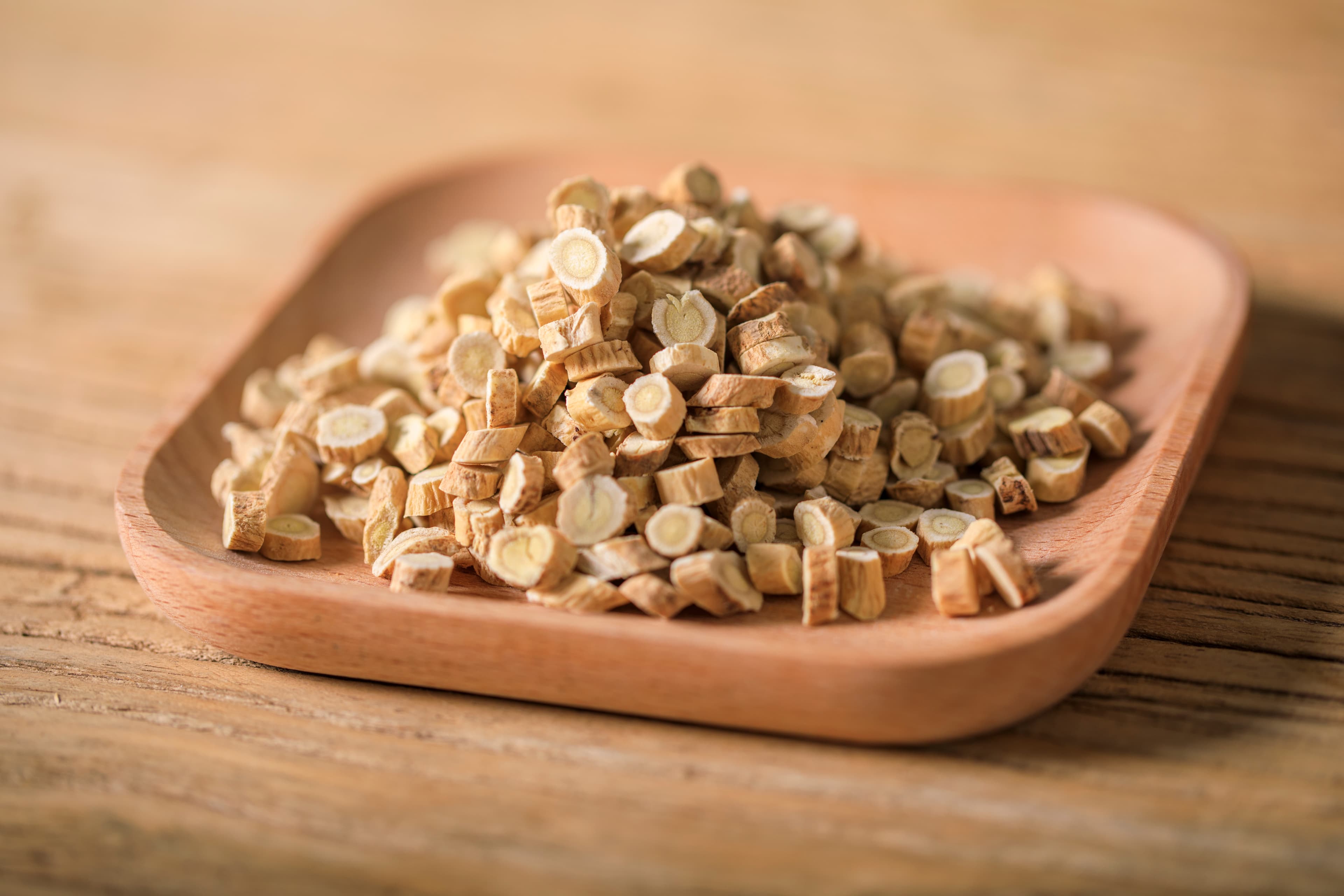 Astragalus(黄芪)→ Astragalus(黄芪)→ | 10g (about 5-6 slices) | Primary | The top herb for raising Qi and strengthening the body's external defenses. Astragalus helps the Spleen generate more energy and lifts the overall vitality upward. |
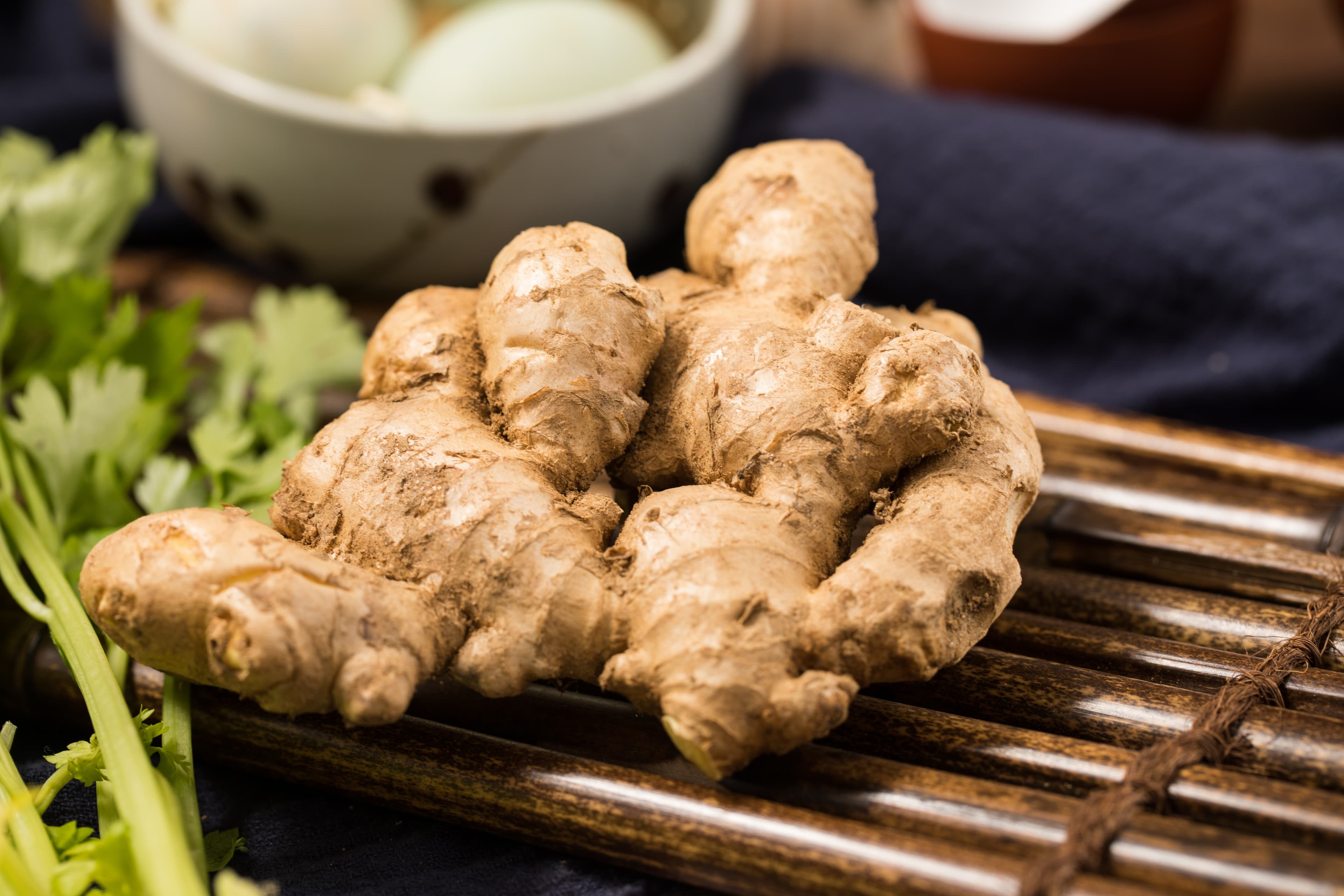 Fresh Ginger(生姜)→ Fresh Ginger(生姜)→ | 3g (about 3 thin slices) | Support | Warms the Spleen and stomach, reviving the digestive fire that converts food into energy. Ginger also helps disperse cold and promotes gentle circulation. |
| Red Dates (Jujube)(大枣)→ | 4 pieces, pitted | Harmony | Nourishes Blood and moderates the drying nature of astragalus and ginger. Adds natural sweetness and supports steady energy release. |
How to Make It
- 1Rinse astragalus slices and red dates under cool water.
- 2Slice fresh ginger into 3 thin pieces.
- 3Place all ingredients in a small pot with 600ml (2.5 cups) of water.
- 4Bring to a boil over medium-high heat (about 8 minutes).
- 5Reduce to low heat, cover, and simmer for 20 minutes. Astragalus needs longer steeping to release its active compounds.
- 6Turn off heat and let sit for 5 minutes.
- 7Strain into a thermos. The tea should be a pale golden color.
How to Take
Drink one cup (250ml) warm, mid-morning between 9 and 11 AM. This is when Spleen energy is naturally highest according to the Chinese medicine body clock, making it the best window for absorption.
How Long
Drink daily for 4 consecutive weeks, then pause for 1 week. Most people feel warmer hands and feet within the first week. Sustained energy improvement typically comes after 3-4 weeks of consistent use.
Taste
Mildly sweet with a gentle warming spice from the ginger. The astragalus contributes an earthy, slightly woody undertone. Comforting and grounding.
Yield
500ml (2 cups) | Prep time: 30 minutes
Who Should Avoid This
- !Not suitable during acute colds, flu, or fever, especially with sore throat.
- !Avoid this formula if you tend to run hot, sweat easily, or have night sweats.
- !If you experience dry mouth or constipation, reduce ginger to 1 slice.
- !Not recommended during pregnancy without consulting a healthcare provider.
- !Astragalus may interact with immunosuppressant medications. Consult your doctor if applicable.
American Ginseng & Ophiopogon Cooling Tea
西洋参麦冬茶|Xi Yang Shen Mai Dong Cha
Classical Source: Adapted from Sheng Mai San (Pulse-Generating Powder) in Yi Qi Bao Ming Ji (1253)
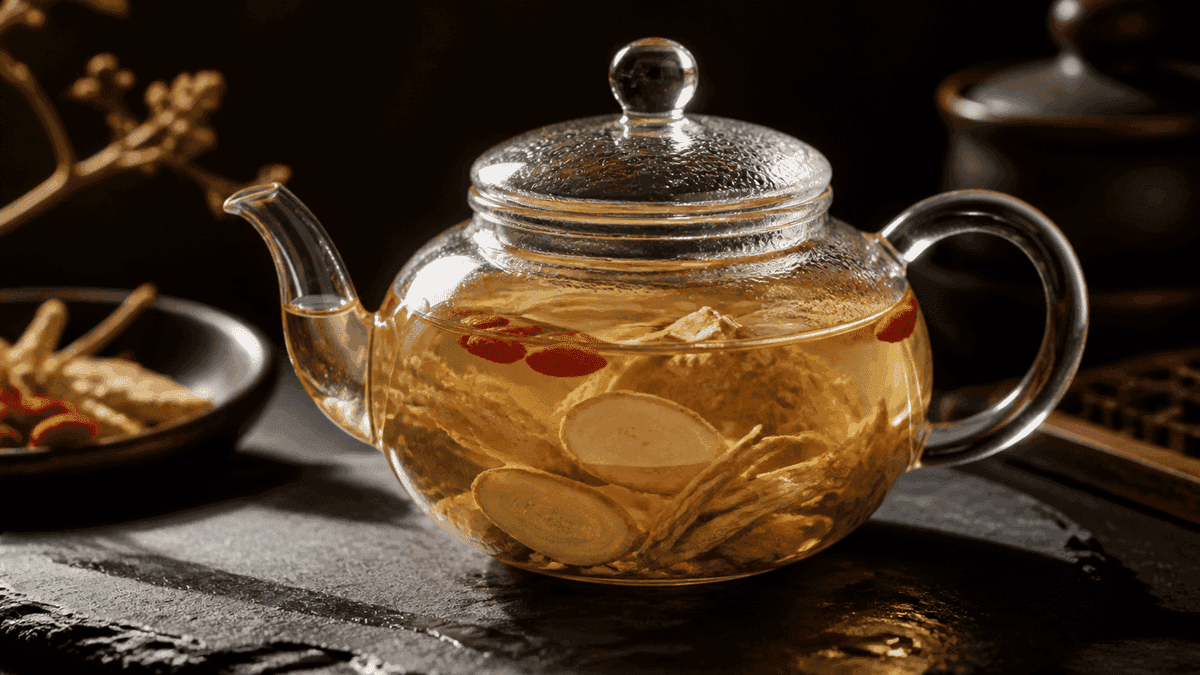
This cooling and moistening tea is for the person who is tired but wired. American ginseng replenishes Qi without adding heat, while ophiopogon root restores the body's cooling fluids. Goji berries add gentle nourishment. Together they rebuild the Yin that prevents internal heat from burning through your energy reserves.
Ingredients
| Ingredient | Amount | Role | Why This Herb |
|---|---|---|---|
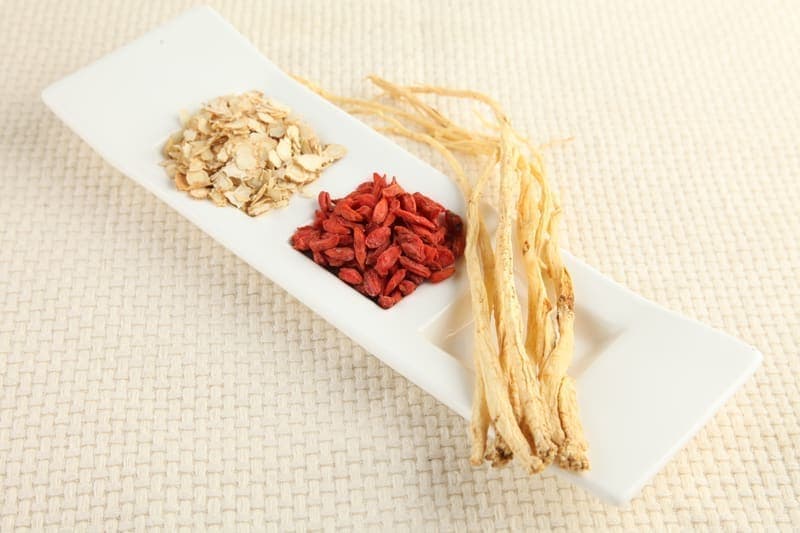 American Ginseng(西洋参)→ American Ginseng(西洋参)→ | 3g (about 5-6 thin slices) | Primary | Unlike Asian ginseng which is warming, American ginseng replenishes Qi while cooling the body. It is ideal for those who feel exhausted but also run hot or restless. |
| Ophiopogon (Mai Dong)(麦冬) | 5g (about 8-10 small pieces) | Support | Nourishes Yin and generates fluids. Ophiopogon moistens dryness and helps the body retain the cooling moisture that prevents overheating and night sweats. |
| Goji Berries(构枞)→ | 10 pieces | Harmony | Gently nourishes Liver and Kidney Yin, supporting deeper restoration. Adds natural sweetness and antioxidants. |
How to Make It
- 1Rinse American ginseng slices and ophiopogon briefly under cool water.
- 2Place all ingredients in a teapot or heatproof glass.
- 3Pour 400ml (1.5 cups) of water that has just come off the boil over the ingredients.
- 4Cover and let steep for 10 minutes. Do not boil, as high heat reduces the delicate cooling properties.
- 5Strain and serve warm or at room temperature. The tea should be a light, clear golden color.
How to Take
Drink one cup (200ml) warm or at room temperature, in the late afternoon between 3 and 5 PM. This is when the body's Yin naturally begins to take over from Yang, making it the ideal window for Yin nourishment.
How Long
Drink daily for 3 consecutive weeks, then pause for 1 week. Most people notice calmer sleep and less nighttime waking within the first week. Deeper energy restoration typically requires 4-6 weeks of consistent use.
Taste
Light, clean, and slightly sweet with a cooling sensation. The American ginseng adds a subtle bitterness balanced by the mild sweetness of goji berries. Ophiopogon contributes a faint floral note.
Yield
400ml (1.5 cups) | Prep time: 15 minutes
Who Should Avoid This
- !Not suitable during acute colds with chills, as this formula is cooling in nature.
- !If you experience loose stools or digestive discomfort, reduce ophiopogon to half.
- !Avoid taking this tea with strong coffee or other stimulants on the same day.
- !If you feel more tired or cold after 3 days, discontinue. You may be Yang deficient rather than Yin deficient.
- !Not recommended for those with diarrhea or loose stools as a regular pattern.
Which Formula Is Right for You?
Each formula targets a specific body type. Taking the 3-minute body type quiz is the fastest way to find your match and get personalized recommendations.
Take the Free Body Type Quiz >Frequently Asked Questions
Can these teas replace my morning coffee?
They can reduce your dependence on coffee, but should not be used as a direct swap on day one. The best approach is to gradually replace your afternoon coffee with one of these teas first. Once your body's Qi begins to rebuild over 2-3 weeks, you may find you naturally need less caffeine. Quitting coffee abruptly while starting these teas may cause withdrawal headaches that mask the benefits.
Which formula should I start with?
It depends on your body type. If you feel tired after eating, have a soft voice, and sweat easily, Formula 1 (Ginseng & Jujube Tea) may suit you. If you feel tired AND cold with cold hands and feet, Formula 2 (Astragalus & Ginger Tea) targets the warmth deficiency. If you feel wired but exhausted, wake at night, and run hot, Formula 3 (American Ginseng & Ophiopogon Tea) replenishes the cooling Yin. The most reliable way to choose is to take our free body type quiz.
Are these ingredients easy to find?
Yes. All ingredients are food-grade items commonly sold at Asian grocery stores, Chinese herbal shops, and online retailers like Amazon. Ginseng slices, red dates, goji berries, and astragalus are widely available. American ginseng and ophiopogon root may require a trip to a Chinese herbal shop or an online TCM supplier. None of these herbs require a prescription.
How long until I feel more energetic?
Chinese medicine works gradually by rebuilding your body's own energy systems rather than stimulating them. Most people notice subtle improvements within the first week: steadier mornings, less afternoon crashing, or warmer hands and feet. Meaningful changes in stamina typically require 3-4 weeks of consistent daily use. The goal is sustainable energy restoration, not a quick boost that fades.
Can I drink more than one formula at the same time?
You can, but it is usually not necessary. Each formula targets a specific energy system. Using the one that matches your body type is more effective than combining all three. If your pattern is mixed or unclear, take the free body type quiz first to get a personalized recommendation. Mixing warming and cooling formulas at the same time may reduce their effectiveness.
This content is for educational and informational purposes only and is not medical advice. The herbal formulas described here use food-grade ingredients traditionally consumed in Chinese culture. Always consult a qualified healthcare professional before starting any herbal regimen, especially if you are pregnant, nursing, taking medications, or managing a health condition. Individual results may vary.