Chinese Herbs for PMS: 3 Herbal Teas by Body Type
In Chinese medicine, the premenstrual phase is governed by the Liver, which ensures the smooth flow of qi and blood. When liver qi stagnates in the days before menstruation, it produces the familiar cluster of PMS symptoms: mood swings, breast tenderness, bloating, and irritability. Three body type patterns underlie these symptoms, and each responds to different herbs that move qi and nourish blood.
Quick Answer
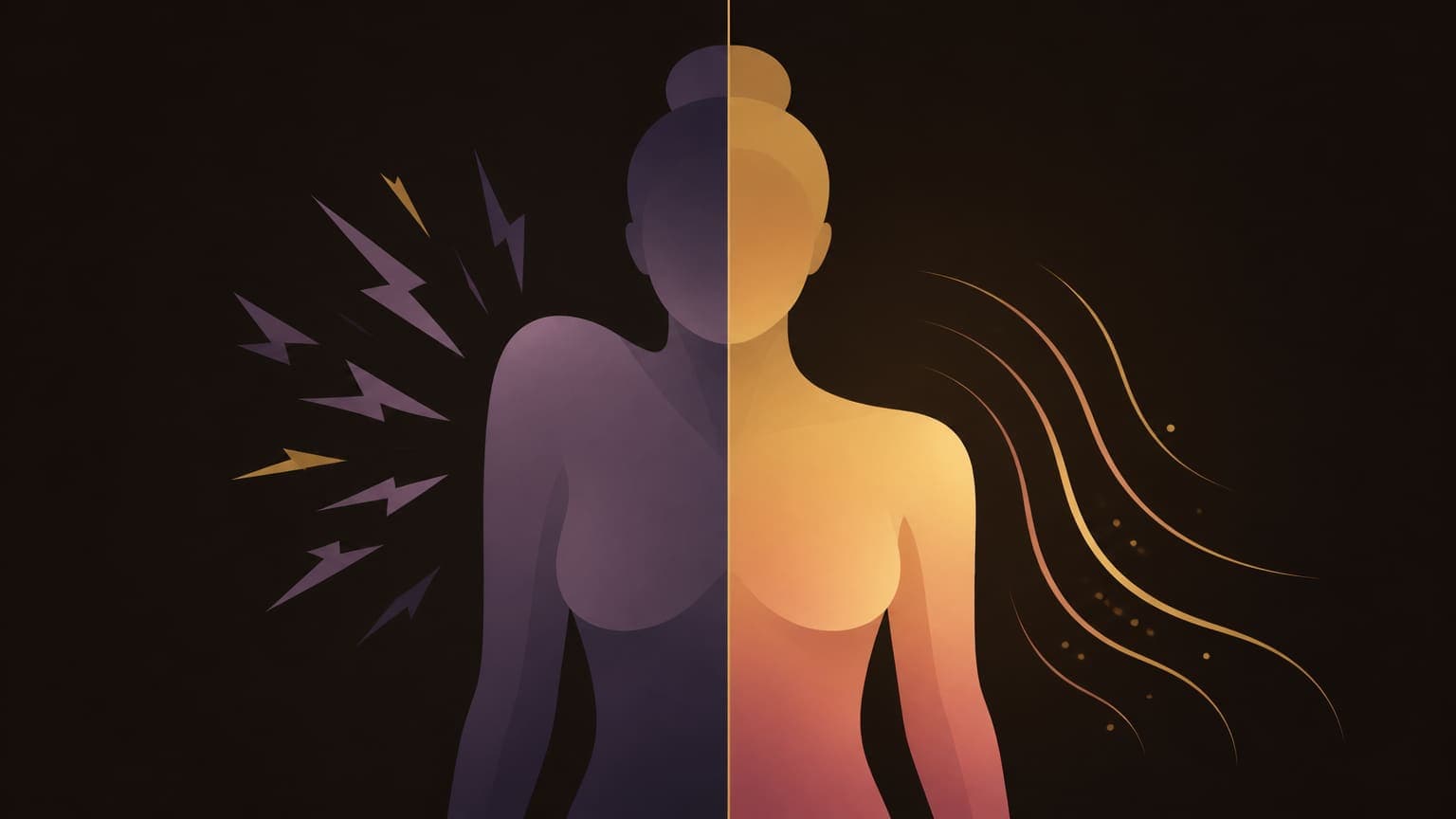
In Chinese medicine, PMS is most often linked to Liver Qi Stagnant, a pattern where the smooth flow of energy and blood slows in the days before menstruation and produces mood swings, breast tenderness, and irritability that ease once the period begins. This is the most common body type behind premenstrual tension. PMS can also stem from Blood Deficient, where low reserves leave you dizzy, pale, and drained rather than irritable, and Blood Stasis, where blood that cannot flow freely causes sharp lower abdominal pain with dark clots. Each pattern may respond to a different food-grade herbal tea that moves, nourishes, or warms the specific imbalance involved. Timing the tea to the days before your period, matched to your pattern, is the core idea behind this guide.
Quick Comparison: Which Formula for Which Type?
Not sure which formula to try? Start here.
| Formula | Best For | Key Herbs | Prep Time | Taste |
|---|---|---|---|---|
| Liver-Soothing Balance Tea | Qi Stagnant | Rose Petals, Cyperus, White Peony, Licorice Root | 20 minutes | Floral, slightly sweet, and aromatic |
| Blood-Nourishing Flow Tea | Blood Deficient | Dong Quai, Red Dates, Longan, Goji Berries | 25 minutes | Sweet, warm, and comforting |
| Comfort Flow Tea | Blood Stasis | Saffron, Dong Quai, Brown Sugar, Fresh Ginger | 20 minutes | Sweet, warm, and slightly earthy |
Curious which body type you are? Take the free 5-minute quiz.
Take the Free Quiz →Why Chinese Medicine Sees Weight Differently
Western medicine and Chinese medicine are not opposites. They look at the same body from different angles. Understanding both perspectives helps you make better choices for your body.
| Topic | Western Medicine | Chinese Medicine |
|---|---|---|
| Root cause of PMS | Hormonal fluctuations, particularly estrogen and progesterone shifts | Liver qi stagnation preventing the smooth flow of energy and blood before menstruation |
| View of mood swings | Neurotransmitter sensitivity to hormonal changes | Liver qi affecting the Heart and spirit, as the Liver governs emotional flow |
| View of breast tenderness | Fluid retention and prostaglandin response | Qi stagnation along the Liver meridian that passes through the breasts |
| Primary approach | Hormonal regulation and symptom management with medication | Soothe liver qi, nourish blood, and regulate the cycle through food-grade herbs |
Three Body Types That Commonly Struggle With Weight
In Chinese medicine, there is no universal weight loss formula. The right approach depends on your body type. Here are the three most common patterns:
TCM Perspective
The most common PMS pattern. When liver qi stagnates before the period, emotional volatility, breast tenderness, and irritability dominate. The stuck energy creates pressure that needs release, which is why symptoms often improve once the period begins and the qi finally moves.
Plain English
This pattern aligns with premenstrual symptoms driven by sensitivity to normal hormonal fluctuations, where stress and emotional factors amplify the physical response.
Common Signs
A Simple Analogy
A river dammed up, pressure building behind the blockage. Once the dam releases, the flow returns to normal.
TCM Perspective
When blood is insufficient to fill the uterus properly, the body struggles with the premenstrual transition. PMS with blood deficiency involves less emotional volatility and more physical depletion: dizziness, pale complexion, scanty flow, and a weak, drained feeling rather than an irritable one.
Plain English
This pattern may correspond to PMS with anemic or iron-deficient components, where the body lacks the nutritional reserves to handle the menstrual transition smoothly.
Common Signs
A Simple Analogy
A well running low on water. The system does not have enough reserve to meet the demand, so everything slows down.
TCM Perspective
When blood is present but not flowing freely, the premenstrual phase becomes painful rather than just uncomfortable. Dark clots, sharp fixed pain, and a feeling of heaviness in the lower abdomen characterize this pattern. The stagnation of blood adds a physical dimension to the qi stagnation that typically precedes it.
Plain English
This pattern may correspond to dysmenorrhea with clotting, where prostaglandin levels and uterine contractions produce painful, clotted menstrual flow.
Common Signs
A Simple Analogy
A stream that has frozen in places. The water is there, but it cannot flow, creating pressure and pain behind the blockage.
Liver-Soothing Balance Tea
疏肝调经茶|Shu Gan Tiao Jing Cha
Classical Source: Liver-soothing tradition from Xiao Yao San
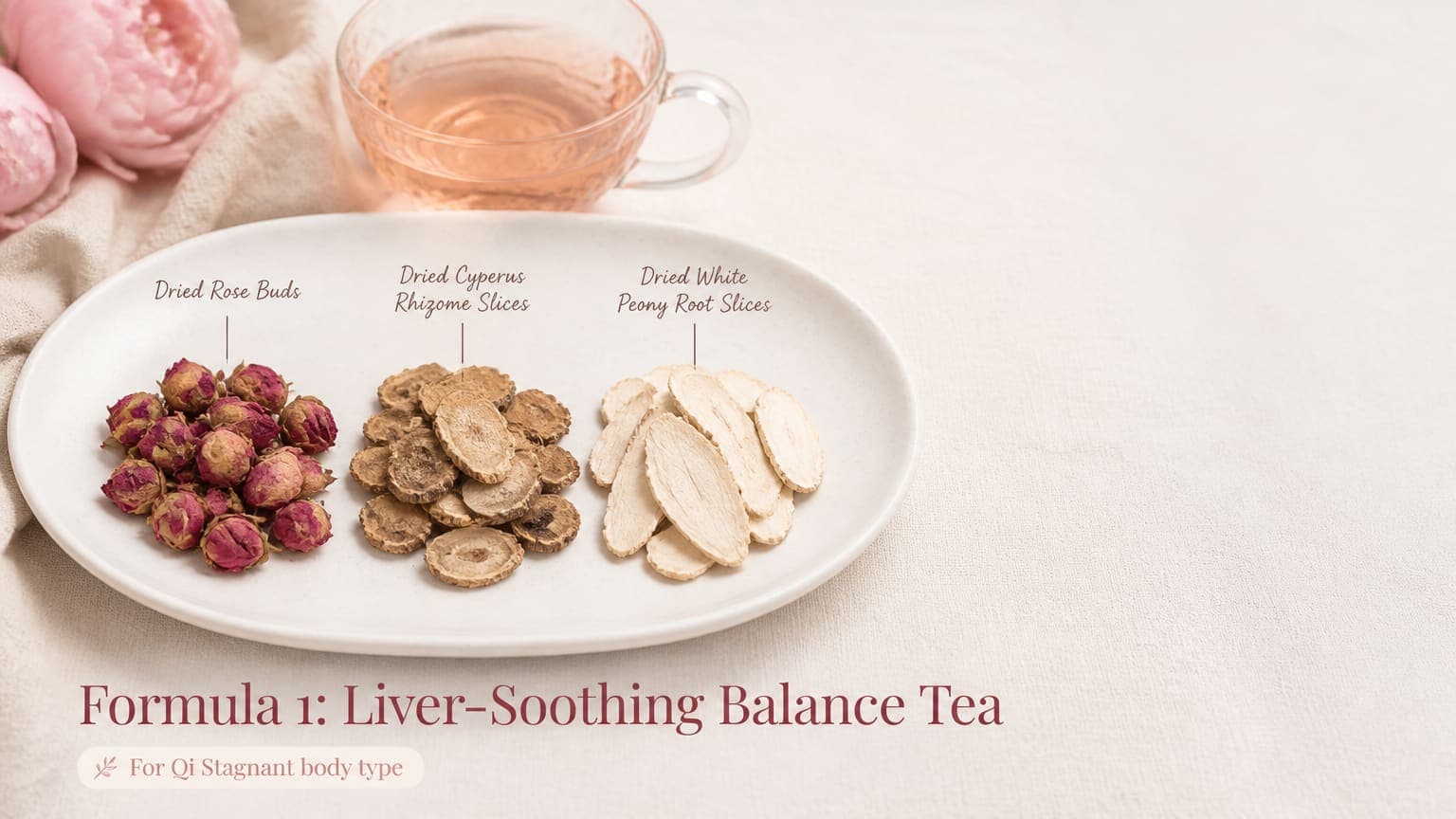
The primary formula for PMS dominated by mood swings, irritability, and breast tenderness. Rose petals soothe the liver and move stuck qi, cyperus regulates the energy flow specifically in the lower abdomen, and white peony softens the liver tension while gently nourishing the blood that prevents further stagnation.
Ingredients
| Ingredient | Amount | Role | Why This Herb |
|---|---|---|---|
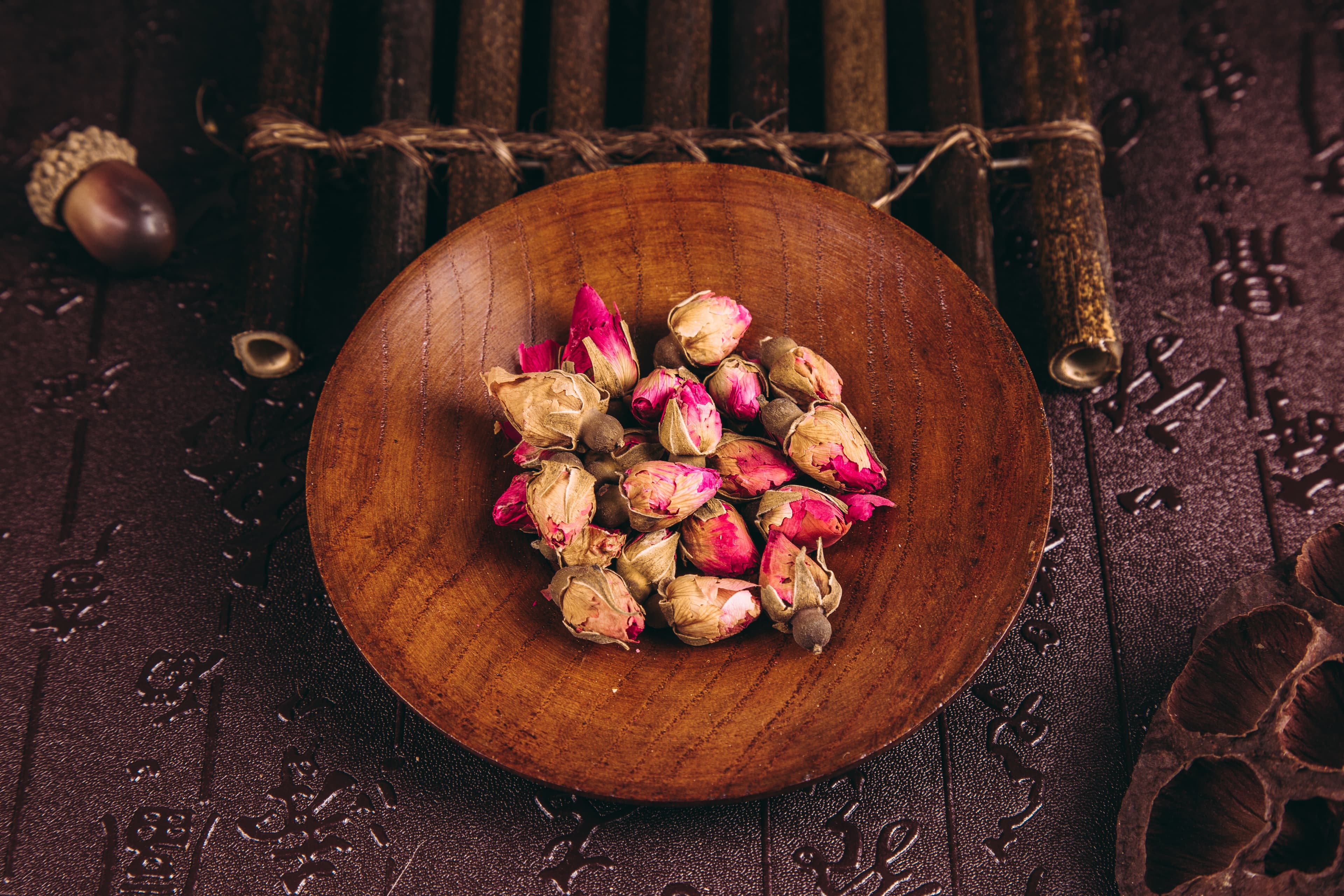 Rose Petals(mei gui)→ Rose Petals(mei gui)→ | 6g | Chief | The gentlest liver-soothing herb in TCM. Rose petals move the stuck liver qi that produces premenstrual irritability and breast tenderness, without the drying or warming intensity of stronger qi-regulating herbs. |
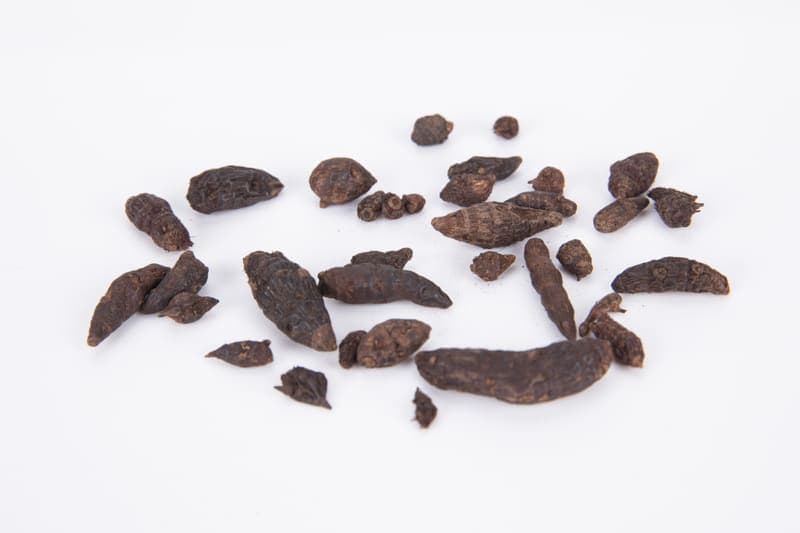 Cyperus(xiang fu)→ Cyperus(xiang fu)→ | 6g | Deputy | Known as the chief of qi-regulating herbs, cyperus specifically targets the lower abdomen and the menstrual cycle. It works alongside rose to move the stuck energy that causes premenstrual tension and cramping. |
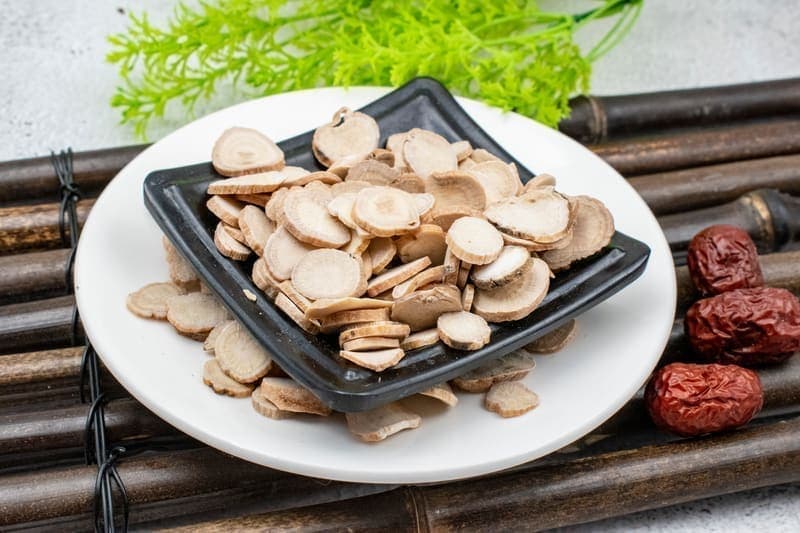 White Peony(bai shao)→ White Peony(bai shao)→ | 10g | Assistant | Softens the liver and relieves pain. White peony's sour, sweet nature relaxes the muscle tension that accompanies liver qi stagnation, particularly in the breast and lower abdomen. |
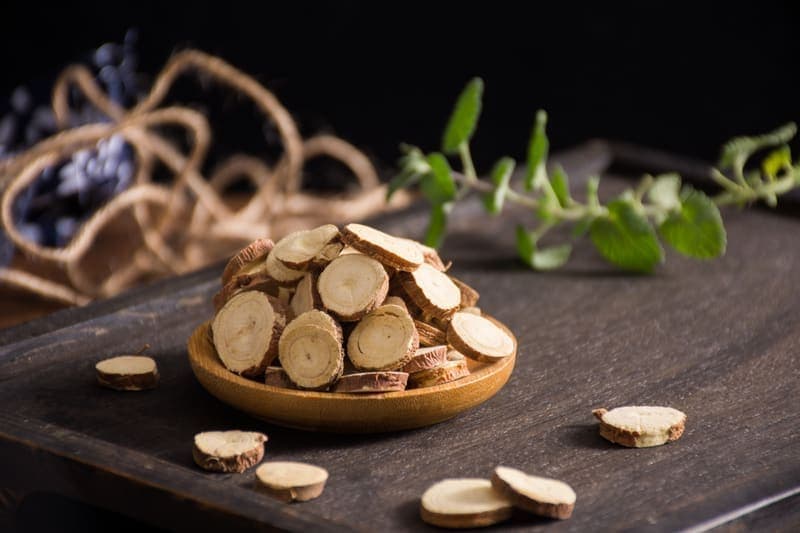 Licorice Root(gan cao)→ Licorice Root(gan cao)→ | 3g | Envoy | Harmonizes the formula and pairs with white peony to relieve pain, a classical combination known as Shao Yao Gan Cao Tang. |
How to Make It
- 1Place white peony, cyperus, and licorice in a pot with 500ml of water.
- 2Bring to a boil, then simmer for 15 minutes.
- 3Add rose petals in the last 3 minutes to preserve their aromatic oils.
- 4Strain and divide into two cups. Drink warm, one in the morning and one in the evening.
How to Take
Begin drinking 5 to 7 days before your expected period. Drink 1 to 2 cups daily through the first day of menstruation, then stop. Repeat for 3 cycles.
How Long
5 to 7 days before each period, for 3 cycles
Taste
Floral, slightly sweet, and aromatic. The rose gives a comforting fragrance.
Yield
2 cups (2 servings) | Prep time: 20 minutes
Who Should Avoid This
- !Stop drinking once the period begins if flow is heavy
- !Avoid during pregnancy
- !Safe for regular cyclical use
- !Reduce cyperus if you experience dry mouth
Blood-Nourishing Flow Tea
养血调经茶|Yang Xue Tiao Jing Cha
Classical Source: Blood-nourishing tradition from Si Wu Tang
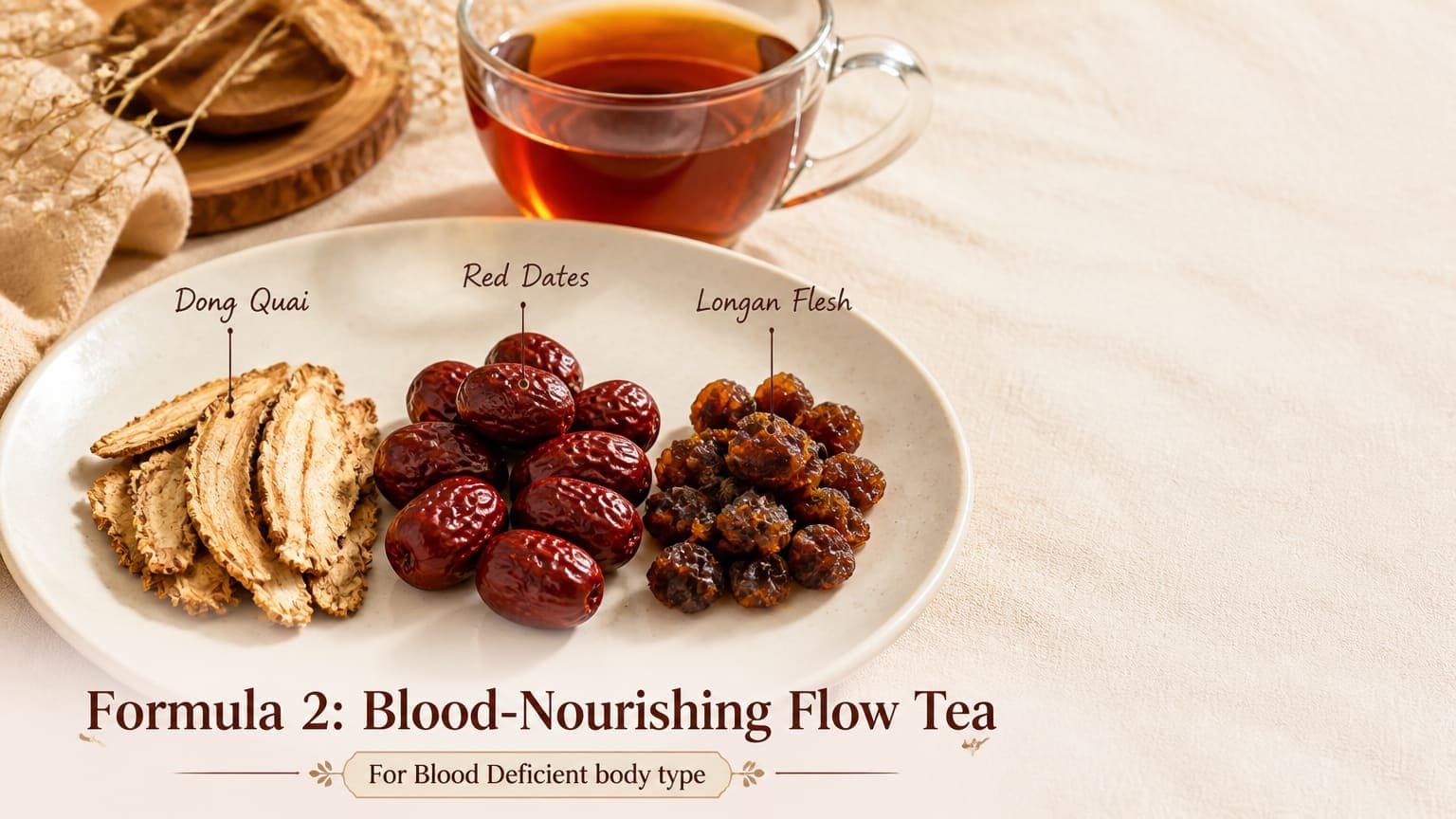
A warming, nourishing tea for PMS dominated by depletion rather than tension. Dong quai builds and moves blood, red dates provide gentle sweetness and spleen support, and longan nourishes the heart blood that calms the spirit. This formula is for the person whose PMS feels more like exhaustion than irritability.
Ingredients
| Ingredient | Amount | Role | Why This Herb |
|---|---|---|---|
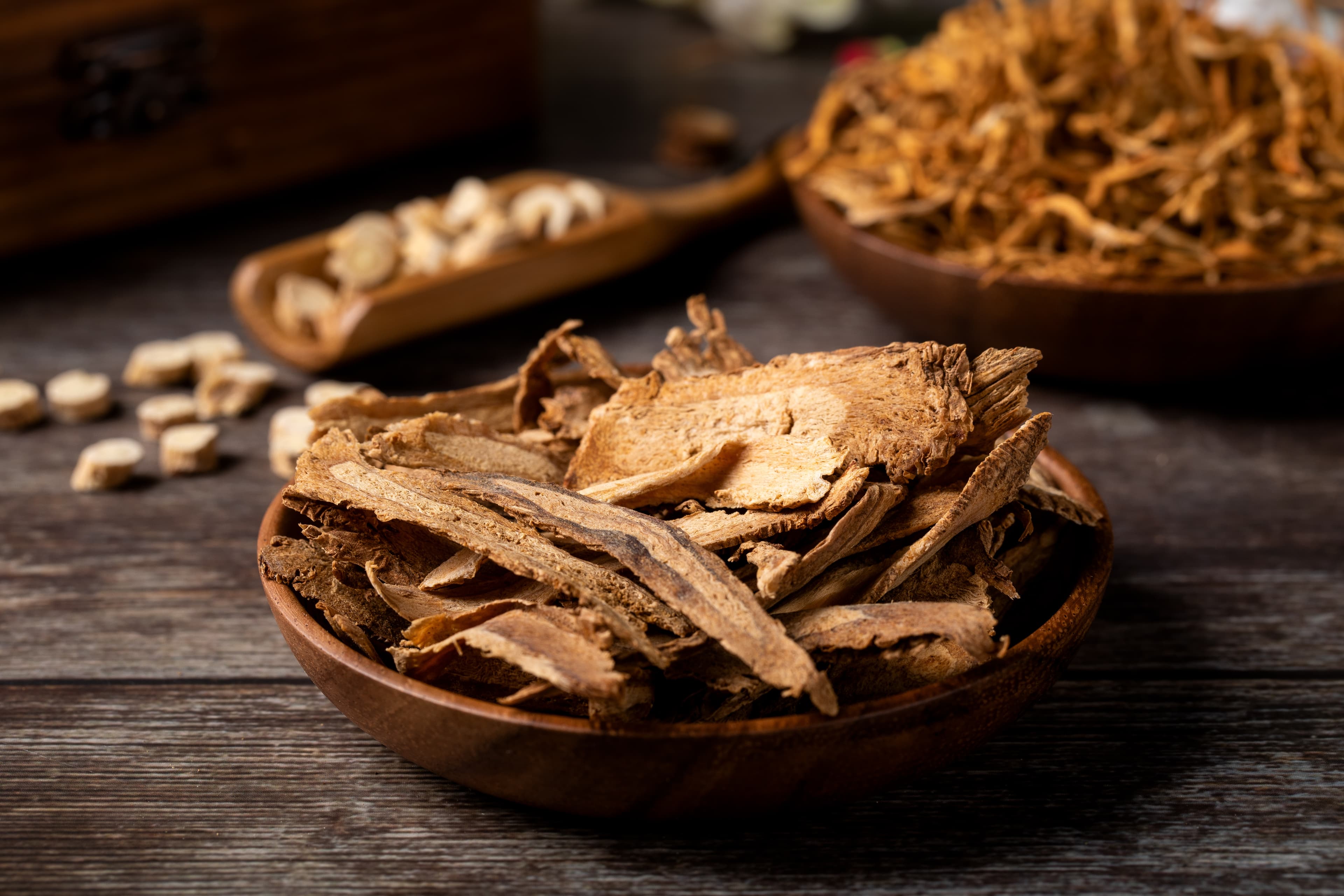 Dong Quai(dang gui)→ Dong Quai(dang gui)→ | 6g | Chief | The primary blood tonic in TCM gynecology. Dong quai both nourishes and moves blood, addressing the deficiency that underlies scanty, painful periods and the weakness that accompanies blood-deficient PMS. |
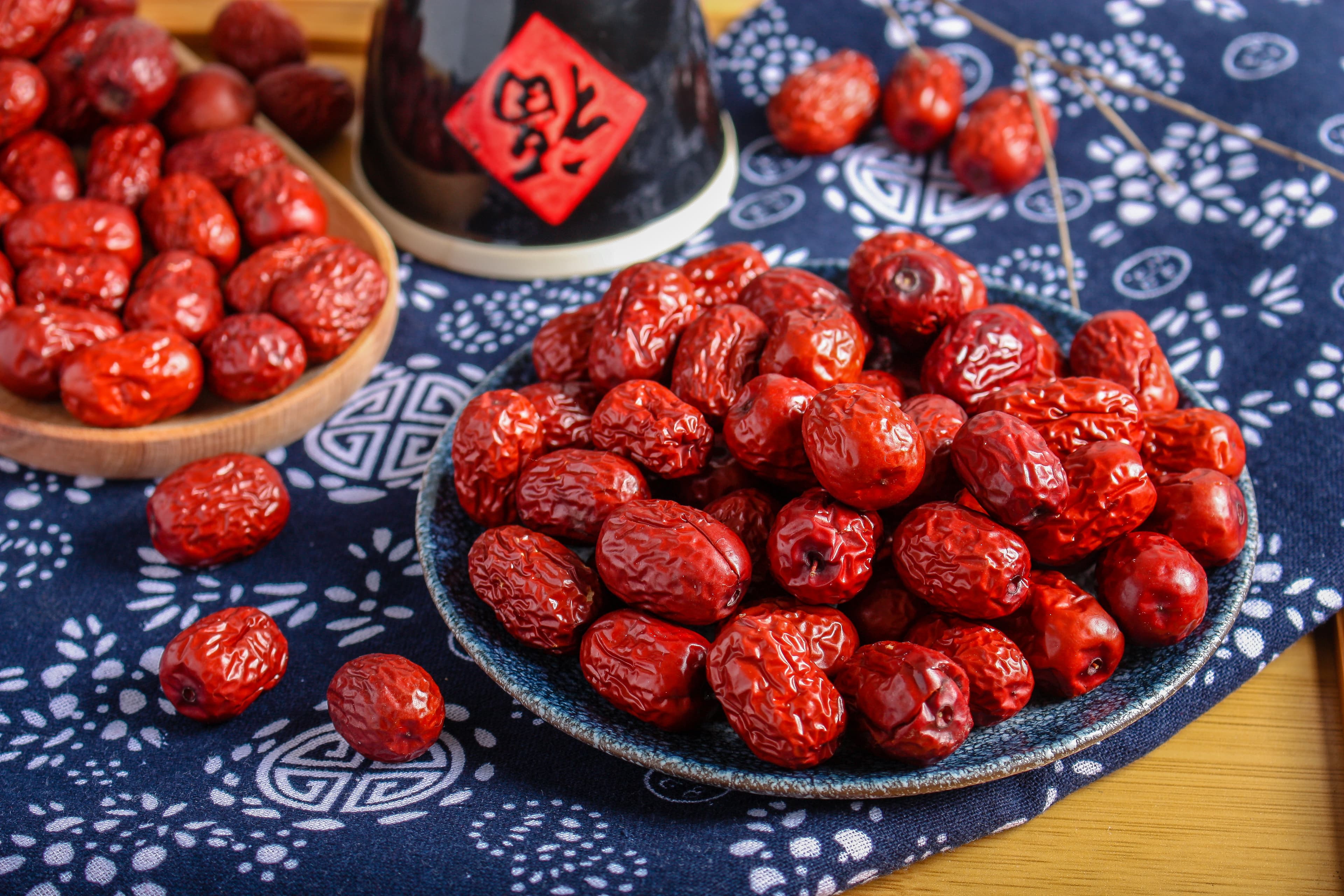 Red Dates(da zao)→ Red Dates(da zao)→ | 5 pieces | Deputy | Gentle blood and qi tonic that supports the spleen's production of new blood. Red dates also moderate the slightly warm, moving nature of dong quai, making the formula suitable for daily use. |
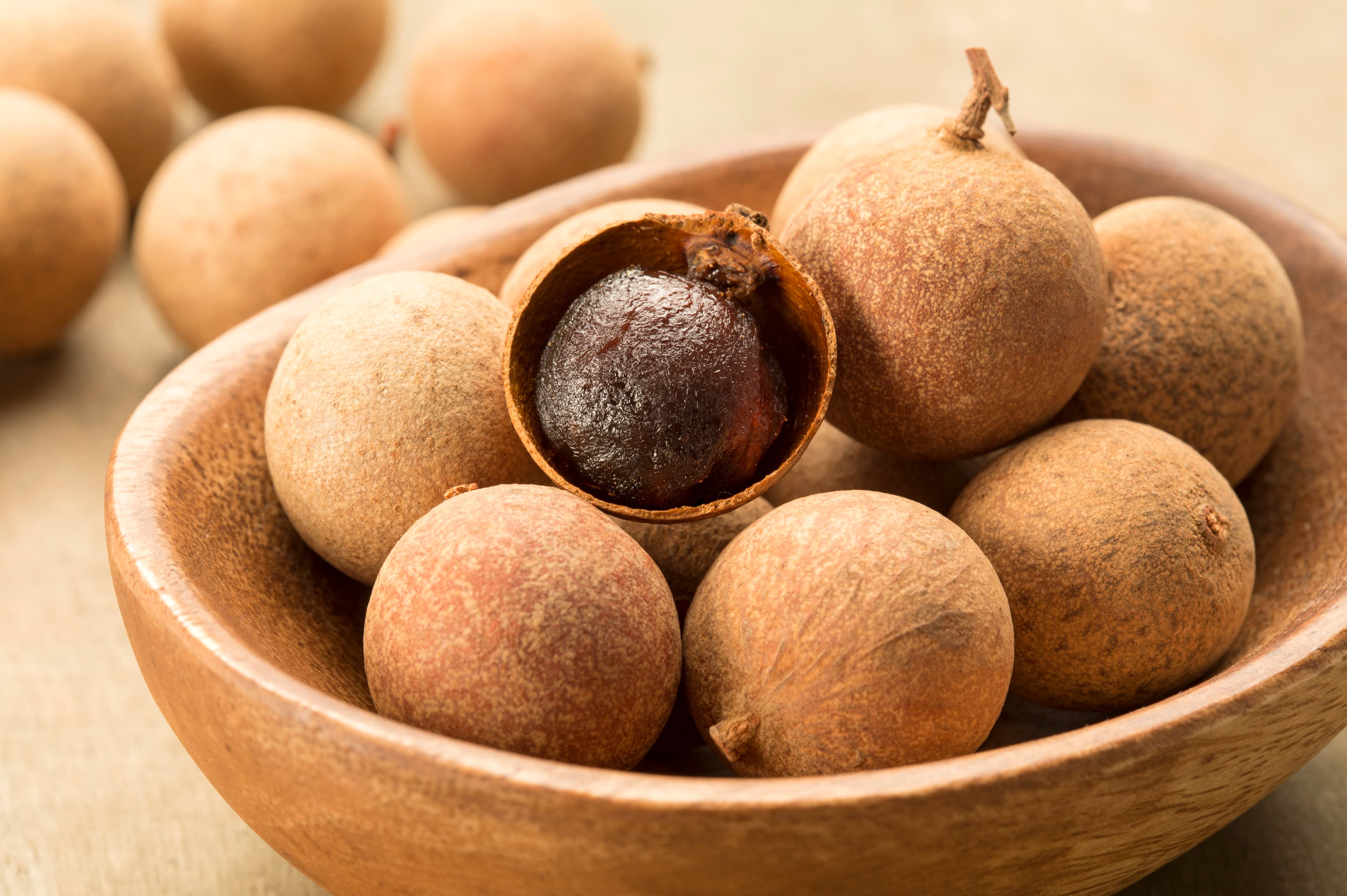 Longan(gui yuan)→ Longan(gui yuan)→ | 10g | Assistant | Nourishes heart blood and calms the spirit, addressing the poor sleep and mild anxiety that accompany blood-deficient PMS. Longan's warm, sweet nature complements dong quai perfectly. |
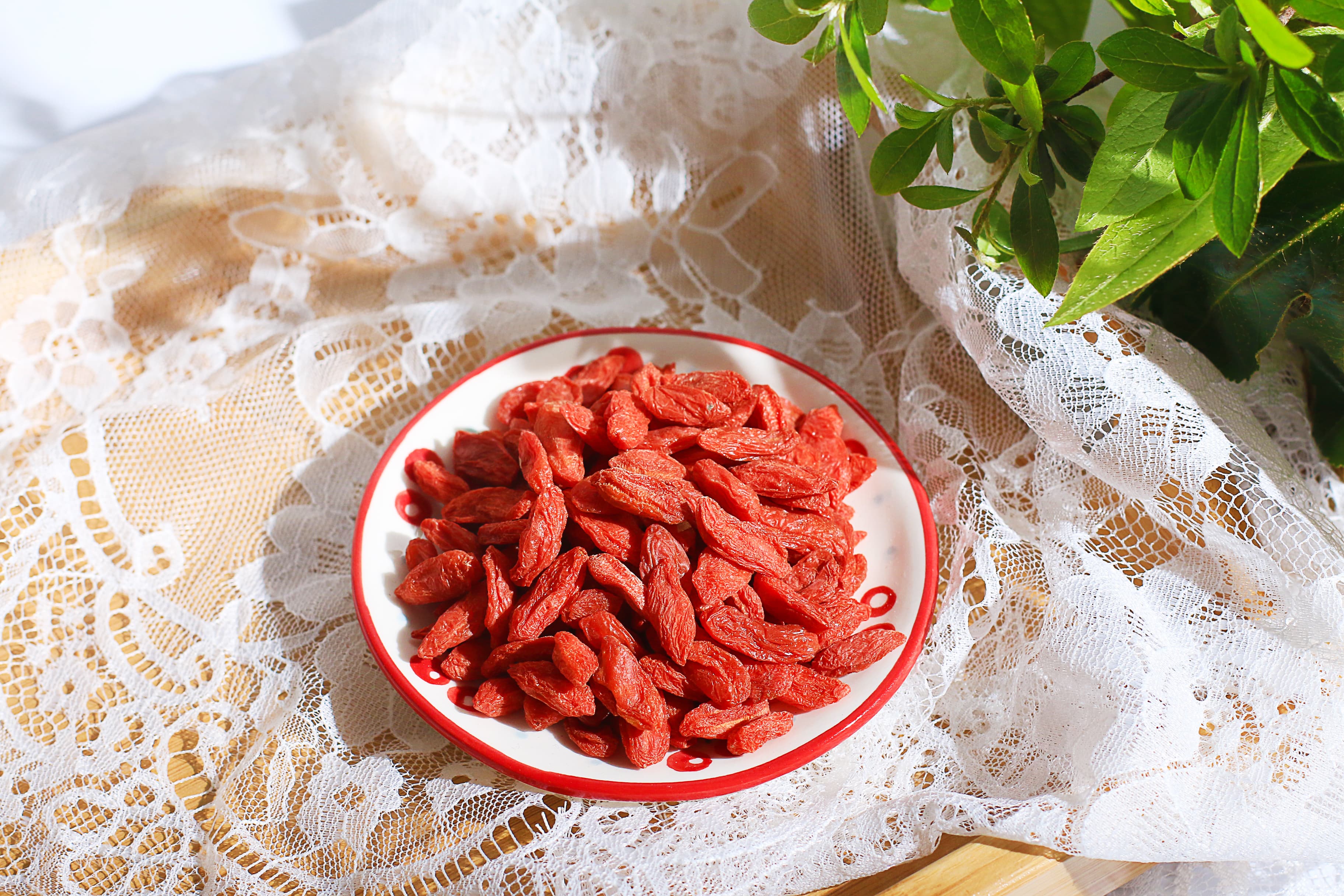 Goji Berries(gou qi zi)→ Goji Berries(gou qi zi)→ | 10g | Envoy | Nourishes liver and kidney yin, supporting the blood-building action. Goji also adds natural sweetness and color to the tea. |
How to Make It
- 1Pit the red dates and cut dong quai slices if whole.
- 2Place dong quai, red dates, and longan in a pot with 500ml of water.
- 3Bring to a boil, then simmer for 20 minutes.
- 4Add goji berries in the last 5 minutes.
- 5Strain into cups. Eat the softened red dates, longan, and goji berries.
How to Take
Begin 7 days before your expected period. Drink 1 to 2 cups daily. Continue through the first 3 days of menstruation to support blood recovery, then pause.
How Long
10 days per cycle (7 days before + 3 days into period)
Taste
Sweet, warm, and comforting. The dates and longan create a naturally sweet, nourishing taste.
Yield
2 cups (2 servings) | Prep time: 25 minutes
Who Should Avoid This
- !Reduce dong quai if you experience heavier menstrual flow
- !Avoid during pregnancy
- !Do not take during acute colds or flu
- !Safe for regular cyclical use over multiple months
Comfort Flow Tea
活血止痛茶|Huo Xue Zhi Tong Cha
Classical Source: Blood-moving gynecological tradition
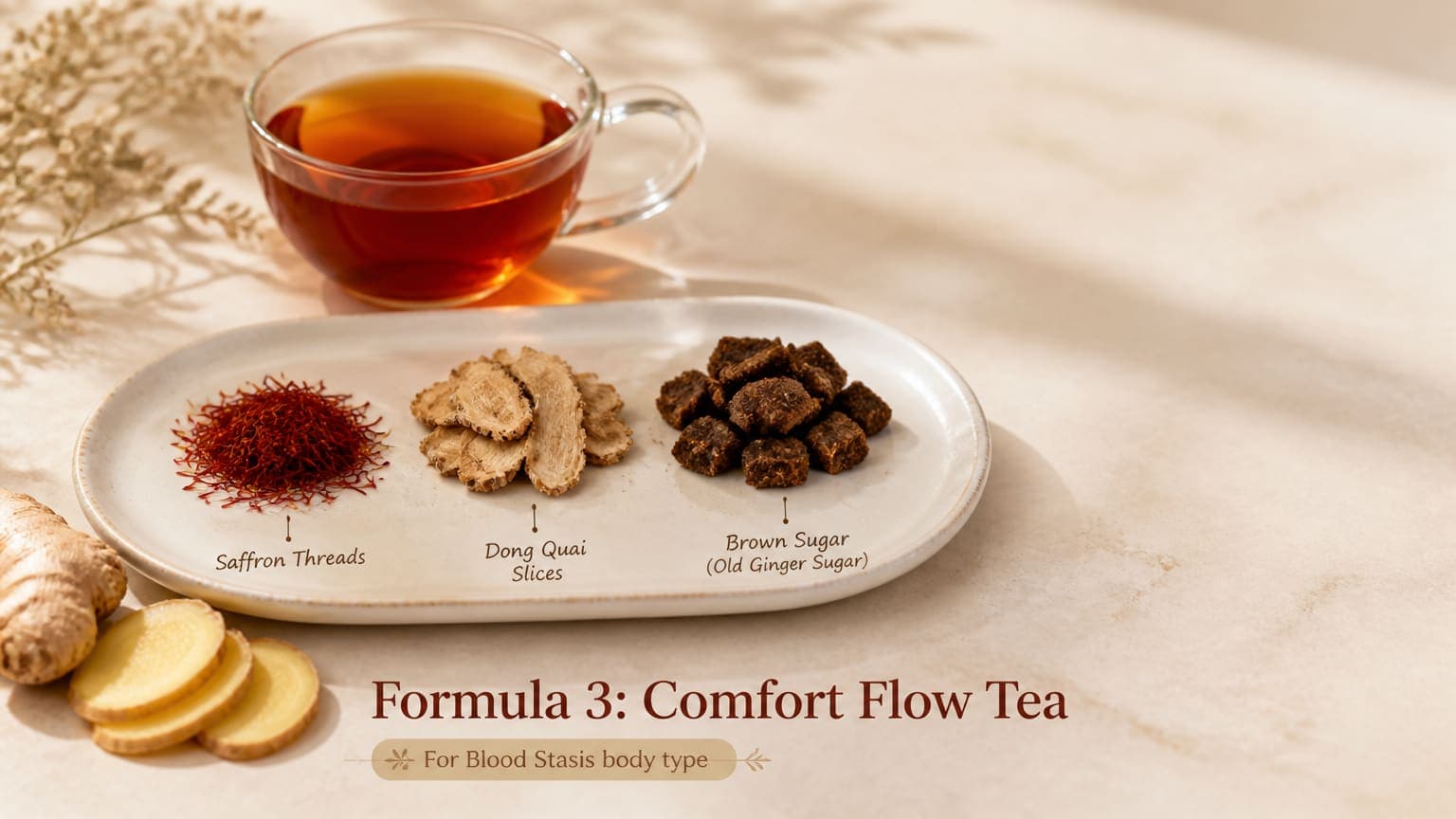
A tea for PMS dominated by sharp pain, dark clots, and a feeling of heaviness in the lower abdomen. Saffron moves the stagnant blood that causes the pain, dong quai both nourishes and moves blood to prevent further stasis, and brown sugar provides warmth and iron to support the menstrual flow.
Ingredients
| Ingredient | Amount | Role | Why This Herb |
|---|---|---|---|
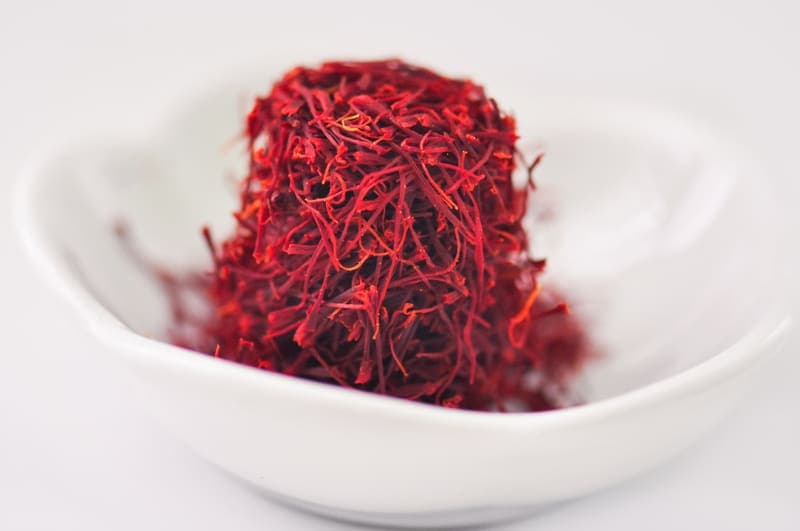 Saffron(zang hong hua)→ Saffron(zang hong hua)→ | 8-10 threads | Chief | One of the most potent blood-moving herbs in TCM, saffron specifically targets blood stasis in the lower abdomen. Its ability to break up dark clots and relieve sharp menstrual pain is well documented in classical gynecological texts. |
| Dong Quai(dang gui)→ | 6g | Deputy | Provides the dual action of moving stagnant blood while nourishing new blood. This prevents the blood-moving action of saffron from depleting the body's reserves. |
| Brown Sugar(hong tang) | 15g | Assistant | Warms the uterus and provides quick energy and iron support. In TCM, brown sugar is a traditional menstrual food that warms the blood and eases cramping. It also improves the taste of the formula. |
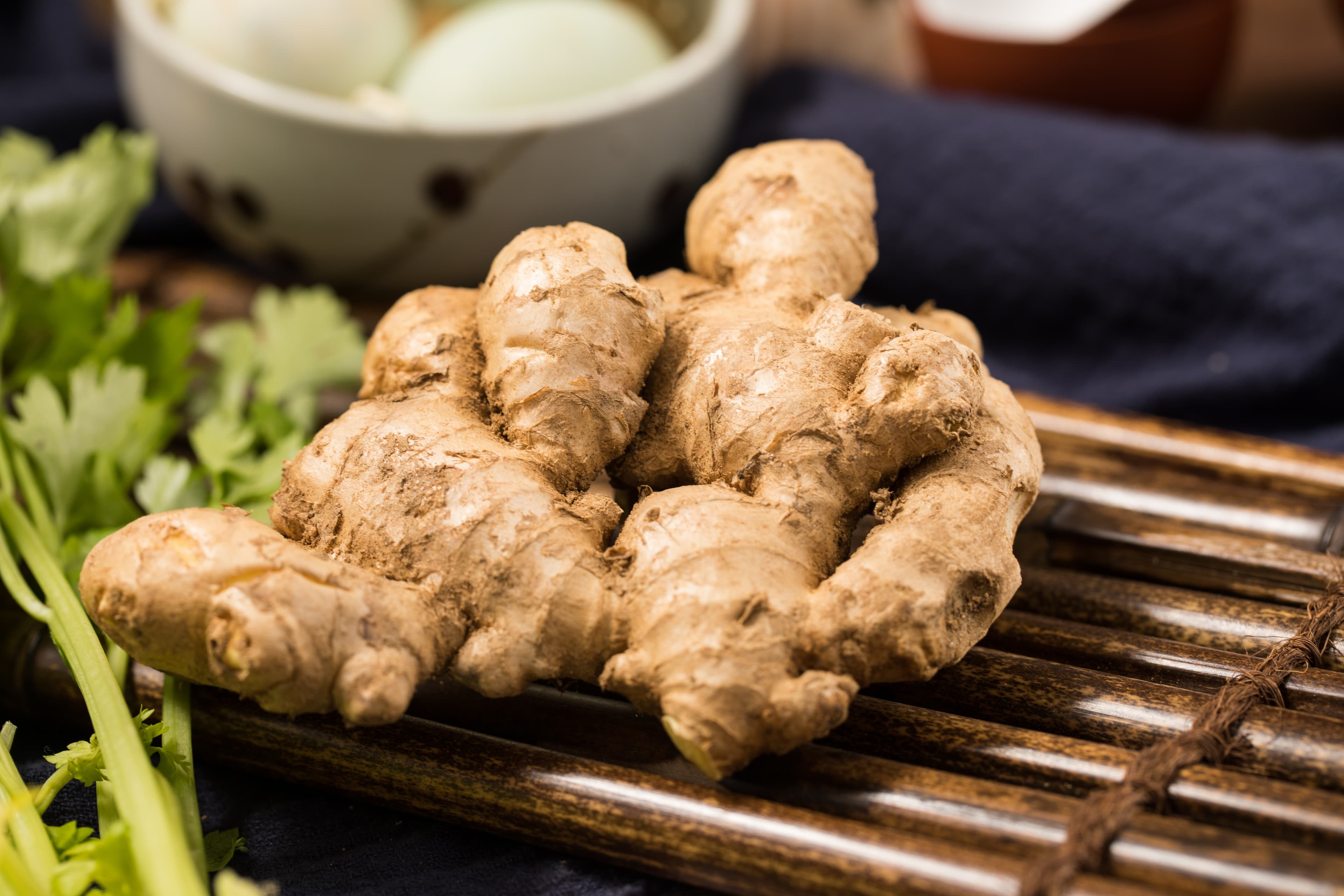 Fresh Ginger(sheng jiang)→ Fresh Ginger(sheng jiang)→ | 3 slices | Envoy | Warms the digestive system to help absorb the herbs, and its warm nature disperses the cold that often accompanies blood stasis patterns. |
How to Make It
- 1Place dong quai and ginger slices in a pot with 400ml of water.
- 2Bring to a boil, then simmer for 15 minutes.
- 3Add saffron threads and brown sugar, stir until sugar dissolves.
- 4Simmer for 2 more minutes, then strain into a cup.
- 5Drink very warm. The warmth itself helps move the stagnant blood.
How to Take
Begin 3 days before your expected period. Drink 1 cup daily, very warm. Continue through the first 2 days of menstruation if pain persists, then stop.
How Long
5 days per cycle (3 days before + 2 days into period)
Taste
Sweet, warm, and slightly earthy. The brown sugar and ginger create a comforting, warming drink.
Yield
1 cup (1 serving) | Prep time: 20 minutes
Who Should Avoid This
- !Do not take during pregnancy under any circumstances
- !Stop if menstrual flow becomes excessively heavy
- !Avoid if you have a bleeding disorder
- !Not suitable for those taking blood-thinning medications
Which Formula Is Right for You?
Each formula targets a specific body type. Taking the 3-minute body type quiz is the fastest way to find your match and get personalized recommendations.
Take the Free Body Type Quiz >Frequently Asked Questions
When should I start drinking these teas for PMS?
Timing depends on your pattern. For mood-related PMS (Formula 1, Qi Stagnant), start 5 to 7 days before your expected period, when symptoms typically begin. For blood-deficient PMS (Formula 2), start 7 days before and continue through the first few days of your period. For pain with clots (Formula 3, Blood Stasis), start 3 days before and continue through the first 2 days of menstruation. Track your cycle for 2 to 3 months to identify your symptom onset pattern accurately.
Can I drink these teas during my period?
Formula 2 (Blood-Nourishing Flow Tea) can be continued through the first 3 days of your period to support blood recovery. Formula 1 (Liver-Soothing Balance Tea) should be stopped once flow begins if your flow is heavy, as its blood-moving action may increase bleeding. Formula 3 (Comfort Flow Tea) can be continued for the first 2 days if pain persists, but stop immediately if flow becomes very heavy. In general, listen to your body and reduce or stop if you notice any unusual changes.
Which herbs should I avoid during pregnancy?
Several herbs in these formulas are contraindicated during pregnancy. Saffron (Formula 3) is strictly avoided in pregnancy as it may stimulate uterine contractions. Dong quai (Formulas 2 and 3) should also be avoided during pregnancy, particularly in the first trimester. Rose petals and cyperus (Formula 1) should be used with caution. If you are trying to conceive or may be pregnant, avoid all three formulas and consult a qualified practitioner for pregnancy-safe alternatives.
How long until PMS symptoms improve?
Chinese medicine works cumulatively over cycles rather than providing immediate relief. Most people notice reduced mood swings and breast tenderness after 1 to 2 cycles of consistent use. Pain reduction for blood stasis patterns (Formula 3) may be noticeable in the first cycle, as saffron is a potent blood-moving herb. Deeper changes in cycle regularity and overall PMS intensity typically require 3 cycles of consistent use. If you do not notice any improvement after 3 cycles, your body type pattern may be different than expected. Take the free EastType body type quiz for a personalized assessment.
Which body type is causing my PMS?
The free EastType body type quiz is the most reliable way to identify your pattern. As a quick guide: if your PMS is dominated by irritability, mood swings, and breast tenderness that improves once your period starts, you may be Qi Stagnant. If your PMS feels more like exhaustion with scanty flow and dizziness, you may be Blood Deficient. If your PMS involves sharp pain, dark clots, and a heavy feeling in the lower abdomen, you may have Blood Stasis. Many people have a combination of patterns.
This content is for educational and informational purposes only and is not medical advice. The herbal formulas described here use food-grade ingredients traditionally consumed in Chinese culture. Always consult a qualified healthcare professional before starting any herbal regimen, especially if you are pregnant, nursing, taking medications, or managing a health condition. Individual results may vary.