Chinese Herbs for Acne: 3 Herbal Teas by Body Type
Chinese medicine views acne not as a surface problem but as a sign of internal heat and dampness rising to the skin. Where Western dermatology focuses on pores and bacteria, TCM asks why the body is pushing heat upward in the first place. Three common body type patterns may contribute to persistent breakouts, and each responds to a different combination of cooling and blood-moving herbs.
Quick Answer
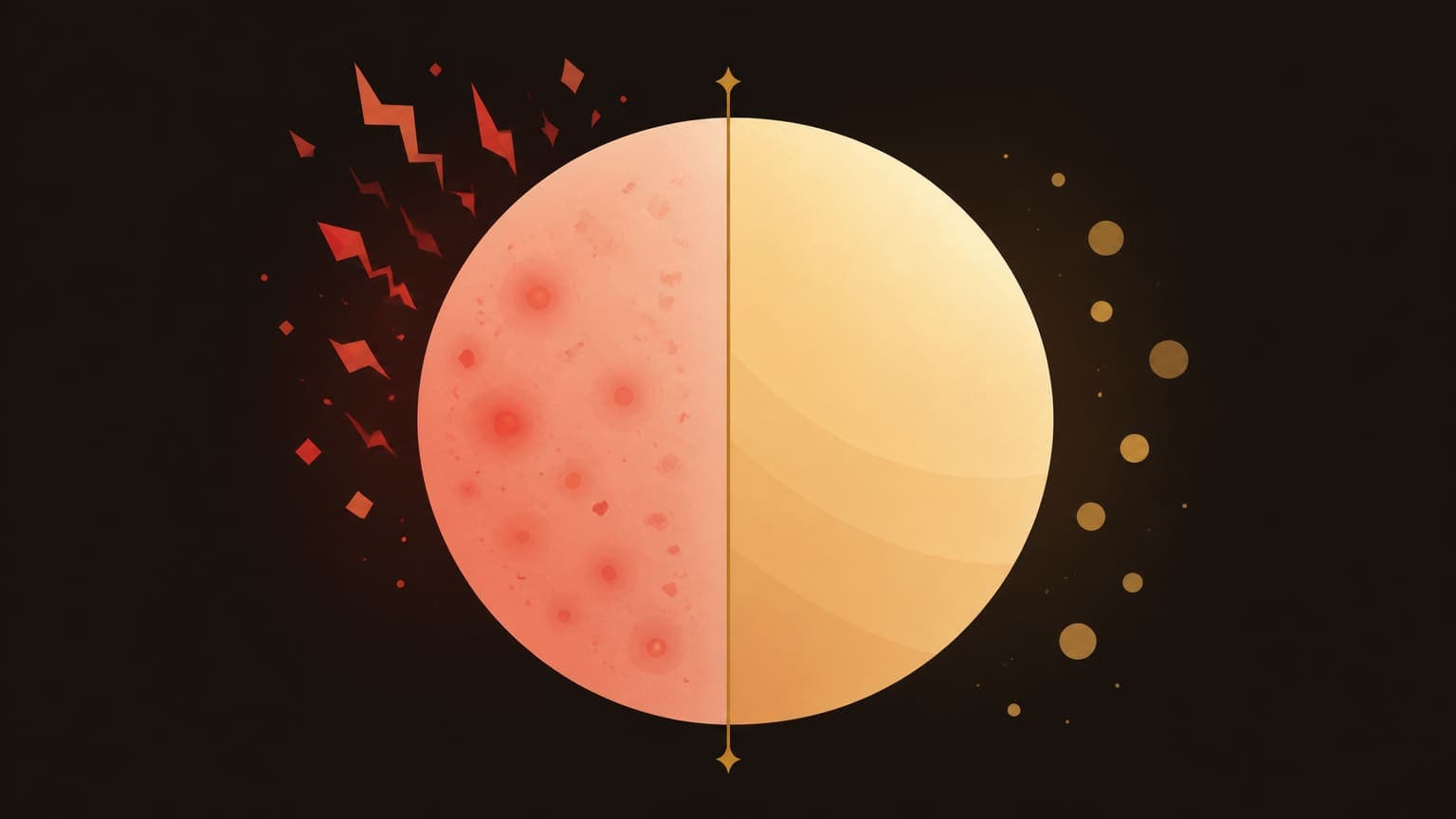
Chinese medicine identifies three distinct patterns behind persistent acne, and Damp Heat is the most common of them. In this pattern, heat and sticky dampness accumulate inside and push upward through the skin as red, inflamed, oily breakouts that worsen in humid weather. Acne can also arise from Blood Stasis, where sluggish circulation leaves deep, purplish cysts and dark marks that linger, and Qi Stagnant, where stress-driven heat flares along the jaw and chin before exams or deadlines. Each pattern may respond to a different food-grade herbal tea that clears, moves, or cools the specific internal cause. Reading which pattern sits behind your breakouts, instead of drying the surface the same way every time, is what guides the right formula.
Quick Comparison: Which Formula for Which Type?
Not sure which formula to try? Start here.
| Formula | Best For | Key Herbs | Prep Time | Taste |
|---|---|---|---|---|
| Heat-Clearing Skin Tea | Damp Heat | Honeysuckle, Dandelion, Chrysanthemum, Licorice Root | 15 minutes | Light, slightly bitter, and refreshing |
| Blood-Moving Complexion Tea | Blood Stasis | Salvia Root, Peach Gum, Saffron, Goji Berries | 20 minutes (plus 6-8 hours soaking for peach gum) | Mild, slightly sweet, with a golden color from the saffron and goji |
| Stress-Breakout Calming Tea | Qi Stagnant | Rose Petals, Mint, Cassia Seed, Licorice Root | 15 minutes | Floral, aromatic, and refreshing |
Curious which body type you are? Take the free 5-minute quiz.
Take the Free Quiz →Why Chinese Medicine Sees Weight Differently
Western medicine and Chinese medicine are not opposites. They look at the same body from different angles. Understanding both perspectives helps you make better choices for your body.
| Topic | Western Medicine | Chinese Medicine |
|---|---|---|
| Root cause of acne | Excess sebum production clogging pores, combined with bacterial overgrowth | Damp-heat or blood stasis accumulating inside and pushing upward through the skin |
| View of pimples | Inflamed and infected hair follicles | Heat-toxin erupting through the skin as the body attempts to clear internal accumulation |
| Primary approach | Topical treatments to reduce bacteria and oil production | Clear internal heat, drain dampness, and move stagnant blood so toxins exit through proper channels |
| Role of diet | Avoid sugar, dairy, and high-glycemic foods | Avoid spicy, greasy, and deep-fried foods that feed internal heat and dampness |
Three Body Types That Commonly Struggle With Weight
In Chinese medicine, there is no universal weight loss formula. The right approach depends on your body type. Here are the three most common patterns:
TCM Perspective
Damp heat is the most common pattern behind inflammatory acne. The body accumulates heat (from spicy food, stress, or hormonal fluctuations) and dampness (from poor digestion and fluid metabolism), and this sticky, hot mixture pushes upward through the skin. The result is red, inflamed, sometimes pus-filled acne that feels worse in humid weather.
Plain English
This pattern loosely corresponds to inflammatory acne driven by sebum overproduction and bacterial inflammation, exacerbated by humidity and dietary factors.
Common Signs
A Simple Analogy
A humid summer day trapped inside your body. The heat and moisture create a sticky, uncomfortable environment where inflammation thrives.
TCM Perspective
When blood circulation is sluggish, the skin does not receive adequate nourishment or waste removal. Acne from blood stasis tends to be deep, purplish, and slow to heal, often leaving dark marks that linger for months. This pattern often follows chronic acne that has resisted topical treatments.
Plain English
This pattern may correspond to cystic acne with poor healing and post-inflammatory hyperpigmentation, where circulation and tissue repair are suboptimal.
Common Signs
A Simple Analogy
A stream that has frozen in places. The flow is stuck, and what should be carried away instead settles and stagnates.
TCM Perspective
Stress-driven acne follows the liver qi stagnation pattern. When emotional pressure blocks the smooth flow of liver energy, heat generated by that stagnation rises to the face, particularly around the jaw and chin. This type of acne flares before exams, deadlines, or emotional conflicts.
Plain English
This pattern aligns with stress-related hormonal acne, where cortisol and androgen fluctuations trigger breakouts along the jawline.
Common Signs
A Simple Analogy
A pressure cooker with no release valve. The internal tension builds until it forces its way out through the skin.
Heat-Clearing Skin Tea
清热皮肤茶|Qing Re Pi Fu Cha
Classical Source: Traditional heat-clearing combination
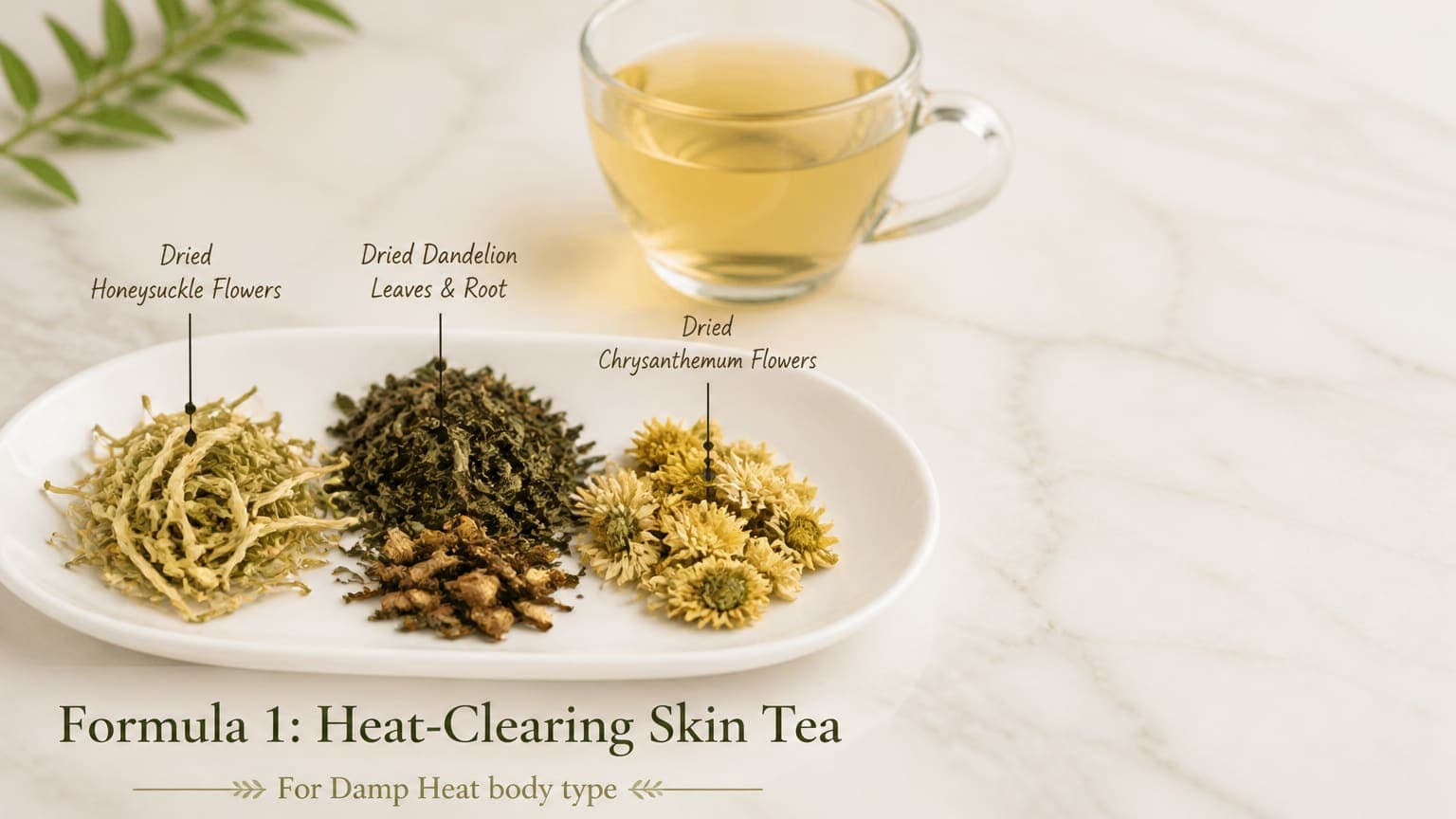
A cooling tea that directly addresses the damp-heat pattern behind inflamed, oily acne. Honeysuckle and dandelion work together to clear heat-toxin from the blood, while chrysanthemum guides the cooling action to the upper body and face.
Ingredients
| Ingredient | Amount | Role | Why This Herb |
|---|---|---|---|
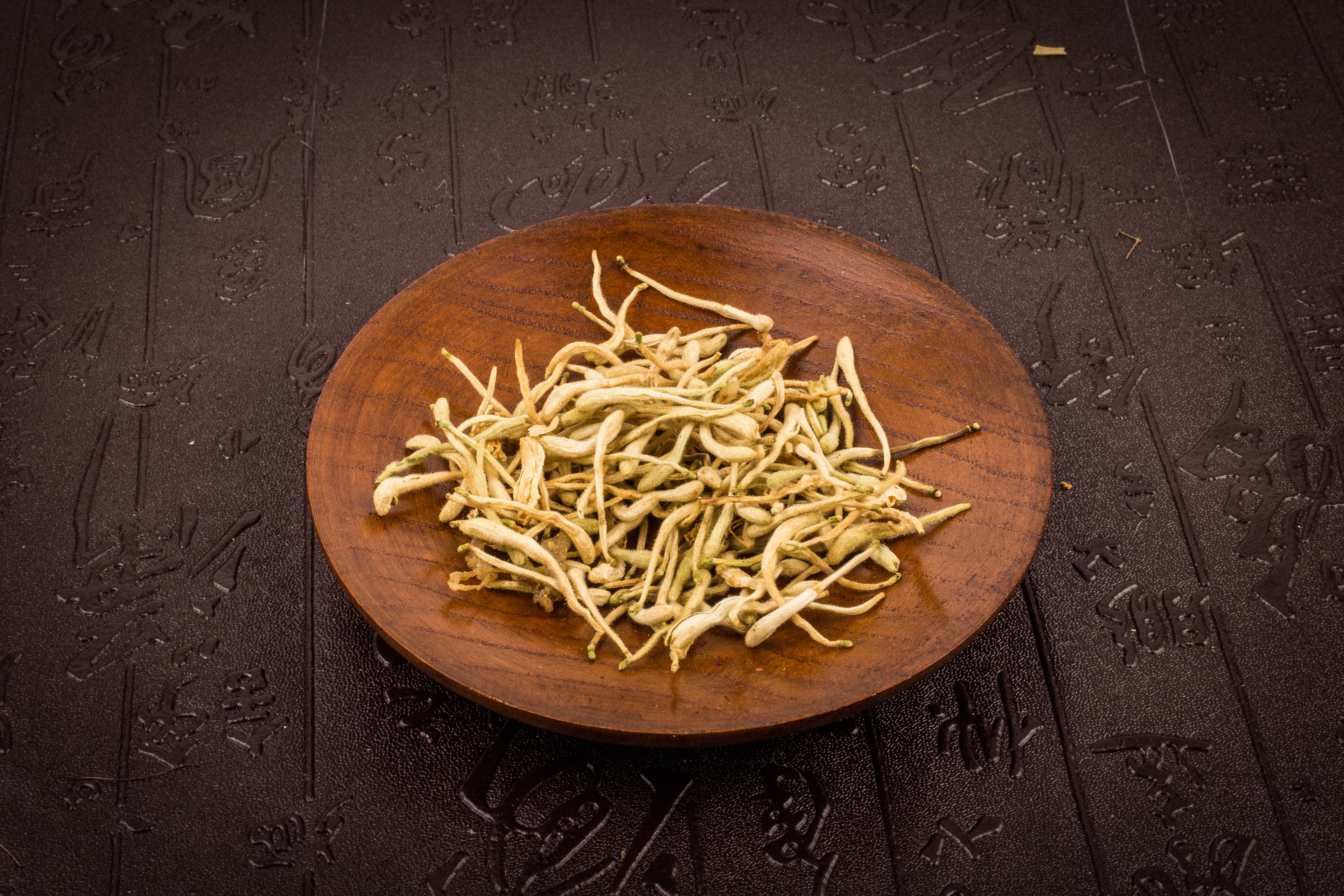 Honeysuckle(jin yin hua)→ Honeysuckle(jin yin hua)→ | 10g | Chief | The primary heat-clearing and toxin-resolving herb for skin conditions. Honeysuckle specifically targets heat in the blood level that manifests as red, inflamed skin eruptions. |
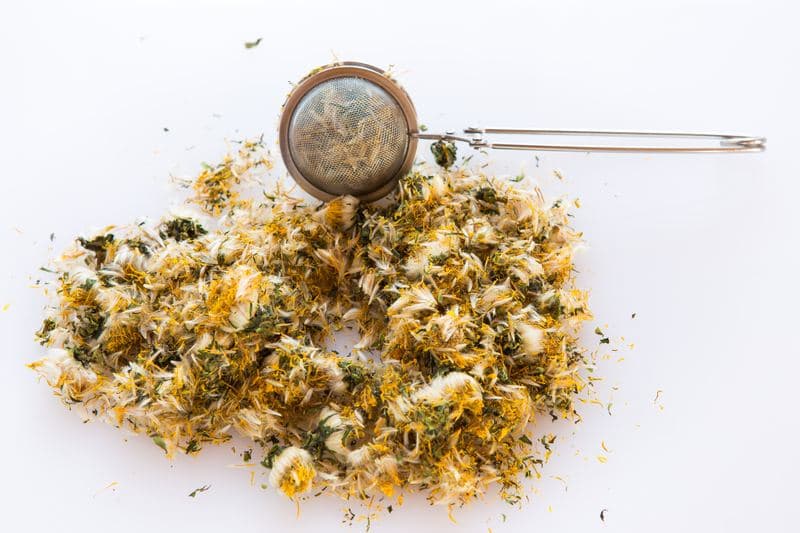 Dandelion(pu gong ying)→ Dandelion(pu gong ying)→ | 10g | Deputy | Strengthens the heat-clearing action of honeysuckle while adding a specific affinity for skin and breast tissue. Dandelion also drains dampness through urination, addressing the sticky component of damp-heat acne. |
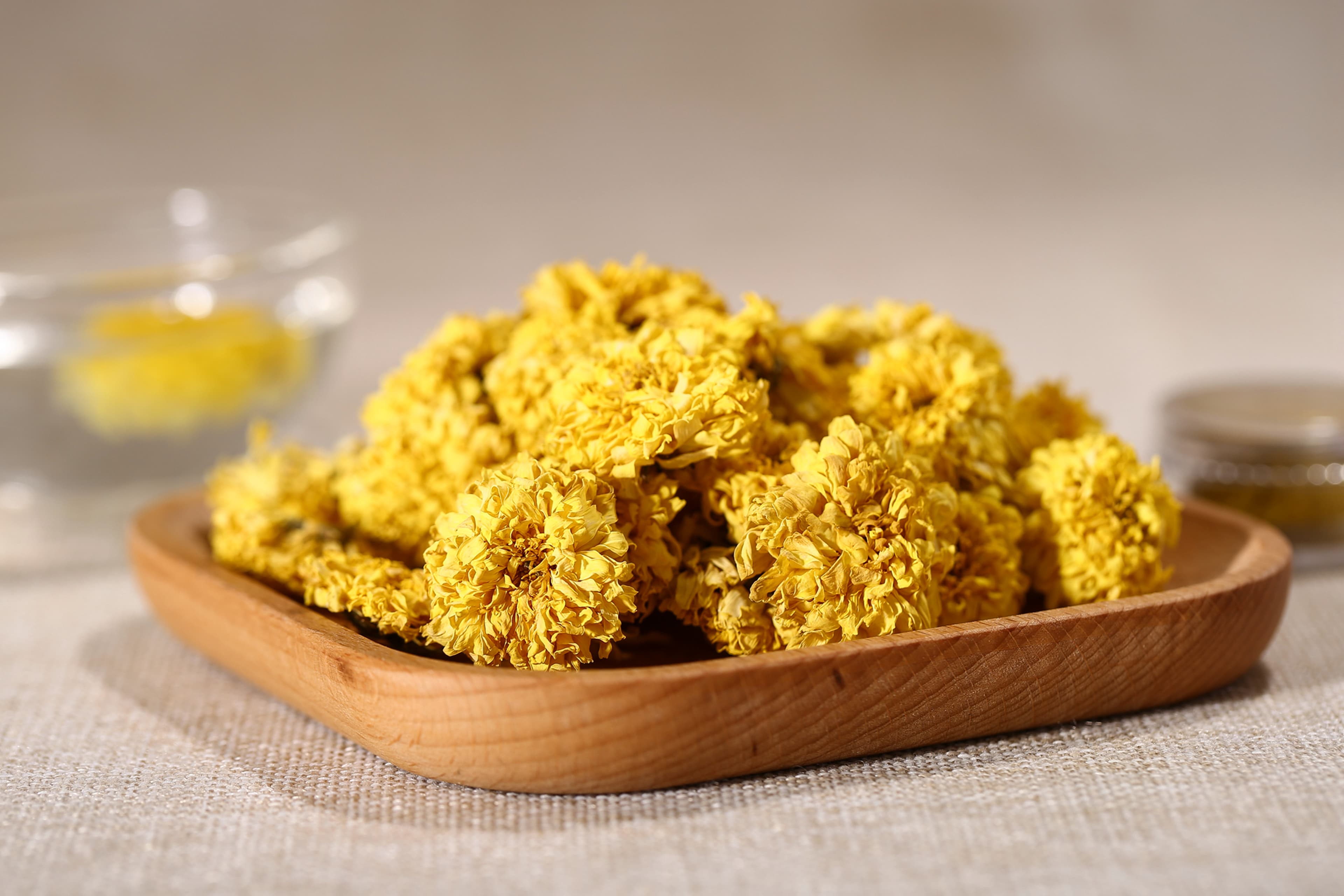 Chrysanthemum(ju hua)→ Chrysanthemum(ju hua)→ | 6g | Assistant | Guides the cooling herbs upward to the head and face where acne manifests. Chrysanthemum also clears liver heat that may be contributing to stress-related skin inflammation. |
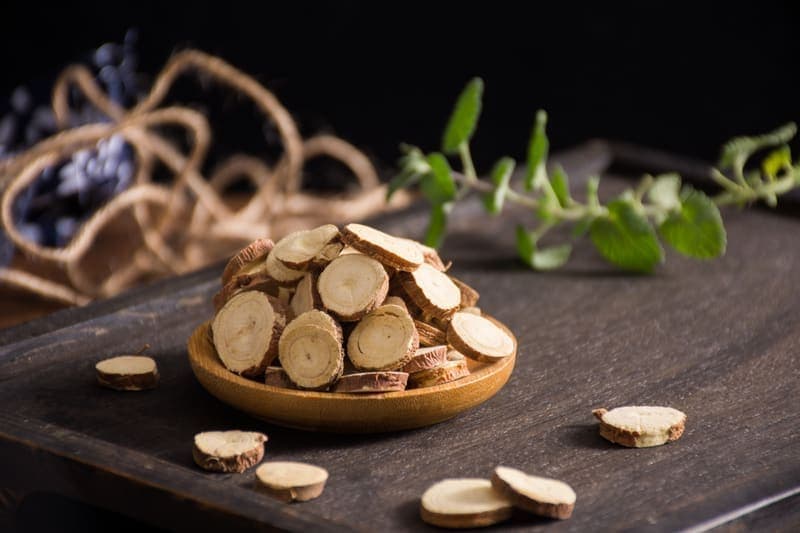 Licorice Root(gan cao)→ Licorice Root(gan cao)→ | 3g | Envoy | Harmonizes the three cooling herbs and moderates their cold nature to protect the stomach. Licorice also has anti-inflammatory properties that complement the skin-clearing action. |
How to Make It
- 1Rinse all herbs briefly under cold water.
- 2Place honeysuckle, dandelion, and licorice in a pot with 500ml of water.
- 3Bring to a boil, then reduce heat and simmer for 10 minutes.
- 4Add chrysanthemum in the last 3 minutes (do not overcook, as it loses its aromatic oils).
- 5Strain and divide into two cups. Drink one cup warm in the morning and one in the afternoon.
How to Take
Drink one cup in the morning and one in the afternoon, between meals. Continue for 2 to 3 weeks, then pause for 1 week before resuming if needed.
How Long
2 to 3 weeks per cycle
Taste
Light, slightly bitter, and refreshing. The chrysanthemum adds a floral note.
Yield
2 cups (2 servings) | Prep time: 15 minutes
Who Should Avoid This
- !Do not drink during menstruation if flow is heavy
- !Avoid if you have cold-type digestive patterns with loose stools
- !Reduce or discontinue if you experience loose stools or stomach discomfort
- !Not suitable during pregnancy without professional guidance
Blood-Moving Complexion Tea
活血容颜茶|Huo Xue Rong Yan Cha
Classical Source: Blood-invigorating tradition from Bencao Gangmu
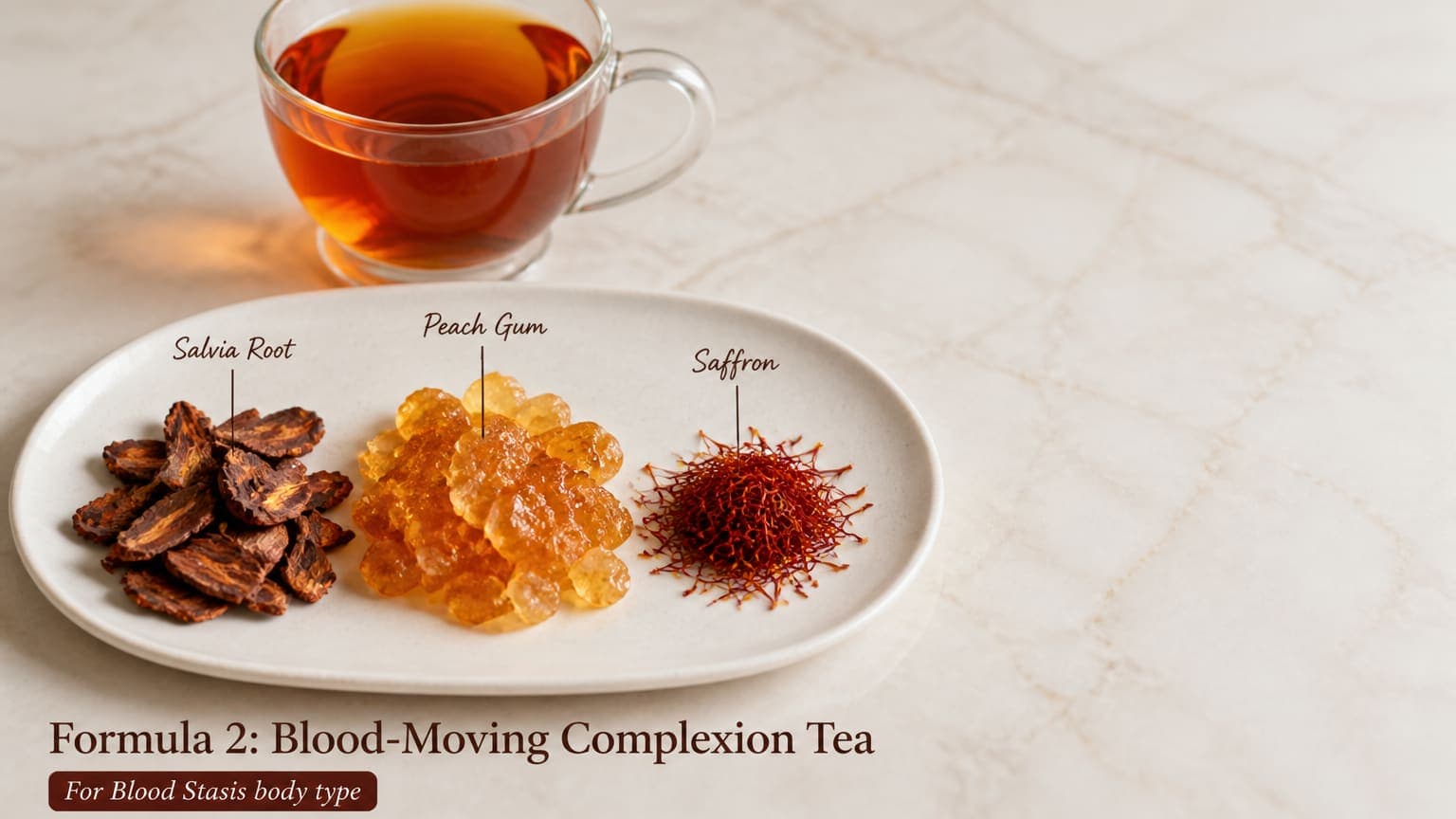
A tea that addresses deep, slow-healing acne by improving blood circulation to the skin. Dan shen moves stagnant blood while peach gum provides deep moistening, and saffron targets the specific blood stasis that produces dark, purplish acne marks.
Ingredients
| Ingredient | Amount | Role | Why This Herb |
|---|---|---|---|
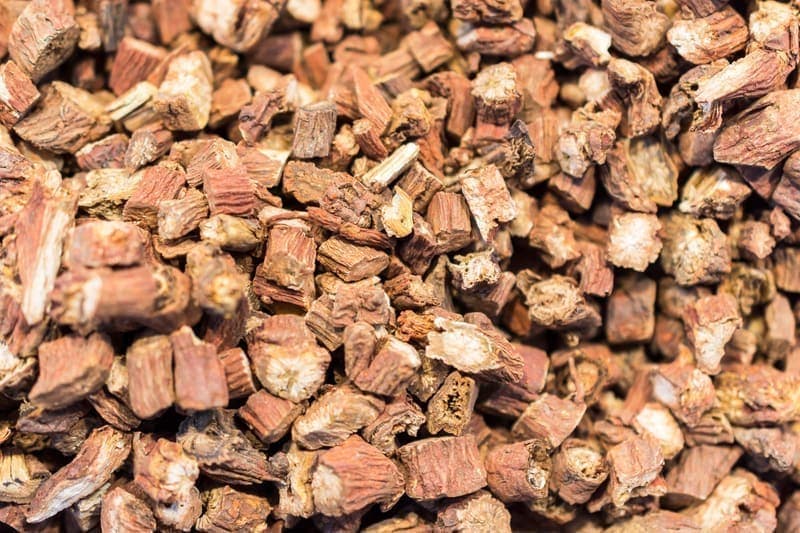 Salvia Root(dan shen)→ Salvia Root(dan shen)→ | 6g | Chief | The primary blood-invigorating herb for the skin. Dan shen moves stagnant blood in the smaller vessels that nourish the face, helping dark marks and deep cysts resolve faster. |
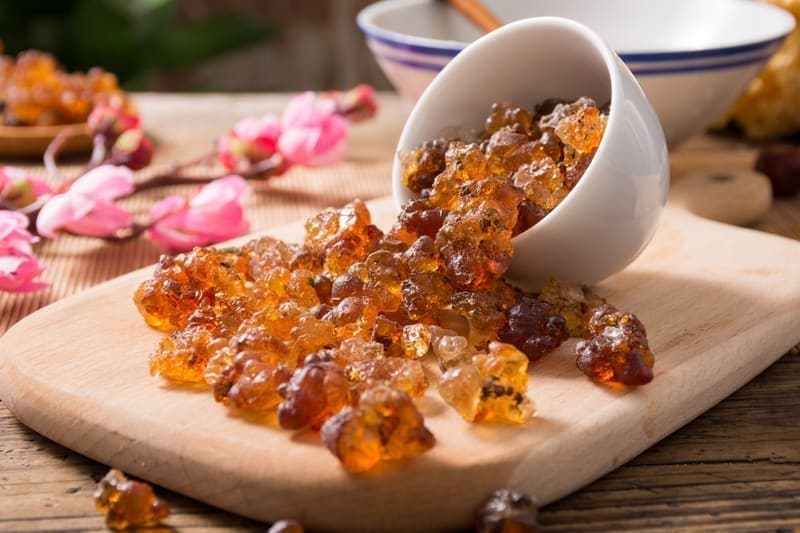 Peach Gum(tao jiao)→ Peach Gum(tao jiao)→ | 5g | Deputy | Provides gelatinous moistening that counteracts the drying nature of blood-moving herbs. Peach gum also helps the skin retain moisture from within, supporting the healing of acne scars. |
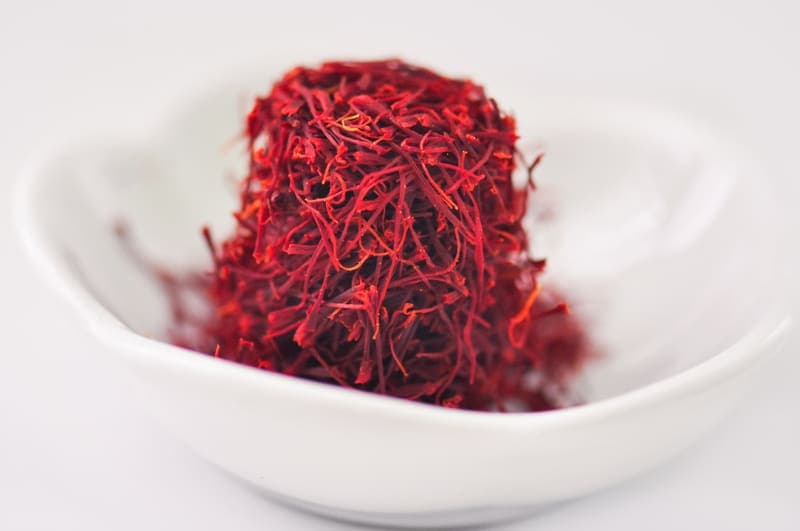 Saffron(zang hong hua)→ Saffron(zang hong hua)→ | 5-10 threads | Assistant | A potent blood-moving herb that specifically targets blood stasis in the face. Saffron helps break down the dark, purplish pigmentation that lingers after deep acne heals. |
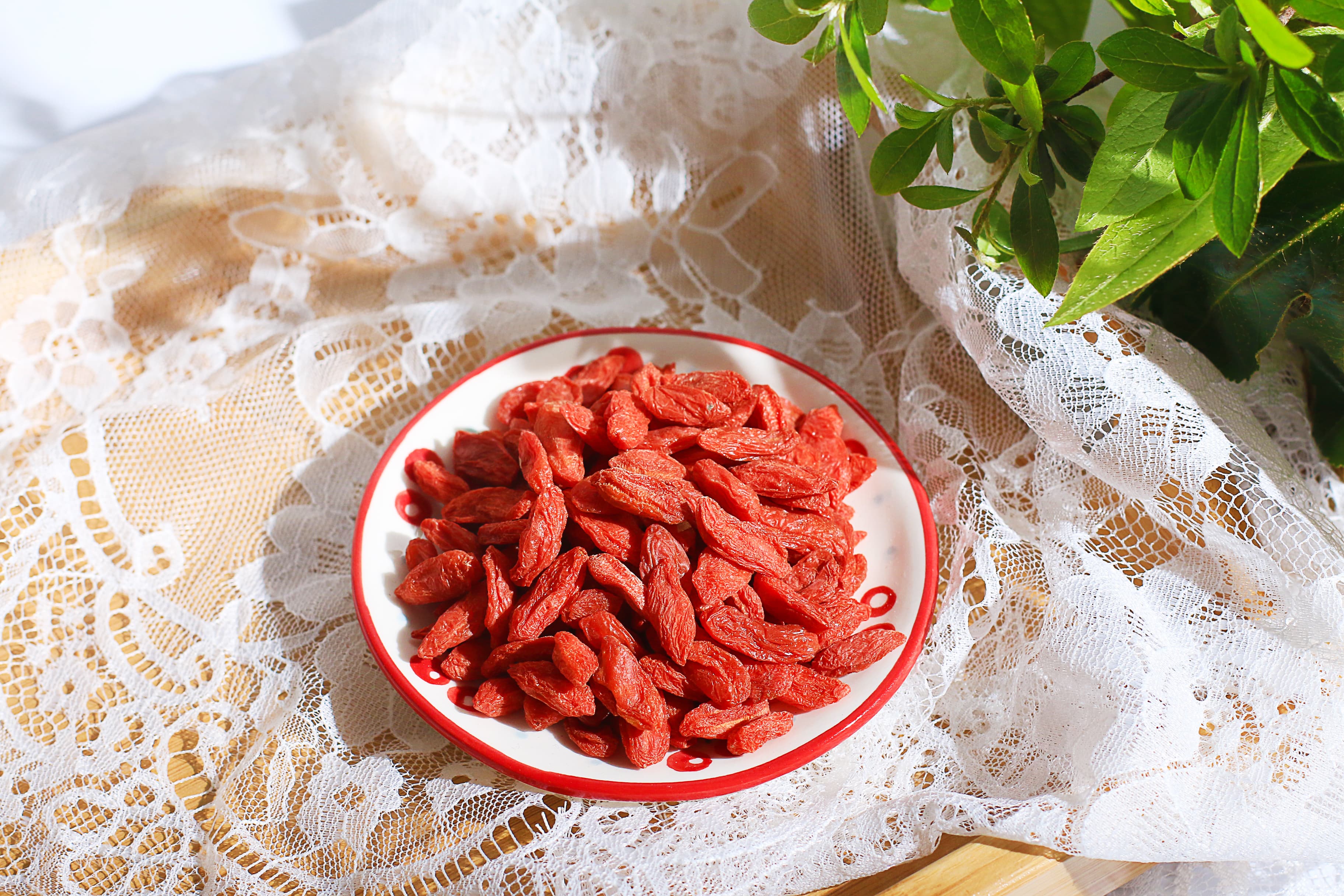 Goji Berries(gou qi zi)→ Goji Berries(gou qi zi)→ | 10g | Envoy | Nourishes the blood and liver to support the overall circulation improvement. Goji also adds natural sweetness to balance the slightly bitter taste of dan shen. |
How to Make It
- 1Soak peach gum in cold water for 6 to 8 hours until fully expanded. Remove any impurities.
- 2Place dan shen, saffron, and goji berries in a pot with 400ml of water.
- 3Bring to a boil, then simmer for 15 minutes.
- 4Add the soaked peach gum and simmer for 5 more minutes.
- 5Strain into a cup and drink warm. Eat the softened peach gum and goji berries.
How to Take
Drink once daily, preferably in the evening. Continue for 4 to 6 weeks for visible improvement in dark marks and skin texture.
How Long
4 to 6 weeks
Taste
Mild, slightly sweet, with a golden color from the saffron and goji.
Yield
1 cup (1 serving) | Prep time: 20 minutes (plus 6-8 hours soaking for peach gum)
Who Should Avoid This
- !Do not take during pregnancy (saffron is contraindicated)
- !Avoid if you have a bleeding disorder or take blood-thinning medications
- !Discontinue during menstruation if flow becomes heavier
- !Not suitable for those with no blood stasis pattern
Stress-Breakout Calming Tea
疏肝清疮茶|Shu Gan Qing Chuang Cha
Classical Source: Liver-soothing tradition from Xiao Yao San
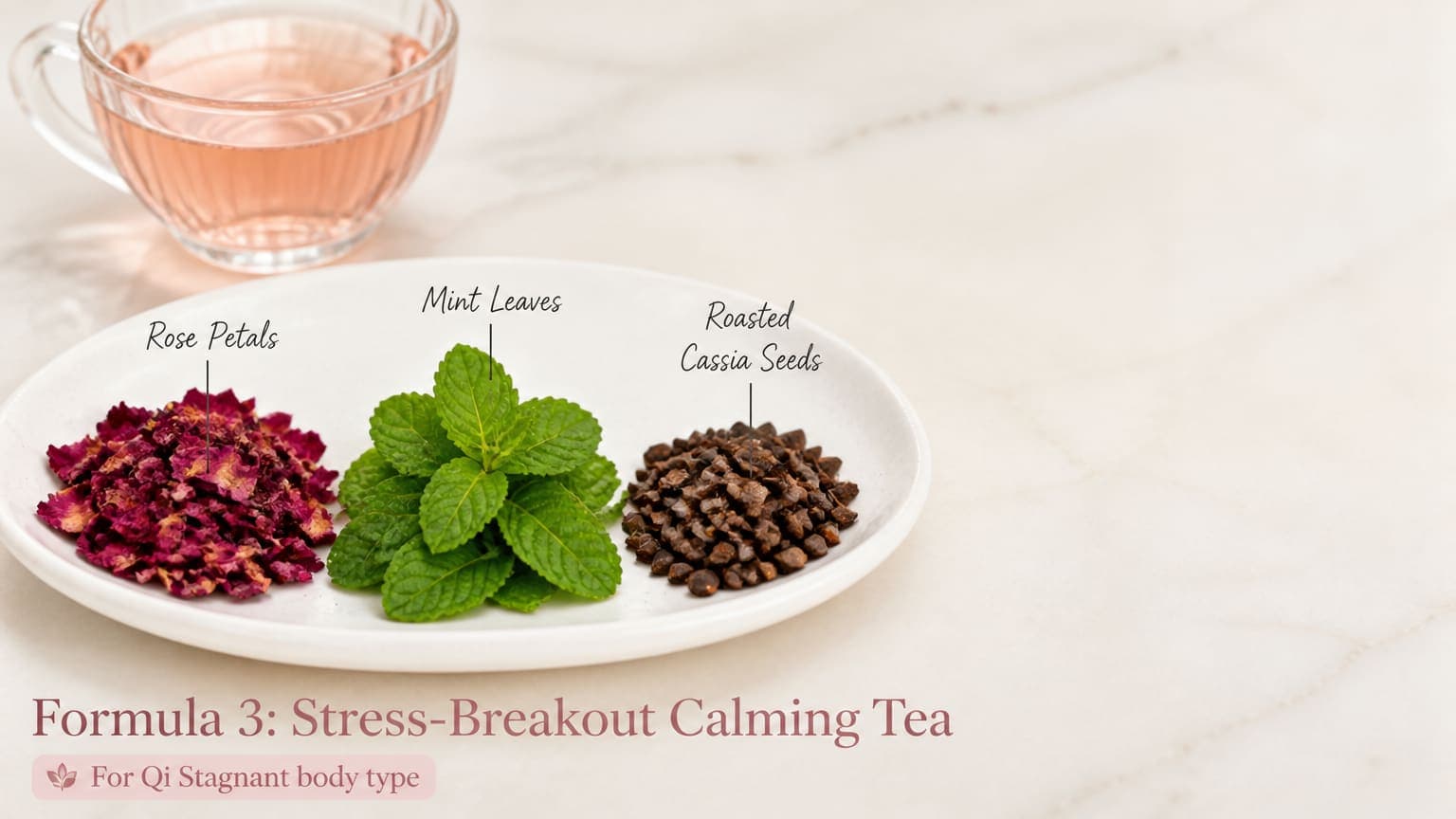
A tea for acne that flares with stress, particularly along the jaw and chin. Rose petals soothe the liver qi that is generating the internal pressure, while mint disperses the heat that rises to the face, and cassia seed clears the liver heat that links emotional tension to skin breakouts.
Ingredients
| Ingredient | Amount | Role | Why This Herb |
|---|---|---|---|
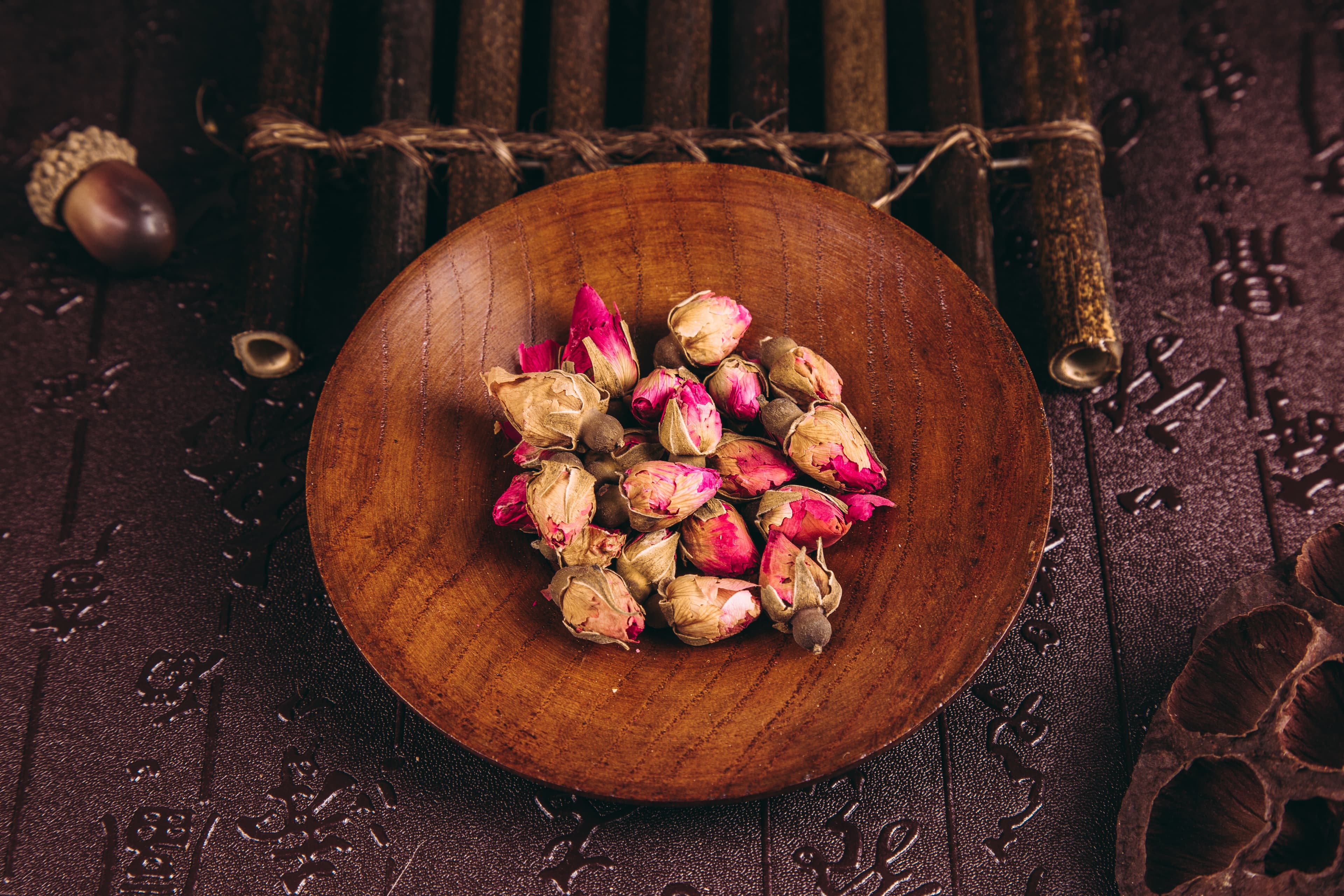 Rose Petals(mei gui)→ Rose Petals(mei gui)→ | 5g | Chief | The primary liver-soothing herb for stress-related conditions. Rose petals move the stuck liver qi that generates the internal pressure behind stress acne, particularly along the jawline. |
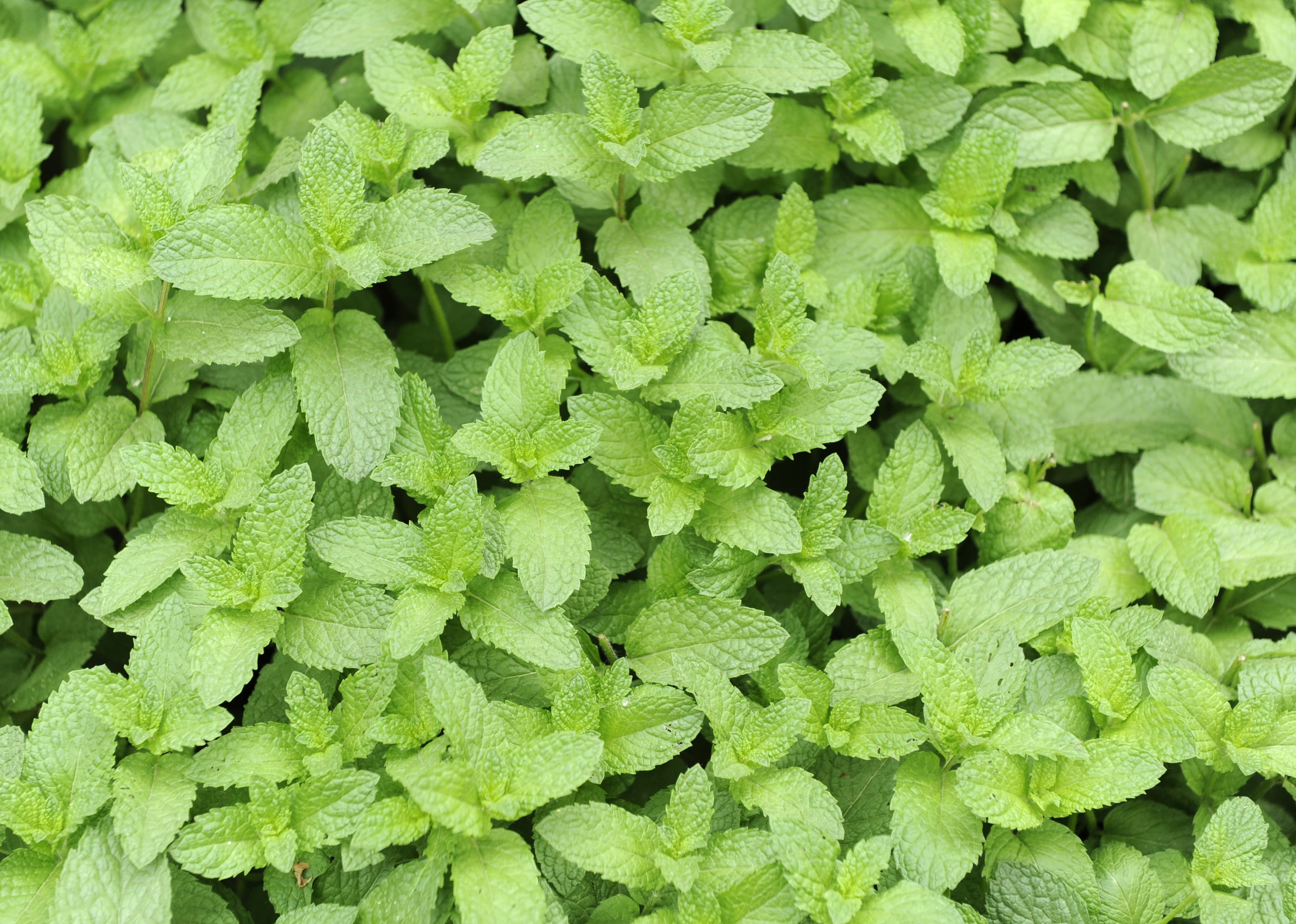 Mint(bo he)→ Mint(bo he)→ | 6g | Deputy | Disperses the heat that liver stagnation generates, pushing it outward through the surface rather than letting it accumulate in the face. Mint also has a refreshing, lifting quality that relieves the foggy-headedness of stress. |
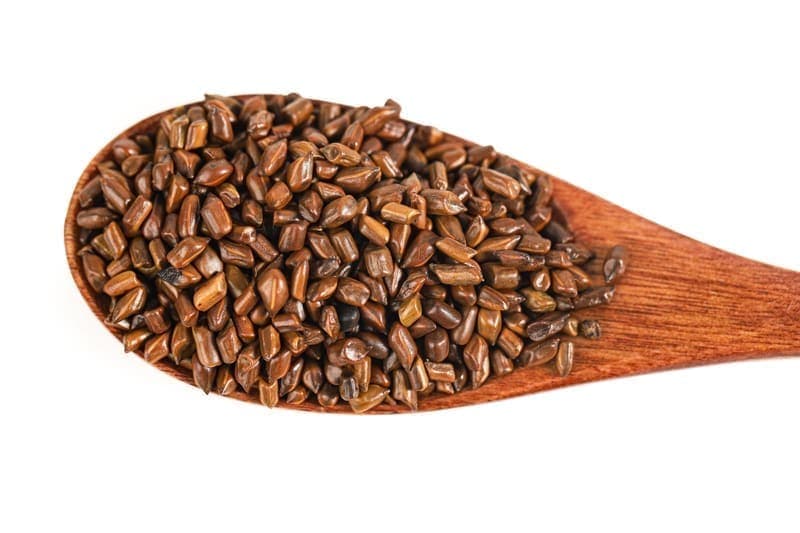 Cassia Seed(jue ming zi)→ Cassia Seed(jue ming zi)→ | 10g | Assistant | Clears liver heat specifically, addressing the root of stress-driven skin inflammation. Cassia seed also benefits the eyes, which are often strained during periods of stress that trigger breakouts. |
| Licorice Root(gan cao)→ | 3g | Envoy | Harmonizes the formula and supports the spleen, which can be weakened by the liver qi stagnation pattern. |
How to Make It
- 1Lightly roast cassia seeds in a dry pan until fragrant, about 2 minutes.
- 2Place roasted cassia seeds and licorice in a pot with 400ml of water.
- 3Bring to a boil, then simmer for 10 minutes.
- 4Add rose petals and mint in the last 3 minutes (do not overcook).
- 5Strain and drink warm. The aroma itself is calming.
How to Take
Drink once daily, ideally in the afternoon when stress and liver heat tend to peak. Continue through stressful periods or for 3 to 4 weeks.
How Long
3 to 4 weeks or through stressful periods
Taste
Floral, aromatic, and refreshing. The rose and mint create a calming fragrance.
Yield
1 cup (1 serving) | Prep time: 15 minutes
Who Should Avoid This
- !Avoid if you have cold-type digestive patterns
- !Reduce if you experience loose stools from the cooling herbs
- !Safe for regular use during non-pregnant periods
- !Discontinue during acute cold with chills
Which Formula Is Right for You?
Each formula targets a specific body type. Taking the 3-minute body type quiz is the fastest way to find your match and get personalized recommendations.
Take the Free Body Type Quiz >Frequently Asked Questions
How long until I see changes in my skin?
Chinese medicine works from the inside out, so changes are gradual rather than immediate. For damp-heat acne (Formula 1), reduced redness and oiliness may appear within 1 to 2 weeks. For blood stasis acne (Formula 2), dark marks and deep cysts typically take 4 to 6 weeks to show visible improvement. For stress-related acne (Formula 3), fewer new breakouts may appear within 2 to 3 weeks, particularly if you also manage the underlying stress. Consistency matters more than intensity. Daily, moderate use over several weeks is more effective than intense, short-term use.
Can I drink these teas while using topical acne treatments?
Yes. These teas work internally while topical treatments work externally, so they address different aspects of the problem simultaneously. There are no known interactions between these food-grade herbs and standard topical acne ingredients like benzoyl peroxide, salicylic acid, or retinoids. However, if you are taking oral medications such as antibiotics or isotretinoin, consult your doctor before adding herbal teas, as some herbs may affect how your body processes certain medications.
Which foods should I avoid while taking these herbs?
For all three acne patterns, reduce spicy foods, deep-fried foods, excessive sugar, and alcohol, as these feed the internal heat and dampness that drive breakouts. For damp-heat acne specifically, also reduce dairy and greasy foods. For blood stasis acne, add more warming, blood-moving foods like ginger tea and dark-colored berries. For stress acne, avoid excessive caffeine, which amplifies the liver heat that stress generates. In general, a diet of warm, cooked, lightly seasoned foods supports all three formulas.
Will these herbs help with acne scars and dark marks?
Formula 2 (Blood-Moving Complexion Tea) is specifically designed for the dark, slow-healing marks that follow deep acne. The dan shen and saffron in this formula improve blood circulation to the skin, which may help the body clear pigmentation faster. However, acne scars that involve physical textural changes (pitted or raised scars) are structural and may not respond to internal herbs alone. For textural scarring, professional dermatological procedures are more effective.
Which body type is causing my acne?
The most reliable way to determine your body type is to take the free EastType body type quiz, which maps your symptoms to one of nine constitutional patterns. As a quick guide: if your acne is red, inflamed, and oily, it may be damp heat. If it is deep, purplish, and slow to heal, it may be blood stasis. If it flares along the jawline during stressful periods, it may be qi stagnation. Many people have a mixed pattern, which the quiz can help identify.
This content is for educational and informational purposes only and is not medical advice. The herbal formulas described here use food-grade ingredients traditionally consumed in Chinese culture. Always consult a qualified healthcare professional before starting any herbal regimen, especially if you are pregnant, nursing, taking medications, or managing a health condition. Individual results may vary.