SeasonalAug 8, 2026

Why Your Hair Sheds More in Autumn: How Your Body Type May Hold the Answer

If your brush fills up faster every September, you are not imagining it. Autumn hair shedding is real, and your Chinese medicine body type may explain why it hits some people harder than others.

The Brush Does Not Lie

It starts around the second week of September. You run a hand through your hair and three strands come away. You brush in the morning and the brush is fuller than usual. The shower drain has more hair in it than you are comfortable looking at. You check your scalp in the mirror, half convinced you are going bald, and then by October it slows down and you forget about it until next year. This is not in your head. Seasonal hair shedding in autumn is one of the most documented patterns in both dermatology and traditional Chinese medicine. Clinics see a spike in hair loss consultations every September and October. Research suggests people shed roughly twice as many hairs per day during peak autumn compared to summer. But the interesting part is not that everyone sheds more. It is that some people shed a little more, barely noticing, while others lose handfuls and genuinely panic. Chinese medicine has a framework for this difference. Two principles sit at the center: hair is considered the surplus of blood, and the kidneys are said to show their vitality through the hair. When autumn arrives and the air turns dry, the body types whose blood or kidney reserves are already thin are the ones whose hair pays the price first. This guide walks through how each of the nine body types experiences autumn hair shedding, what makes some types more vulnerable than others, and what may help you support your hair through the transition.

Curious which body type you are? Take the free 5-minute quiz.

Take the Free Quiz

How Autumn Affects Hair Across Body Types
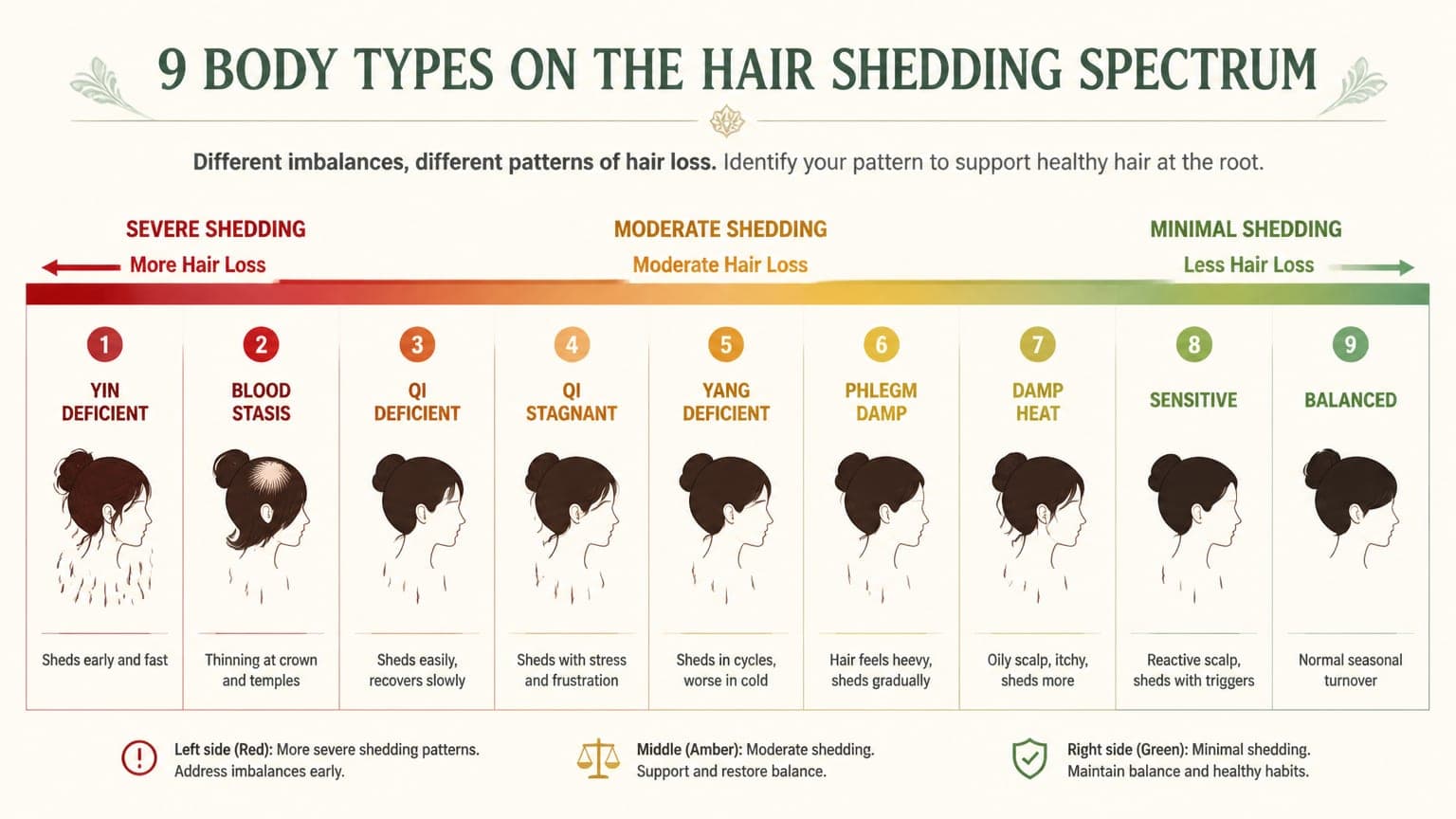
Autumn hair shedding risk by body type

The Nine Body Types and Autumn Hair Shedding

Body TypeShedding PatternScalp ConditionRisk Level
Yin DeficientSheds early and fastDry, flaky, itchy★★★★★
Blood StasisThinning at crown and templesTight, poor circulation★★★★☆
Qi DeficientSlow, thin strandsPale, low energy★★★★☆
Qi StagnantPatchy, stress-triggeredNormal but tense★★★☆☆
Yang DeficientDry, brittle hairCold, sluggish circulation★★★☆☆
Phlegm DampOily sheddingGreasy, clogged follicles★★★☆☆
Damp HeatInflamed shedding with dandruffRed, itchy, irritated★★★☆☆
SensitiveReactive sheddingIrritated, flares with changes★★☆☆☆
BalancedNormal seasonal turnoverHealthy, resilient★☆☆☆☆

Hair Shedding Severity by Body Type

Three body types face high to moderate risk of noticeable autumn hair shedding. The remaining six either shed within normal range or barely notice the change. The difference comes down to whether the body has enough blood and kidney reserve to keep the hair rooted when the season turns dry.

Yin Deficient
2/10
Blood Stasis
3/10
Qi Deficient
4/10
Qi Stagnant
5/10
Yang Deficient
5/10
Phlegm Damp
5/10
Damp Heat
6/10
Sensitive
7/10
Balanced
9/10

Your body type may explain why your hair reacts to autumn the way it does. Take the free 5-minute quiz to find out which of the nine constitutions you are, and what it means for your hair, your skin, and your energy through every season.

Take the Free Quiz

The Types That Shed Most

Two body types account for most of the autumn hair loss that sends people to the mirror in a panic. If you belong to either, the arrival of dry, cool air is a signal to start supporting your hair from the inside, not just switching shampoos.

Yin Deficient: When Dryness Reaches the Root

Yin Deficient types are the most vulnerable to autumn hair shedding, and it usually starts earlier than for other types. The scalp is an extension of the skin, and the hair root depends on moisture and blood to stay anchored. When your body already runs warm and dry, the drop in humidity that comes with autumn pulls moisture from every surface, including the scalp. The scalp may feel tight, itchy, and flaky. The hair may lose its shine before the shedding even begins, because the root is running on empty. What makes this worse is that Yin Deficient types often sleep poorly, and the deepest repair of blood and hair happens during sleep. A cycle forms: dryness disrupts sleep, poor sleep reduces blood production, and thin blood cannot hold the hair. What may help: moistening foods like black sesame, mulberry, lily bulb, and pear. Avoid anything that dries you further, including spicy food, late nights, and very hot showers. Aim for sleep before 11 PM, and consider adding a spoonful of black sesame powder to your morning routine through September and October.

Blood Stasis: When the Scalp Cannot Feed the Follicle

Blood Stasis types shed for a different reason. The blood may be present, but it is not moving. The scalp is the farthest point from the heart, and if circulation is sluggish, the hair follicles sit at the end of a supply line that is not delivering. The scalp may feel tight or tender when you press it. Hair thinning often appears at the crown and temples first, because those areas have the weakest blood supply to begin with. Autumn makes this worse because cold constricts blood vessels. As the temperature drops, the scalp gets even less circulation, and the hair that was already hanging on by a thread lets go. What may help: foods that invigorate blood circulation, including walnuts, peach kernel, and a small amount of dark chocolate or hawthorn. Gentle scalp massage with warm fingers for two minutes each morning may help bring blood to the surface. Avoid sitting still for long stretches, and keep the head and neck warm as the weather cools.

The Types That Shed Moderately

Three body types experience autumn shedding in a milder form. The hair thins, the brush fills up a bit more than usual, but it does not reach the level of panic. These types can usually manage the shedding with dietary adjustments and a few habit changes.

Qi Deficient: When the Root Is Underfed

Qi Deficient types shed because the body lacks the energy to produce blood efficiently. If blood is the soil that feeds the hair, Qi is the farmer. When the farmer is exhausted, the soil goes untilled and the crop suffers. The hair may grow slowly, come out in thin strands, and lack body. The scalp may look pale. Unlike Yin Deficient shedding, which is driven by dryness, Qi Deficient shedding is driven by sheer exhaustion. It tends to worsen during periods of stress, poor appetite, or after illness. What may help: Chinese yam, jujube dates, black bean, and goji berry. These are gentle, nourishing foods that support the body's ability to produce blood over time. Avoid skipping meals, overexercising, and staying up late, all of which deepen the deficit.

Phlegm Damp: When Oil Smothers the Root

Phlegm Damp types face a different problem entirely. Their scalp produces too much oil, and the excess sebum can clog the hair follicle, weaken the root, and cause hair to fall out before its natural cycle is complete. The hair may feel greasy by the end of the day, and the shedding often comes with a heavy, waxy feeling on the scalp. This type of shedding does not worsen dramatically in autumn, but it does not improve either. The cooler air reduces sweating, which means the oil sits on the scalp longer instead of being flushed out. What may help: foods that reduce dampness and oil, including coix seed, mung bean, and celery. Avoid dairy, fried food, and sweets, which all increase the body's tendency to produce phlegm and oil. Wash the scalp with warm, not hot, water, and avoid heavy styling products that add to the buildup.

The Types That Barely Notice

If you are Balanced, you will still shed more hair in autumn than in summer. This is normal. The hair growth cycle includes a natural shedding phase, and seasonal turnover is a sign that the body is responding to changes in light and temperature. For Balanced types, the shedding stays within the normal range of 50 to 100 hairs per day and resolves on its own within four to six weeks. No special intervention is needed beyond basic scalp care and a healthy diet.

Autumn Foods That May Support Hair Health
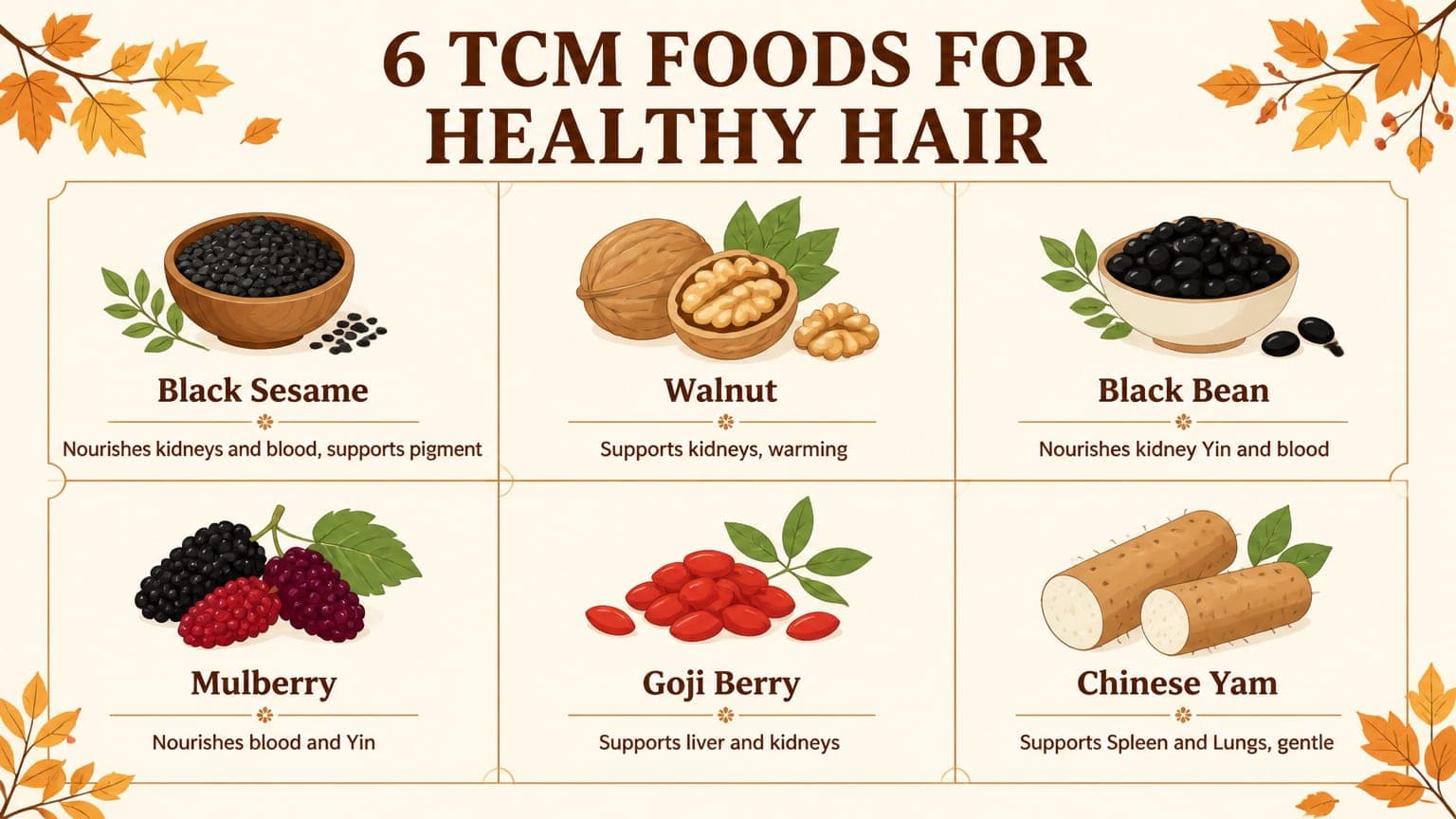
Six autumn hair-supporting foods

Foods That May Support Hair Through Autumn

  • Black sesame. The single most recommended food for hair in Chinese medicine. It nourishes the kidneys and blood, and its dark color is traditionally associated with hair pigment. A spoonful of ground black sesame each morning is a simple autumn habit.
  • Walnut. Walnuts support the kidneys and are considered a brain and hair food in TCM. Their warming nature makes them suitable for Yang Deficient and Qi Deficient types. Four to five walnuts a day is enough.
  • Black bean. Black beans nourish kidney Yin and blood. They are gentle enough for daily use and may be added to soups, stews, or rice. Their dark skin contains anthocyanins, which support circulation to the scalp.
  • Mulberry. Fresh or dried, mulberries nourish blood and Yin. They are particularly suited to Yin Deficient and Blood Stasis types. A small handful of dried mulberries can be soaked in warm water and drunk as a light tea.
  • Goji berry. Goji berries support both the liver and kidneys, the two organ systems most connected to hair health in TCM. Add a teaspoon to tea, congee, or oatmeal. Avoid large amounts if you tend to run warm, as they are slightly warming.
  • Chinese yam. Also known as shan yao, it supports the Spleen and Lungs, the organs responsible for producing the Qi that eventually becomes blood. It is the most gentle and versatile food on this list, suitable for every body type.

Black Sesame and Walnut Paste: A Step-by-Step Hair Recipe

Black sesame and walnut paste is one of the oldest and simplest hair-supporting recipes in Chinese households. It takes ten minutes of active time and requires no special equipment beyond a pan and a grinder. The combination of black sesame, walnut, and black bean provides the three things the hair root needs most in autumn: moisture, oil, and blood-building nutrition. Here is how to make it.

  1. 1

    Measure the ingredients

    You will need half a cup of black sesame seeds, a quarter cup of walnut halves, and two tablespoons of dried black beans. This makes enough powder for about one week of daily servings. All three ingredients can be found in Asian grocery stores or online.

  2. 2

    Toast the black sesame seeds

    Place a dry pan over low heat. Add the sesame seeds and stir constantly for 3 to 4 minutes. They are done when they become fragrant and a few begin to pop. Do not use oil. Do not walk away, because sesame seeds burn quickly and burnt sesame tastes bitter and loses its beneficial properties. Transfer to a plate to cool.

  3. 3

    Toast the walnuts

    In the same dry pan over low heat, add the walnut halves. Stir for 2 to 3 minutes until they become fragrant and slightly darker. Walnuts burn even faster than sesame, so keep the heat low and the pan moving. Break them into smaller pieces as they toast. Transfer to the plate with the sesame.

  4. 4

    Toast the black beans

    Add the dried black beans to the dry pan over medium heat. Stir for 5 to 6 minutes. The skins will begin to crack and split open, and the beans will give off a nutty aroma. This step is important because raw black beans are hard to digest. Let them cool on the plate with the other ingredients.

  5. 5

    Grind into a fine powder

    Once all three ingredients are completely cool, transfer them to a spice grinder, coffee grinder, or food processor. Grind for 30 to 60 seconds until you have a fine, dark powder. The texture should resemble coarse flour. Do not over-grind the walnuts, or they will release their oil and turn the powder into a paste.

  6. 6

    Store in an airtight jar

    Transfer the powder to a clean, dry glass jar with a tight lid. Store at room temperature in a dark cupboard. The powder will keep for up to two weeks. Do not refrigerate, because moisture will cause it to clump and spoil.

  7. 7

    Make a daily serving

    Each morning, put one tablespoon of the powder in a small bowl. Add just enough warm water to make a smooth paste, stirring to remove lumps. Then add more warm water or warm milk to thin it to your preferred consistency. Sweeten with a teaspoon of honey. Drink it warm, not hot, ideally before breakfast.

  8. 8

    Be patient with the results

    Hair grows slowly, and the effects of dietary changes show up over weeks, not days. A daily spoonful of this paste through September and October may support the hair root from within. If you notice less shedding after three to four weeks, you are on the right track. If not, your body type may need a different approach.

Things to Keep in Mind About the Paste

  • Do not add sugar. White sugar is considered drying in TCM, which works against the moistening purpose of the sesame and walnut. Honey is the preferred sweetener because it is moistening and gentle on the Lungs.
  • If you run cold, add ginger. Yang Deficient types may find the paste too cooling if eaten raw. A tiny pinch of ginger powder stirred in with the warm water can balance the temperature without changing the flavor much.
  • If you have oily scalp, reduce the walnut. Phlegm Damp and Damp Heat types should use less walnut and more black bean, since walnuts are oily and may increase scalp sebum. Adjust the ratio to one tablespoon walnut and three tablespoons black bean.
  • Consistency matters more than quantity. A small daily serving for four weeks is more effective than a large batch once a week. The hair root responds to steady nutrition, not occasional floods.

Autumn Hair Care Habits Beyond Food
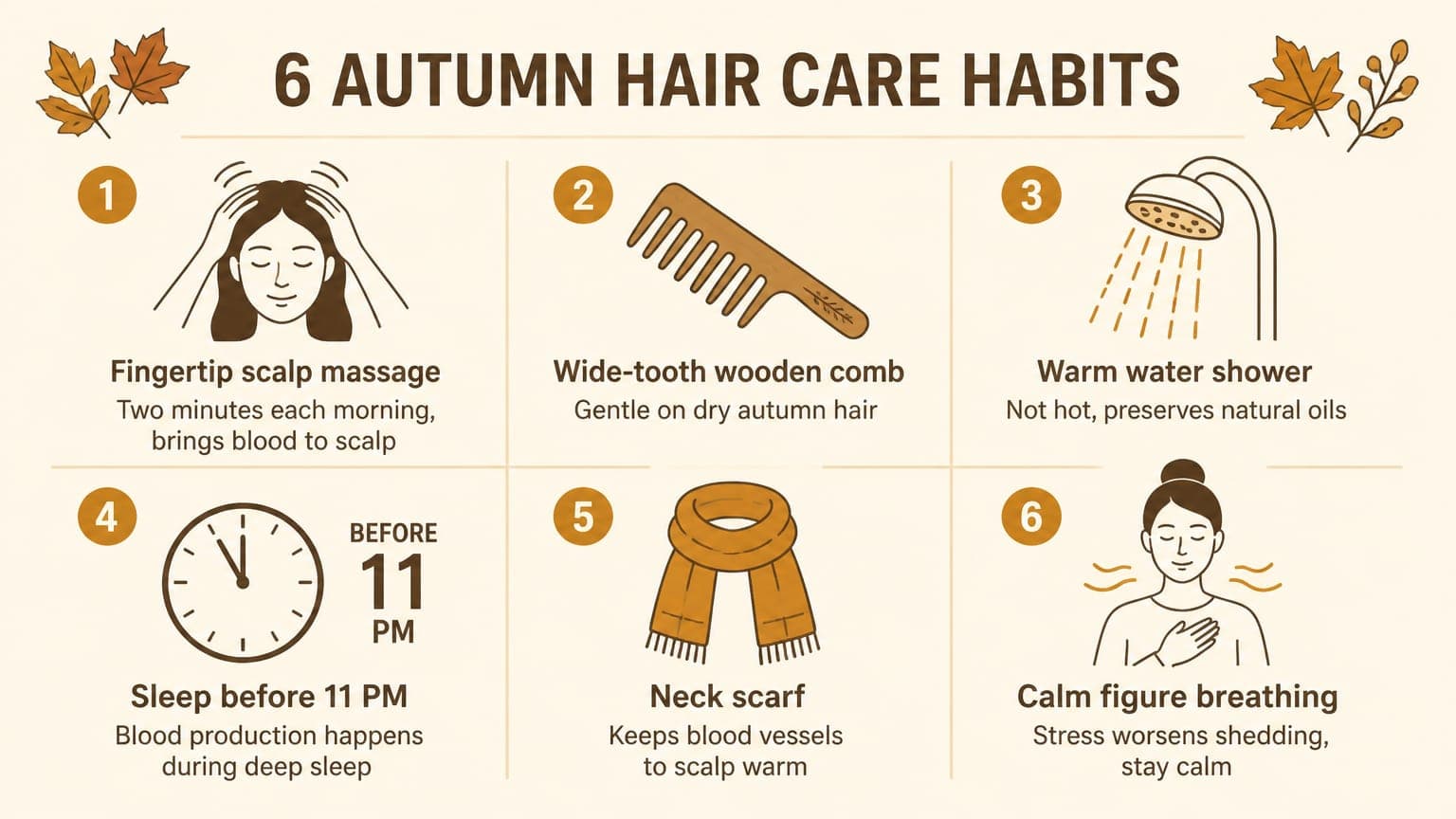
Six autumn hair care habits

Daily Habits for Autumn Hair Care

  • Massage your scalp each morning. Use the pads of your fingers, not your nails, and press in small circles for two minutes. This may help bring blood to the scalp surface, which is especially important for Blood Stasis and Yang Deficient types.
  • Switch to a wide-tooth wooden comb. Plastic combs create static and pull on dry autumn hair. A wooden comb glides more gently and distributes natural oils from the scalp down the hair shaft.
  • Wash with warm, not hot, water. Hot water strips the scalp of its natural oils and worsens the dryness that drives autumn shedding. Warm water cleans without disrupting the protective layer.
  • Sleep before 11 PM. The body produces blood and repairs tissue during deep sleep, and the hours before midnight are considered the most restorative in TCM. If your hair is shedding, sleep is the first thing to fix, before any food or supplement.
  • Keep your neck warm. The back of the neck is where blood vessels travel to the scalp. Cold constricts them, reducing blood flow to the hair root. A light scarf in autumn is practical hair care, not just fashion.
  • Do not panic. Stress worsens shedding, especially for Qi Stagnant types. Seasonal shedding is temporary. Most people see it slow down by late October. If you are losing more than 150 hairs a day for more than six weeks, consider consulting a dermatologist.

Related Articles

Frequently Asked Questions

Is autumn hair shedding normal?+
Yes. Seasonal shedding in autumn is a well-documented pattern. Most people shed 50 to 100 hairs per day normally, and this may double during peak autumn. If the shedding slows down within four to six weeks, it is likely seasonal and not a sign of permanent hair loss.
Why does my hair shed more in autumn than spring?+
In Chinese medicine, autumn is the season of dryness, and the hair root depends on moisture and blood to stay anchored. When the air loses humidity, the scalp loses moisture faster, and the root weakens. Spring, by contrast, is a season of rising energy and renewal, which tends to support hair growth.
Which body type is most affected by autumn hair shedding?+
Yin Deficient types are the most vulnerable, because their bodies already run warm and dry. When autumn reduces external moisture, the scalp dries out faster and the hair root loses its grip. Blood Stasis types are also at high risk because poor circulation prevents the scalp from receiving the blood it needs.
Does black sesame really help with hair loss?+
Black sesame is one of the most traditional hair-supporting foods in Chinese medicine. It nourishes the kidneys and blood, which are the two systems most connected to hair health. While it is not a quick fix, a daily spoonful over several weeks may support the hair root from within, especially for Yin Deficient and Qi Deficient types.
Should I wash my hair less in autumn to prevent shedding?+
Not necessarily. Washing frequency depends on your scalp type. Phlegm Damp and Damp Heat types may need to wash daily to remove excess oil. Yin Deficient and Balanced types may benefit from washing every other day to preserve natural oils. The key is using warm, not hot, water and a gentle, sulfate-free shampoo.
When should I see a doctor about hair loss?+
If you are shedding more than 150 hairs per day for more than six weeks, if the shedding is accompanied by scalp redness, pain, or scarring, or if you notice bald patches appearing suddenly, consult a dermatologist. Seasonal shedding is temporary, but these signs may indicate a different type of hair loss that needs medical attention.
Can stress cause autumn hair shedding?+
Stress is a major factor, especially for Qi Stagnant types. The Liver system in TCM is responsible for smooth energy flow, and when stress blocks that flow, blood circulation to the scalp suffers. Autumn, with its shorter days and emotional weight, can amplify stress-related shedding. Movement, sleep, and emotional expression may help more than any supplement.

Discover Your Eastern Type

Take our free 5-minute assessment to explore which body type best matches your current wellness patterns.

Take the Free Quiz

This article is for informational and educational purposes only and is not medical advice. Always consult a qualified healthcare professional for medical concerns.

EastType
10 Foods Your Body Type Will Love
A Practical Chinese Medicine Guide
Chinese medicine identifies 9 body types. Each type has foods that suit it well. This guide covers 10 ingredients used in Chinese medicine traditions for centuries.
myeasterntype.com
1
Ginger
Also known as: Sheng Jiang (Chinese), Shoga (Japanese), Adrak (Hindi), Khing (Thai)

Ginger is the most widely used warming food in Chinese medicine. If your hands and feet tend to run cold, or if you feel heavy and slow after meals, ginger may be one of the simplest things you can add to your daily routine.

Who It Suits

Cold Sensitivity and Low Vitality body types (people who tend to run cold, feel fatigued, or have slow digestion).

What It May Help With
Warming the body from the inside
Supporting digestion after heavy or cold meals
Reducing that heavy, sluggish feeling after eating
How to Use
Slice 3 to 4 thin pieces of fresh ginger and steep in hot water for 5 minutes. Drink this in the morning, 20 minutes before breakfast.
Add grated ginger to soups, stews, and stir-fries.
Avoid ginger late at night if you tend to feel hot when trying to sleep.
Simple HabitReplace your first glass of cold water in the morning with a cup of warm ginger water. This single change can make a noticeable difference in how your digestion feels throughout the day.
2
Goji Berries
Also known as: Wolfberries, Gou Qi Zi (Chinese), Kuko no Mi (Japanese), Boxthorn Berries

Goji berries are small, sweet, red dried fruits that look similar to raisins but have a distinct tart-sweet flavor. In Chinese medicine, they are associated with eye health, liver support, and healthy aging.

Who It Suits

Internal Heat body types (people who tend to feel warm at night, have dry skin, or wake up between 1 AM and 3 AM). Also suitable for people concerned about eye strain from screens.

What It May Help With
Supporting eye comfort during long screen hours
Nourishing the body's cooling and moistening functions
Providing a gentle energy source without caffeine
How to Use
Eat a small handful (about 15 to 20 berries) as a snack.
Add to oatmeal, yogurt, or trail mix.
Steep in hot water with chrysanthemum flowers for a gentle tea.
Simple HabitKeep a small jar of goji berries at your desk. Eat 10 to 15 berries around 3 PM, when afternoon energy dips tend to hit. They provide a mild, steady energy without the crash that comes with sugar or caffeine.
3
Red Dates (Jujube)
Also known as: Chinese Dates, Hong Zao (Chinese), Natsume (Japanese), Injeol (Korean)

Red dates are dried jujube fruits, not related to the Middle Eastern dates you find in most Western supermarkets. They are sweet, slightly chewy, and have been used in Chinese medicine for thousands of years to support calm sleep and steady energy.

Who It Suits

Low Vitality and Stuck Energy body types (people who feel chronically tired, anxious, or have trouble falling asleep).

What It May Help With
Supporting calm and restful sleep
Providing a gentle, steady source of energy
Settling an anxious or overactive mind
How to Use
Simmer 5 to 6 pitted red dates in water for 15 minutes. Drink the liquid as tea before bed.
Add to rice porridge (congee) for a nourishing breakfast.
Eat 2 to 3 dates as an afternoon snack.
Simple HabitBrew a small pot of red date tea in the evening. Let it steep while you wind down, and drink it 30 minutes before bed. Many people notice calmer, more settled sleep within the first week.
4
Black Sesame Seeds
Also known as: Hei Zhi Ma (Chinese), Kuro Goma (Japanese), Gingili (Indian)

Black sesame seeds look like tiny dark pearls and have a rich, nutty, slightly smoky flavor. In Chinese medicine, their dark color connects them to the body's deepest energy reserves. They are associated with healthy hair, skin, and the body's foundational vitality.

Who It Suits

Internal Heat and Blood Stasis body types (people concerned about hair thinning, dry skin, premature aging, or dark circles under the eyes).

What It May Help With
Supporting hair strength and skin moisture
Nourishing the body's deepest energy reserves
Providing healthy fats and minerals
How to Use
Grind 2 tablespoons of black sesame seeds and mix with a small amount of honey. Eat one spoonful each morning.
Sprinkle on rice, noodles, salads, or avocado toast.
Use black sesame paste (similar to tahini but made from black sesame) as a spread on toast.
Simple HabitBuy a small bag of pre-roasted black sesame seeds. Keep it next to your salt shaker. Sprinkle on everything savory. This is one of the easiest ingredients to integrate into Western meals.
5
Mung Beans
Also known as: Lu Dou (Chinese), Ryokuto (Japanese), Moong Dal (Hindi), Green Gram (English)

Mung beans are small, green legumes that cook quickly and have a mild, slightly sweet flavor. In Chinese medicine, they are considered one of the most cooling foods available. They are traditionally eaten during hot summer months to help the body manage internal heat.

Who It Suits

Damp Heat body types (people who tend to feel hot and sticky, have oily skin, breakouts, or acid reflux). Also suitable for anyone during hot weather.

What It May Help With
Supporting the body's natural cooling processes
Helping the body process and eliminate excess fluids
Soothing skin inflammation from the inside
How to Use
Simmer 1 cup of mung beans in 4 cups of water for 30 minutes until soft. Add a little rock sugar for a simple sweet soup.
Sprout mung beans at home for fresh, crunchy bean sprouts (takes 2 to 3 days in a jar).
Cook mung bean soup once a week during summer months.
Simple HabitDuring hot weather, replace one meal per week with a simple bowl of mung bean soup. It is light, cooling, and easy to digest. People who tend to break out in summer often notice their skin calms down within 2 to 3 weeks of eating mung beans regularly.
6
Walnuts
Also known as: He Tao (Chinese), Kurumi (Japanese), Akhrot (Hindi), Nuez (Spanish)

Walnuts look like tiny brains, and in Chinese medicine, this visual resemblance is taken seriously. Walnuts are associated with brain function, memory, and the body's deepest warmth reserves. They are also one of the most accessible ingredients on this list.

Who It Suits

Cold Sensitivity and Internal Heat body types concerned about memory, focus, or lower back discomfort. Also suitable for older adults.

What It May Help With
Supporting memory and mental clarity
Warming and strengthening the lower back and knees
Providing omega-3 fatty acids
How to Use
Eat 5 to 8 walnuts per day as a snack. Chew thoroughly.
Add chopped walnuts to oatmeal or yogurt.
Simmer walnuts in porridge with red dates for a nourishing breakfast.
Simple HabitKeep a small container of walnuts where you work. Eat 5 pieces at 10 AM and 5 pieces at 3 PM. The steady supply of healthy fats supports focus and sustained energy without the spike-and-crash of sugary snacks.
7
Chinese Yam
Also known as: Shan Yao (Chinese), Nagaimo (Japanese), Ma (Korean), Mexican Yam

Chinese yam is a long, cylindrical root with a pale interior. When raw, it feels slippery and slightly sticky when cut. When cooked, it becomes tender and mildly sweet. In Chinese medicine, it is one of the most recommended foods for people with sensitive digestion.

Who It Suits

Heavy and Sluggish body types (people who bloat after meals, feel heavy and tired, or have irregular digestion). Also suitable for anyone recovering from illness.

What It May Help With
Strengthening digestive function over time
Supporting steady, consistent energy levels
Reducing bloating and heaviness after meals
How to Use
Peel, slice, and stir-fry with a little salt and sesame oil for a simple side dish.
Cut into chunks and add to soups or stews.
Slice thinly and steam for 15 minutes. Drizzle with a little honey.
Simple HabitIf you have a sensitive stomach that reacts to raw vegetables, try replacing raw salads with steamed Chinese yam twice a week. Its gentle, starchy nature gives your digestive system a break while still providing nutrients.
8
Chrysanthemum Flowers
Also known as: Ju Hua (Chinese), Kikka (Japanese), Gul-e-Daudi (Hindi)

Dried chrysanthemum flowers are brewed into a light, floral tea that has been consumed in East Asia for centuries. The tea is golden-colored, delicate in flavor, and naturally caffeine-free. In Chinese medicine, chrysanthemum is associated with cooling internal heat, especially in the head and eyes.

Who It Suits

Internal Heat and Stuck Energy body types (people who get headaches, eye strain, feel hot and irritable, or have trouble sleeping). Also ideal for office workers who stare at screens all day.

What It May Help With
Soothing tired, dry, or strained eyes
Cooling the head and reducing tension headaches
Supporting calm focus without caffeine
How to Use
Steep 8 to 10 dried chrysanthemum flowers in hot water for 5 minutes. Drink as is or add a few goji berries.
Drink in the afternoon instead of coffee or green tea.
Can be enjoyed cold in summer with a touch of honey.
Simple HabitReplace your afternoon coffee with chrysanthemum tea for one week. Many people notice their afternoon energy feels more stable and their eyes feel less strained by the end of the workday. You can find dried chrysanthemum flowers at most Asian grocery stores or online.
9
Longan
Also known as: Dragon's Eye, Gui Yuan (Chinese), Ryugan (Japanese), Lamyai (Thai)

Dried longan is a small, round, dark brown fruit that looks like a tiny pearl when shelled. It gets its English name, "Dragon's Eye," from the fresh fruit, which has a dark seed visible through the translucent white flesh. Dried longan is sweet, warm in nature, and has been used in Chinese medicine to support calm energy and restful sleep.

Who It Suits

Low Vitality body types (people who feel chronically tired, anxious, or have trouble sleeping due to an overactive mind).

What It May Help With
Supporting calm, settled energy during the day
Helping quiet an overactive mind at night
Providing a gentle, non-stimulating source of sweetness
How to Use
Simmer 10 to 15 dried longan in water for 10 minutes. Drink the tea before bed.
Add to rice porridge along with red dates for a nourishing breakfast.
Eat 5 to 6 pieces as a sweet snack.
Simple HabitIf you tend to snack on sweets in the evening, replace candy or chocolate with 8 to 10 dried longan pieces. They satisfy the sweet craving while supporting calm, restful sleep.
10
Lotus Seeds
Also known as: Lian Zi (Chinese), Hasu no Mi (Japanese), Bikh (Hindi)

Lotus seeds are small, ivory-colored seeds harvested from the seed pod of the lotus flower. They have a mild, slightly sweet, and slightly nutty flavor. In Chinese medicine, they are associated with calm, steady energy and clear thinking. They are one of the key ingredients in traditional East Asian desserts and savory dishes alike.

Who It Suits

Stuck Energy and Heavy and Sluggish body types (people who overthink, feel mentally scattered, or have trouble concentrating).

What It May Help With
Supporting mental calm and clear focus
Helping settle an overactive, racing mind
Supporting steady, even-keeled energy
How to Use
Soak dried lotus seeds overnight, then simmer in water for 30 minutes until tender. Add rock sugar for a simple sweet soup.
Add cooked lotus seeds to soups and stews.
Find canned lotus seeds at Asian grocery stores for convenience.
Simple HabitIf your mind races at night and prevents you from sleeping, try a small bowl of lotus seed soup as an evening snack. Its calming quality may help quiet mental chatter and support more settled sleep.
How to Start

You do not need to buy all 10 ingredients today. Here is a simple way to begin:

1Take the EastType quiz to learn your body type.
2Pick 2 ingredients from this guide that suit your type.
3Start with one habit from the "Simple Habit" section of each food.
4Give it 2 to 3 weeks. Notice how your body responds.
5Adjust from there. Chinese medicine is about consistent, small adjustments, not dramatic overhauls.
Where to Find These Ingredients
Asian grocery stores (look for H Mart, 99 Ranch, Mitsuwa, or local equivalents)
Online (Amazon, iHerb, Asian food specialty sites)
Health food stores (ginger, walnuts, and goji berries are widely available)
Regular supermarkets (ginger, walnuts, and mung beans are usually in stock)

Most of these ingredients cost between $3 and $10 and last for weeks or months. Chinese medicine eating does not need to be expensive.

A Final Note

This guide is for educational and wellness purposes only. It is not medical advice. If you have specific health concerns, food allergies, or are taking medication, consult a qualified healthcare provider before making dietary changes.

Individual responses to foods vary. The information in this guide reflects traditional Chinese medicine principles, which focus on patterns and tendencies rather than medical diagnoses.

Listen to your body. Start small. Be consistent. That is the Chinese medicine way.
Ready to Find Your Body Type?
Take the free 5-minute quiz and get personalized food suggestions tailored to your constitution.
myeasterntype.com