SeasonalAug 7, 2026

Autumn Arrives: Why the Season Change Energizes Some and Drains Others

August 7 marks Liqiu, the start of autumn in the Chinese calendar. The same cool air that refreshes one person may leave another dry, tired, or low. Here is how each of the nine body types handles the seasonal shift.

When the Calendar Says Autumn but the Thermometer Says Summer

On August 7, the Chinese calendar turns a page. Liqiu, the Start of Autumn, arrives right on schedule, even if the weather outside still feels like the middle of July. In the Western calendar, this seems odd. The hottest days of the year often come after the official start of autumn. But Chinese medicine does not wait for the thermometer to agree. It tracks something subtler: the direction of change. That shift is already happening, even if you cannot feel it in the temperature. The air loses a fraction of its humidity. The nights grow a touch longer. The morning dew sits differently on the grass. These are small signals, and your body reads them whether you notice or not. What is striking is how differently people respond. Some feel a wave of clarity and energy as the air cools, as if a fog has lifted. Others reach for lip balm and skin cream, wake up with a dry throat, or feel a quiet heaviness in their chest. A few feel emotionally flat, as if the world has turned down its color saturation. Chinese medicine has a name for this. It is the moment when your body type meets the season, and the two either get along or they do not. This guide walks through how each of the nine body types responds to the arrival of autumn, what to watch for, and what may help you stay balanced through the transition.

Curious which body type you are? Take the free 5-minute quiz.

Take the Free Quiz

How Autumn Meets Each Body Type

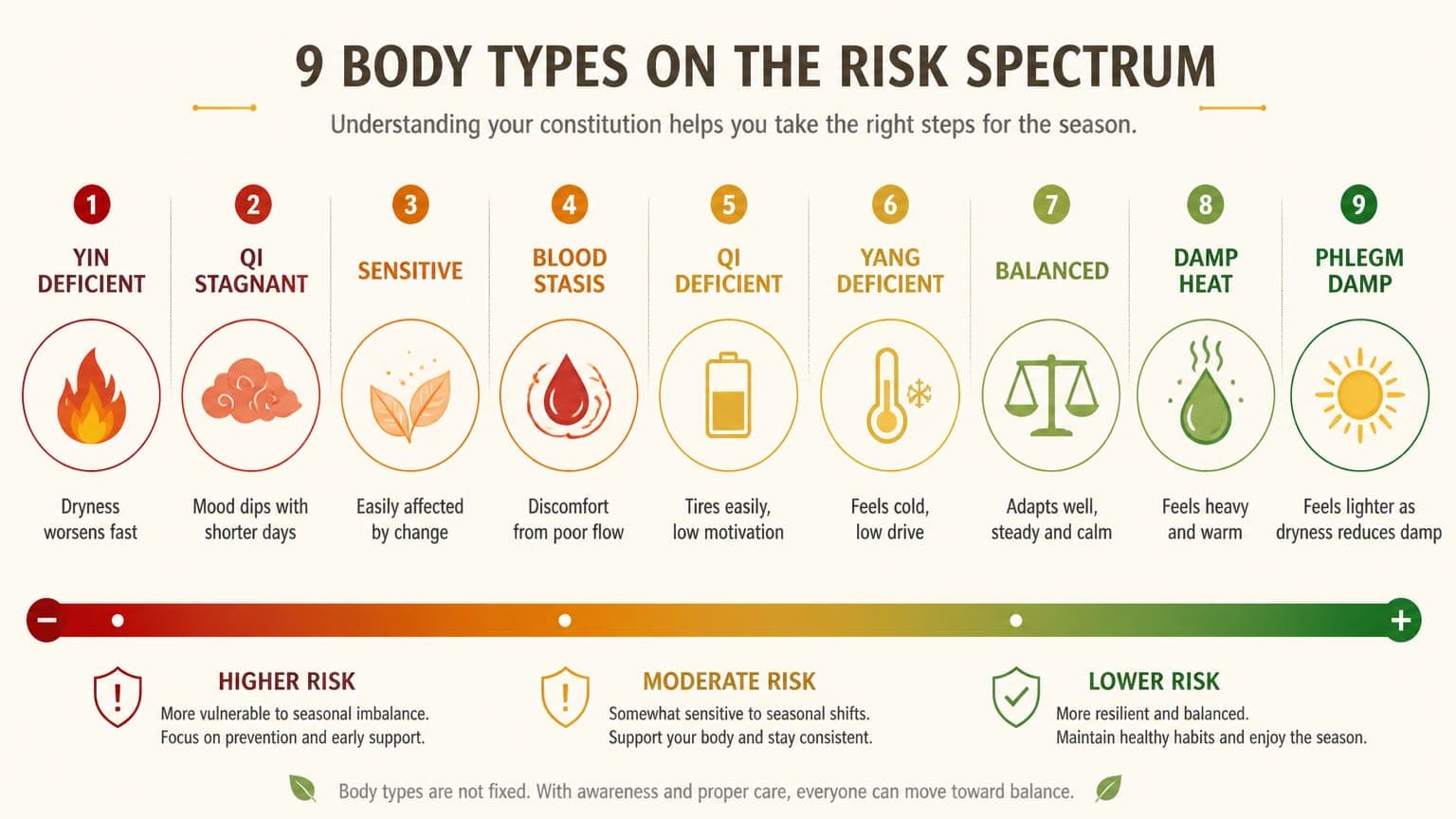
Autumn body type impact spectrum

The Nine Body Types in Autumn

Body TypeAutumn ExperienceMain RiskRisk Level
Yin DeficientDryness worsens fastDry throat, skin, night sweats★★★★★
Qi StagnantMood dips with shorter daysEmotional flatness, chest tightness★★★★☆
SensitiveReacts to temperature swingsSkin flare-ups, nasal irritation★★★★☆
Blood StasisCold worsens circulationPain patterns, cold extremities★★★☆☆
Qi DeficientEnergy dips with the transitionFatigue, low appetite, weak voice★★★☆☆
Yang DeficientStarts feeling the cold earlyCold hands and feet, sluggishness★★★☆☆
BalancedAdapts with minor adjustmentsMinimal, basic self-care sufficient★☆☆☆☆
Damp HeatActually improves as humidity dropsLeast risk, heat eases naturally★☆☆☆☆
Phlegm DampFeels lighter as dryness reduces dampLeast risk, body prefers the shift★☆☆☆☆

Autumn Adaptability Score by Body Type

Nearly half of the nine body types face moderate to high risk during the autumn transition. Three types, Phlegm Damp, Damp Heat, and Balanced, handle the shift with relative ease. The rest need to pay attention.

Yin Deficient
2/10
Qi Stagnant
3/10
Sensitive
4/10
Blood Stasis
5/10
Qi Deficient
5/10
Yang Deficient
5/10
Balanced
8/10
Damp Heat
9/10
Phlegm Damp
9/10

Not sure which of the nine body types you are? Take the free 5-minute quiz and learn how your constitution may shape the way you experience every season, not just autumn.

Take the Free Quiz

The Types That Struggle Most

Two body types account for most autumn discomfort. If you belong to either, the arrival of cooler, drier air is a signal to adjust your diet, protect your sleep, and pay attention to what your body is telling you.

Yin Deficient: When the Air Steals Your Moisture

If you are Yin Deficient, autumn is your hardest season. Your body already runs warm and dry. When the air loses its humidity, the little moisture you have evaporates faster. Your throat may feel scratchy by mid-morning. Your skin may tighten and flake. Your lips crack. You might wake at 3 AM with a dry mouth and a restless mind, unable to get back to sleep. Night sweats, already a hallmark of this type, may intensify during the first weeks of autumn. The underlying issue is that your cooling, moistening reserve is thin, and the season amplifies that deficit. What may help: pear, lily bulb, white fungus, lotus root, and honey. These are the classic autumn moistening foods, and they are not optional for your type. Avoid spicy food, deep-fried food, and anything that makes you sweat. Go to bed before 11 PM, because the hours before midnight are when the body rebuilds its Yin.

Qi Stagnant: When the Shorter Days Pull Your Mood Down

If you are Qi Stagnant, the physical dryness of autumn may not bother you much, but the emotional shift might. The Lung system in Chinese medicine is linked to grief, and autumn is the season of the Lung. As the light changes and the days contract, a quiet sadness can settle in that has nothing to do with anything going wrong in your life. You might feel less motivated, more irritable, or oddly flat. Your chest may feel tight, as if you cannot take a full breath. This is not a character flaw. It is the interaction between a Liver that already struggles with smooth emotional flow and a season that asks it to process more. What may help: movement, first and foremost. A brisk walk outdoors in the morning light may do more than any food. Rose tea, citrus peel tea, and foods that keep energy moving. Avoid sitting for long stretches, suppressing frustration, and skipping meals, which all deepen stagnation.

The Types That Actually Feel Better

Not everyone dreads autumn. If you are Phlegm Damp or Damp Heat, the cooler, drier air may come as a relief. Your body has been wrestling with humidity and heaviness all summer. Autumn starts to solve that problem for you, naturally.

Phlegm Damp: The Season That Lightens the Load

Phlegm Damp types often feel sluggish and heavy through summer. The humidity thickens the dampness already sitting in their system, and no amount of sweating seems to clear it. When autumn arrives and the air dries out, something lifts. The body feels less congested. The mind feels less foggy. The sticky, heavy quality that has been dragging at you for months begins to ease, because the environment is now working with you instead of against you. This does not mean you can eat whatever you want. Continue to avoid heavy, sweet, and dairy-heavy foods. But you may find that the same diet that left you bloated in July sits comfortably in September.

Damp Heat: When the Fire Finally Cools

Damp Heat types suffer through summer. The combination of heat and humidity is exactly what their body already produces too much of, and the environment piles on. When autumn begins to dry the air and drop the temperature, the external pressure eases. Skin breakouts may calm down. The irritability that flared in August may soften. The sticky, uncomfortable quality in the body starts to clear. Enjoy the relief, but do not overdo the warming foods yet. The remnants of summer heat are still in the body for the first few weeks of autumn, and heavy, spicy, or greasy food can reignite them.

Autumn Foods That May Help Every Body Type
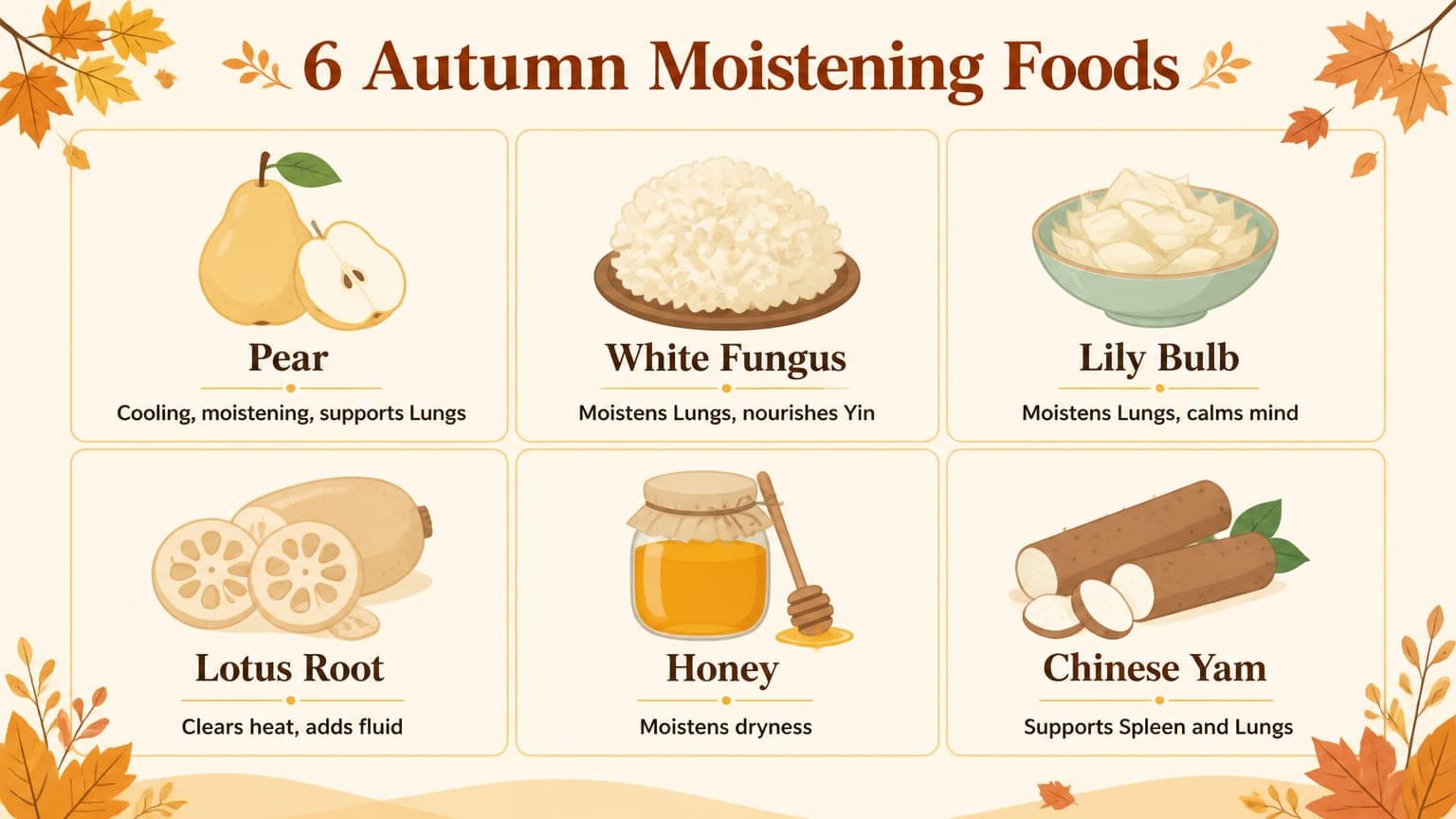
Autumn moistening foods guide

Foods to Add in Autumn

  • Pear. The single most recommended fruit for autumn. It is cooling, moistening, and directly supports the Lungs. Eat it fresh, steamed with rock sugar, or poached.
  • White fungus. Also called snow fungus, it is prized in TCM for its ability to moisten the Lungs and nourish Yin. Simmered into soup with rock sugar, it becomes a daily staple for Yin Deficient types through autumn.
  • Lily bulb. Not the ornamental flower, but the edible bulb used in Chinese cooking. It moistens the Lungs and calms the mind, which may help the sleep disturbances that come with autumn dryness.
  • Lotus root. Cooling and moistening, it clears heat while adding fluid. Sliced into soups or stir-fried, it is one of the most versatile autumn vegetables.
  • Honey. A spoonful in warm water each morning is a simple autumn habit. It moistens dryness and supports the Lungs. Avoid adding it to very hot water, which reduces its beneficial properties.
  • Chinese yam. Also known as shan yao, it supports both the Spleen and the Lungs. It is gentle enough for daily use and may help the body adjust to the seasonal transition.

The Autumn Tiger: When Summer Bites Back

  • Keep drinking warm water. The air is drier even if the temperature is high. Your body needs more fluid than you think.
  • Do not switch to heavy, warming foods yet. Save lamb, ginger, and cinnamon for late September. The residual heat in the body is still clearing.
  • Protect your neck from cold drafts. The gap between hot outdoors and cold air-conditioned indoors is wider in late August than at any other time. A light scarf may prevent the first autumn cold.
  • Eat melon while it lasts. Watermelon and winter melon are still appropriate in the Autumn Tiger window. Their cooling properties help clear the last of the summer heat.

How to Make White Fungus and Pear Soup: A Step-by-Step Autumn Recipe

White fungus and pear soup is the quintessential autumn dish in Chinese households. It is simple, inexpensive, and directly addresses the dryness that the season brings. The combination of snow fungus, pear, and rock sugar creates a lightly sweet, silky soup that moistens the Lungs and soothes the throat. Here is how to make it the traditional way.

  1. 1

    Choose the right fungus

    Look for dried white fungus that is pale yellow, not bleached white. The pieces should be loose and light, not compacted. Avoid any with a sharp chemical smell, which indicates sulfur treatment. A single small piece, about the size of a walnut, is enough for two servings.

  2. 2

    Soak until fully expanded

    Place the dried fungus in a bowl of cold water for two to three hours. It will expand dramatically, sometimes to ten times its dry size. Once fully softened, trim the hard yellow base and tear the soft part into small florets. Rinse twice to remove any grit.

  3. 3

    Prepare the pear

    Use one Asian pear if available, or a firm Western pear as a substitute. Peel, core, and cut into small chunks. Asian pear is preferred because it is juicier and has a crisper texture that holds up during simmering. Do not use overripe pear, which turns mushy and clouds the soup.

  4. 4

    Simmer the fungus first

    Place the torn fungus in a clay pot or stainless steel pot with about four cups of water. Bring to a boil, then reduce to a low simmer. Cook for 30 to 40 minutes before adding the pear. The fungus needs more time to release its gelatinous texture, which gives the soup its characteristic silkiness.

  5. 5

    Add the pear and simmer gently

    Add the pear chunks and continue simmering for another 15 to 20 minutes. The pear should soften but not dissolve. If you are using dried lily bulb, add it at the same time as the pear. The soup is done when the liquid has turned slightly thick and the fungus is tender with a pleasant, gelatinous bite.

  6. 6

    Sweeten with rock sugar

    Turn off the heat and stir in a small piece of rock sugar, about 15 grams. Rock sugar is preferred over white sugar because it is gentler on the Lungs and does not introduce the drying quality that refined sugar can bring. Stir until fully dissolved. The soup should be lightly sweet, not syrupy.

  7. 7

    Serve warm, not hot

    Let the soup cool for ten minutes before serving. A warm bowl in the morning or evening is ideal. One small bowl per day is sufficient. Store any leftover in the refrigerator and consume within 24 hours, as the soup loses its moistening quality after a day.

A Few Things to Keep in Mind About White Fungus Soup

  • Do not eat it cold. Cold soup weakens the Spleen, which is the organ responsible for processing fluids. Warm is always better for moistening in TCM.
  • If you run cold, add ginger. Yang Deficient types may find white fungus too cooling. A single thin slice of ginger added during simmering can balance the coldness without changing the flavor.
  • Quality of the fungus matters. Bleached, sulfur-treated white fungus is common in cheap markets. It looks brighter but tastes chemical and may irritate the throat. Source from a reputable seller.
  • It is a daily habit, not a one-time fix. The moistening effect builds over days, not hours. A small bowl each evening for the first two weeks of autumn is more effective than a large batch once a week.

Autumn Habits Beyond Food
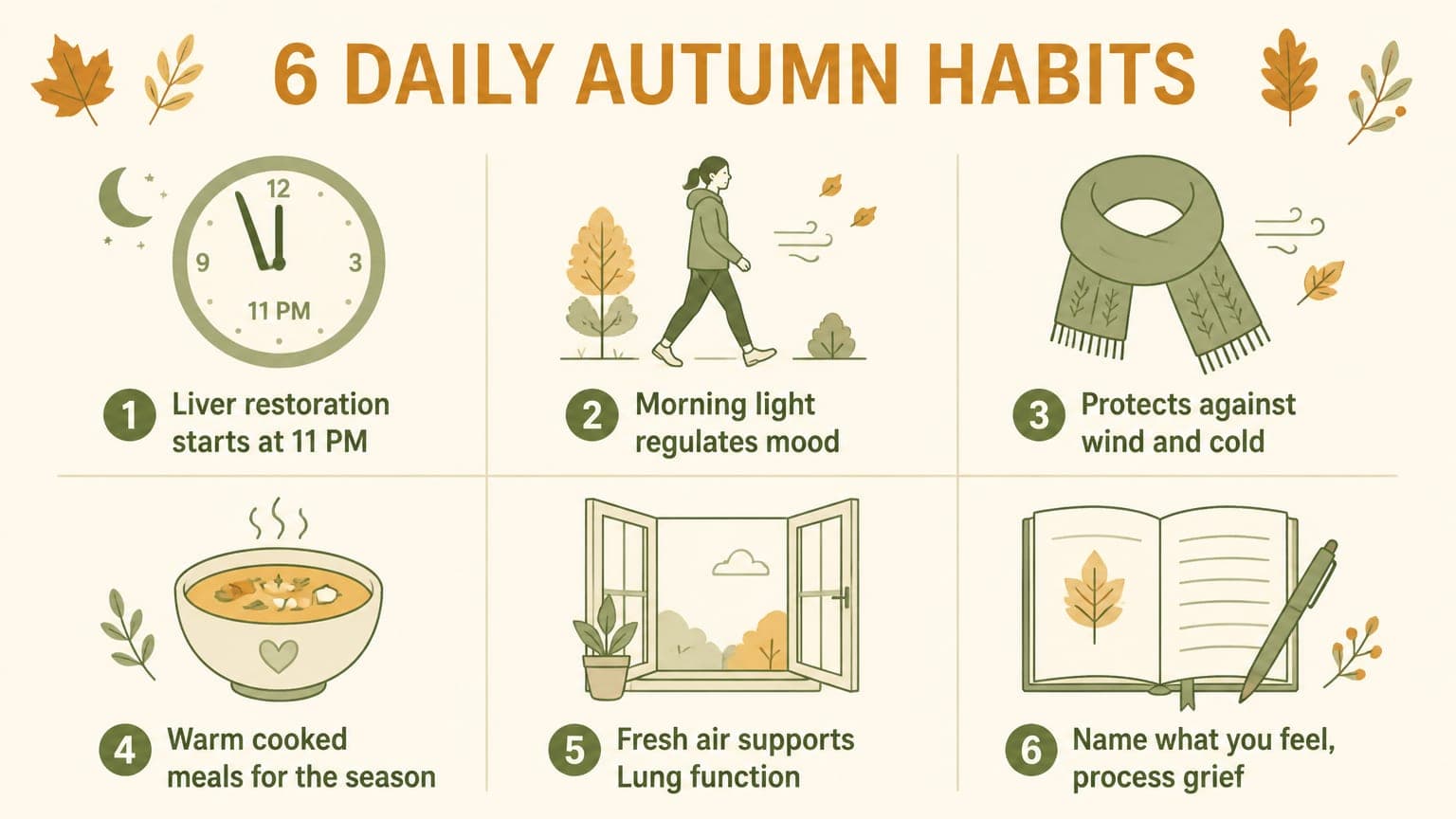
Six autumn wellness habits

Daily Habits for the Autumn Transition

  • Go to bed before 11 PM. In the TCM body clock, the Liver begins its restoration work at 11 PM. Autumn asks the body to conserve more, and sleep is the primary way it does that.
  • Walk outdoors in the morning. Morning light and cool air help regulate the internal clock and may lift the mood, especially for Qi Stagnant types who feel the emotional pull of shorter days.
  • Wear a light scarf. The back of the neck is considered a gateway for cold and wind in Chinese medicine. A simple scarf is the most practical autumn accessory.
  • Eat warm, cooked meals. Salads, smoothies, and raw foods are summer habits. Autumn calls for soups, stews, and porridge, which are easier on a body that is adjusting to cooler air.
  • Keep a window slightly open at night. Fresh air supports Lung function, but avoid direct drafts on the face. A cracked window is enough.
  • Name what you are feeling. Autumn is linked to grief in TCM. If you feel a quiet sadness, do not push it away. Acknowledging it, writing it down, or talking with someone may move it through faster than suppressing it.

Related Articles

Frequently Asked Questions

Why do I feel sad when autumn starts, even when nothing is wrong?+
In Chinese medicine, autumn is linked to the Lung system, which is associated with grief. The shorter days and cooler air can amplify a natural emotional response that has nothing to do with external events. Qi Stagnant types are most sensitive to this shift.
Why is my throat dry in the morning during autumn?+
Autumn air carries less moisture than summer air. If your body type is already prone to dryness, particularly Yin Deficient, the throat is often the first place you notice it. A spoonful of honey in warm water before bed may help.
Should I stop eating cooling foods once autumn starts?+
Not immediately. The first two to three weeks of autumn may still be hot, what Chinese medicine calls the Autumn Tiger. Continue eating watermelon and cucumber during this window, then transition to moistening foods like pear and white fungus as the air cools.
Which body type has the easiest time in autumn?+
Phlegm Damp and Damp Heat types tend to feel better in autumn, because the drier air naturally reduces the dampness and humidity their bodies have been struggling with all summer.
Is white fungus soup good for every body type?+
It is most beneficial for Yin Deficient, Qi Deficient, and Balanced types. Yang Deficient types may find it too cooling and can add a slice of ginger to balance the effect. Phlegm Damp types should eat it in moderation, as the sweetness can add dampness if overconsumed.
Why do I catch colds more easily in autumn?+
The temperature gap between day and night widens in autumn, and the body is still adjusting from summer. The neck and upper back are considered vulnerable to wind in TCM. Wearing a light scarf and avoiding direct drafts may help reduce the risk.
What is the Autumn Tiger?+
It is the period of lingering summer heat during the first weeks after Liqiu, the start of autumn. Daytime temperatures can still be high, even though the air is drying. The combination of heat and dryness can dehydrate the body faster than expected.

Discover Your Eastern Type

Take our free 5-minute assessment to explore which body type best matches your current wellness patterns.

Take the Free Quiz

This article is for informational and educational purposes only and is not medical advice. Always consult a qualified healthcare professional for medical concerns.

EastType
10 Foods Your Body Type Will Love
A Practical Chinese Medicine Guide
Chinese medicine identifies 9 body types. Each type has foods that suit it well. This guide covers 10 ingredients used in Chinese medicine traditions for centuries.
myeasterntype.com
1
Ginger
Also known as: Sheng Jiang (Chinese), Shoga (Japanese), Adrak (Hindi), Khing (Thai)

Ginger is the most widely used warming food in Chinese medicine. If your hands and feet tend to run cold, or if you feel heavy and slow after meals, ginger may be one of the simplest things you can add to your daily routine.

Who It Suits

Cold Sensitivity and Low Vitality body types (people who tend to run cold, feel fatigued, or have slow digestion).

What It May Help With
Warming the body from the inside
Supporting digestion after heavy or cold meals
Reducing that heavy, sluggish feeling after eating
How to Use
Slice 3 to 4 thin pieces of fresh ginger and steep in hot water for 5 minutes. Drink this in the morning, 20 minutes before breakfast.
Add grated ginger to soups, stews, and stir-fries.
Avoid ginger late at night if you tend to feel hot when trying to sleep.
Simple HabitReplace your first glass of cold water in the morning with a cup of warm ginger water. This single change can make a noticeable difference in how your digestion feels throughout the day.
2
Goji Berries
Also known as: Wolfberries, Gou Qi Zi (Chinese), Kuko no Mi (Japanese), Boxthorn Berries

Goji berries are small, sweet, red dried fruits that look similar to raisins but have a distinct tart-sweet flavor. In Chinese medicine, they are associated with eye health, liver support, and healthy aging.

Who It Suits

Internal Heat body types (people who tend to feel warm at night, have dry skin, or wake up between 1 AM and 3 AM). Also suitable for people concerned about eye strain from screens.

What It May Help With
Supporting eye comfort during long screen hours
Nourishing the body's cooling and moistening functions
Providing a gentle energy source without caffeine
How to Use
Eat a small handful (about 15 to 20 berries) as a snack.
Add to oatmeal, yogurt, or trail mix.
Steep in hot water with chrysanthemum flowers for a gentle tea.
Simple HabitKeep a small jar of goji berries at your desk. Eat 10 to 15 berries around 3 PM, when afternoon energy dips tend to hit. They provide a mild, steady energy without the crash that comes with sugar or caffeine.
3
Red Dates (Jujube)
Also known as: Chinese Dates, Hong Zao (Chinese), Natsume (Japanese), Injeol (Korean)

Red dates are dried jujube fruits, not related to the Middle Eastern dates you find in most Western supermarkets. They are sweet, slightly chewy, and have been used in Chinese medicine for thousands of years to support calm sleep and steady energy.

Who It Suits

Low Vitality and Stuck Energy body types (people who feel chronically tired, anxious, or have trouble falling asleep).

What It May Help With
Supporting calm and restful sleep
Providing a gentle, steady source of energy
Settling an anxious or overactive mind
How to Use
Simmer 5 to 6 pitted red dates in water for 15 minutes. Drink the liquid as tea before bed.
Add to rice porridge (congee) for a nourishing breakfast.
Eat 2 to 3 dates as an afternoon snack.
Simple HabitBrew a small pot of red date tea in the evening. Let it steep while you wind down, and drink it 30 minutes before bed. Many people notice calmer, more settled sleep within the first week.
4
Black Sesame Seeds
Also known as: Hei Zhi Ma (Chinese), Kuro Goma (Japanese), Gingili (Indian)

Black sesame seeds look like tiny dark pearls and have a rich, nutty, slightly smoky flavor. In Chinese medicine, their dark color connects them to the body's deepest energy reserves. They are associated with healthy hair, skin, and the body's foundational vitality.

Who It Suits

Internal Heat and Blood Stasis body types (people concerned about hair thinning, dry skin, premature aging, or dark circles under the eyes).

What It May Help With
Supporting hair strength and skin moisture
Nourishing the body's deepest energy reserves
Providing healthy fats and minerals
How to Use
Grind 2 tablespoons of black sesame seeds and mix with a small amount of honey. Eat one spoonful each morning.
Sprinkle on rice, noodles, salads, or avocado toast.
Use black sesame paste (similar to tahini but made from black sesame) as a spread on toast.
Simple HabitBuy a small bag of pre-roasted black sesame seeds. Keep it next to your salt shaker. Sprinkle on everything savory. This is one of the easiest ingredients to integrate into Western meals.
5
Mung Beans
Also known as: Lu Dou (Chinese), Ryokuto (Japanese), Moong Dal (Hindi), Green Gram (English)

Mung beans are small, green legumes that cook quickly and have a mild, slightly sweet flavor. In Chinese medicine, they are considered one of the most cooling foods available. They are traditionally eaten during hot summer months to help the body manage internal heat.

Who It Suits

Damp Heat body types (people who tend to feel hot and sticky, have oily skin, breakouts, or acid reflux). Also suitable for anyone during hot weather.

What It May Help With
Supporting the body's natural cooling processes
Helping the body process and eliminate excess fluids
Soothing skin inflammation from the inside
How to Use
Simmer 1 cup of mung beans in 4 cups of water for 30 minutes until soft. Add a little rock sugar for a simple sweet soup.
Sprout mung beans at home for fresh, crunchy bean sprouts (takes 2 to 3 days in a jar).
Cook mung bean soup once a week during summer months.
Simple HabitDuring hot weather, replace one meal per week with a simple bowl of mung bean soup. It is light, cooling, and easy to digest. People who tend to break out in summer often notice their skin calms down within 2 to 3 weeks of eating mung beans regularly.
6
Walnuts
Also known as: He Tao (Chinese), Kurumi (Japanese), Akhrot (Hindi), Nuez (Spanish)

Walnuts look like tiny brains, and in Chinese medicine, this visual resemblance is taken seriously. Walnuts are associated with brain function, memory, and the body's deepest warmth reserves. They are also one of the most accessible ingredients on this list.

Who It Suits

Cold Sensitivity and Internal Heat body types concerned about memory, focus, or lower back discomfort. Also suitable for older adults.

What It May Help With
Supporting memory and mental clarity
Warming and strengthening the lower back and knees
Providing omega-3 fatty acids
How to Use
Eat 5 to 8 walnuts per day as a snack. Chew thoroughly.
Add chopped walnuts to oatmeal or yogurt.
Simmer walnuts in porridge with red dates for a nourishing breakfast.
Simple HabitKeep a small container of walnuts where you work. Eat 5 pieces at 10 AM and 5 pieces at 3 PM. The steady supply of healthy fats supports focus and sustained energy without the spike-and-crash of sugary snacks.
7
Chinese Yam
Also known as: Shan Yao (Chinese), Nagaimo (Japanese), Ma (Korean), Mexican Yam

Chinese yam is a long, cylindrical root with a pale interior. When raw, it feels slippery and slightly sticky when cut. When cooked, it becomes tender and mildly sweet. In Chinese medicine, it is one of the most recommended foods for people with sensitive digestion.

Who It Suits

Heavy and Sluggish body types (people who bloat after meals, feel heavy and tired, or have irregular digestion). Also suitable for anyone recovering from illness.

What It May Help With
Strengthening digestive function over time
Supporting steady, consistent energy levels
Reducing bloating and heaviness after meals
How to Use
Peel, slice, and stir-fry with a little salt and sesame oil for a simple side dish.
Cut into chunks and add to soups or stews.
Slice thinly and steam for 15 minutes. Drizzle with a little honey.
Simple HabitIf you have a sensitive stomach that reacts to raw vegetables, try replacing raw salads with steamed Chinese yam twice a week. Its gentle, starchy nature gives your digestive system a break while still providing nutrients.
8
Chrysanthemum Flowers
Also known as: Ju Hua (Chinese), Kikka (Japanese), Gul-e-Daudi (Hindi)

Dried chrysanthemum flowers are brewed into a light, floral tea that has been consumed in East Asia for centuries. The tea is golden-colored, delicate in flavor, and naturally caffeine-free. In Chinese medicine, chrysanthemum is associated with cooling internal heat, especially in the head and eyes.

Who It Suits

Internal Heat and Stuck Energy body types (people who get headaches, eye strain, feel hot and irritable, or have trouble sleeping). Also ideal for office workers who stare at screens all day.

What It May Help With
Soothing tired, dry, or strained eyes
Cooling the head and reducing tension headaches
Supporting calm focus without caffeine
How to Use
Steep 8 to 10 dried chrysanthemum flowers in hot water for 5 minutes. Drink as is or add a few goji berries.
Drink in the afternoon instead of coffee or green tea.
Can be enjoyed cold in summer with a touch of honey.
Simple HabitReplace your afternoon coffee with chrysanthemum tea for one week. Many people notice their afternoon energy feels more stable and their eyes feel less strained by the end of the workday. You can find dried chrysanthemum flowers at most Asian grocery stores or online.
9
Longan
Also known as: Dragon's Eye, Gui Yuan (Chinese), Ryugan (Japanese), Lamyai (Thai)

Dried longan is a small, round, dark brown fruit that looks like a tiny pearl when shelled. It gets its English name, "Dragon's Eye," from the fresh fruit, which has a dark seed visible through the translucent white flesh. Dried longan is sweet, warm in nature, and has been used in Chinese medicine to support calm energy and restful sleep.

Who It Suits

Low Vitality body types (people who feel chronically tired, anxious, or have trouble sleeping due to an overactive mind).

What It May Help With
Supporting calm, settled energy during the day
Helping quiet an overactive mind at night
Providing a gentle, non-stimulating source of sweetness
How to Use
Simmer 10 to 15 dried longan in water for 10 minutes. Drink the tea before bed.
Add to rice porridge along with red dates for a nourishing breakfast.
Eat 5 to 6 pieces as a sweet snack.
Simple HabitIf you tend to snack on sweets in the evening, replace candy or chocolate with 8 to 10 dried longan pieces. They satisfy the sweet craving while supporting calm, restful sleep.
10
Lotus Seeds
Also known as: Lian Zi (Chinese), Hasu no Mi (Japanese), Bikh (Hindi)

Lotus seeds are small, ivory-colored seeds harvested from the seed pod of the lotus flower. They have a mild, slightly sweet, and slightly nutty flavor. In Chinese medicine, they are associated with calm, steady energy and clear thinking. They are one of the key ingredients in traditional East Asian desserts and savory dishes alike.

Who It Suits

Stuck Energy and Heavy and Sluggish body types (people who overthink, feel mentally scattered, or have trouble concentrating).

What It May Help With
Supporting mental calm and clear focus
Helping settle an overactive, racing mind
Supporting steady, even-keeled energy
How to Use
Soak dried lotus seeds overnight, then simmer in water for 30 minutes until tender. Add rock sugar for a simple sweet soup.
Add cooked lotus seeds to soups and stews.
Find canned lotus seeds at Asian grocery stores for convenience.
Simple HabitIf your mind races at night and prevents you from sleeping, try a small bowl of lotus seed soup as an evening snack. Its calming quality may help quiet mental chatter and support more settled sleep.
How to Start

You do not need to buy all 10 ingredients today. Here is a simple way to begin:

1Take the EastType quiz to learn your body type.
2Pick 2 ingredients from this guide that suit your type.
3Start with one habit from the "Simple Habit" section of each food.
4Give it 2 to 3 weeks. Notice how your body responds.
5Adjust from there. Chinese medicine is about consistent, small adjustments, not dramatic overhauls.
Where to Find These Ingredients
Asian grocery stores (look for H Mart, 99 Ranch, Mitsuwa, or local equivalents)
Online (Amazon, iHerb, Asian food specialty sites)
Health food stores (ginger, walnuts, and goji berries are widely available)
Regular supermarkets (ginger, walnuts, and mung beans are usually in stock)

Most of these ingredients cost between $3 and $10 and last for weeks or months. Chinese medicine eating does not need to be expensive.

A Final Note

This guide is for educational and wellness purposes only. It is not medical advice. If you have specific health concerns, food allergies, or are taking medication, consult a qualified healthcare provider before making dietary changes.

Individual responses to foods vary. The information in this guide reflects traditional Chinese medicine principles, which focus on patterns and tendencies rather than medical diagnoses.

Listen to your body. Start small. Be consistent. That is the Chinese medicine way.
Ready to Find Your Body Type?
Take the free 5-minute quiz and get personalized food suggestions tailored to your constitution.
myeasterntype.com