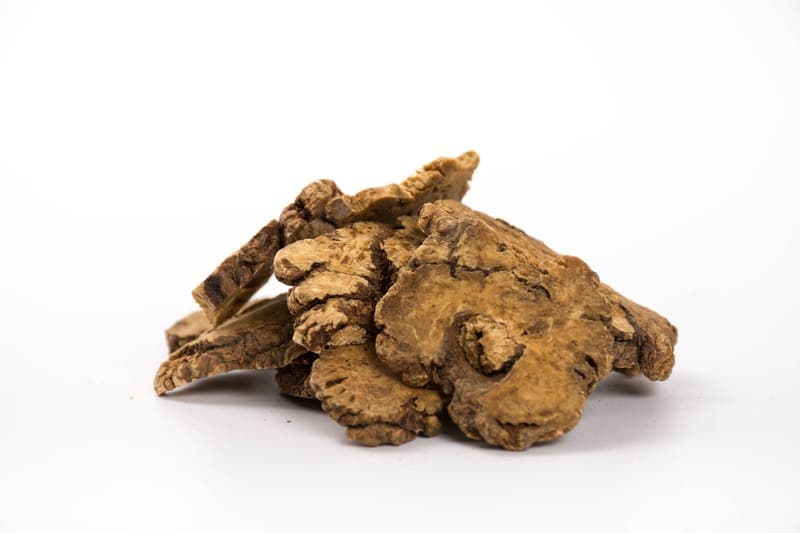
Szechwan Lovage Root
chuan xiong · chuan xiong
Ligusticum chuanxiong Hort.
Quick Answer
Blood stasis with qi stagnation is the primary TCM explanation for fixed, stabbing headaches and menstrual pain that worsens with pressure, and Szechwan Lovage Root is the herb Chinese medicine considers most essential for this combined pattern. Its warm, pungent nature may help move both qi and blood at once, and its special affinity for the head makes it the lead herb in classical headache formulas.
Curious which body type you are? Take the free 5-minute quiz.
Take the Free Quiz →Summary
The premier herb for moving blood and relieving pain in Chinese medicine. Szechwan Lovage Root is the go-to herb for headaches, menstrual pain, and any condition involving stuck blood and qi.
TCM Properties
| Botanical Name | Ligusticum chuanxiong Hort. |
| Category | Blood Tonic |
| Temperature | Warm |
| Taste | Pungent |
| Channels Entered | Liver, Gallbladder, Pericardium |
| Classical Source | Shennong Bencao Jing (circa 200 BCE) |
| Safety Rating | Non-toxic |
Key Concept
Szechwan Lovage Root(川芎)
Imagine Szechwan Lovage Root as a warm wind rising through the body: it clears the blocked roads of stagnant qi, pushes forward the stalled traffic of congealed blood, and carries its reach all the way to the crown of the head. Few herbs in the pharmacopoeia move both qi and blood at once, and fewer still direct that movement upward, which may help explain why this warm, pungent root has become the lead herb in classical headache and menstrual pain formulas.
What This Herb Does
Invigorates blood circulation and dispels stasis
Szechwan Lovage Root is considered the most important blood-invigorating herb in Chinese medicine. Unlike purely breaking herbs, it both moves blood and has a gentle nourishing quality. This makes it suitable for patterns where blood is stuck but not severely depleted.
Promotes qi movement and relieves pain
In TCM theory, where qi goes, blood follows. Szechwan Lovage Root's pungent taste and warm nature help move qi, which in turn helps move blood. This dual action on qi and blood explains why it is so effective for pain, especially pain that feels fixed, stabbing, or worsening with pressure.
Dispels wind and alleviates headaches
Szechwan Lovage Root has a special affinity for the head and is considered the premier herb for headaches in TCM. Whether the headache is from wind-cold, wind-heat, blood stasis, or blood deficiency, this herb may be included in formulas because it both reaches the head and addresses multiple headache mechanisms.
Supports menstrual comfort and regularity
Many menstrual pains involve blood stasis and qi stagnation in the lower abdomen. Szechwan Lovage Root's blood-moving and qi-regulating actions directly address this pattern. It is one of the most common ingredients in classical formulas for menstrual discomfort.
Commonly Used For
Blood Stasis types with chronic pain or dark spots
TCM Interpretation: Blood stasis is a key pattern in chronic pain conditions. The pain tends to be fixed, stabbing, and worse at night. Szechwan Lovage Root's blood-invigorating action directly targets this pattern. It is often the lead herb in classical stasis-resolving formulas.
Why Szechwan Lovage Root Helps: The warm, pungent nature of Szechwan Lovage Root allows it to penetrate deeply and move stagnant blood in the channels. Its affinity for the Liver channel (which stores blood) and the head makes it versatile for pain throughout the body.
Qi Stagnant types with tension headaches or menstrual pain
TCM Interpretation: Liver qi stagnation often produces tension-type headaches and menstrual discomfort. When qi stagnation leads to blood stasis, the pain becomes more fixed and severe. Szechwan Lovage Root addresses both the qi and blood aspects of this pattern.
Why Szechwan Lovage Root Helps: As a herb that moves both qi and blood, Szechwan Lovage Root is uniquely suited for patterns where stagnation involves both substances. Its upward-reaching nature helps it reach the head for headache treatment.
Matching Szechwan Lovage Root to Your Pain Location
Szechwan Lovage Root targets pain by location and stasis type. Match yours by these signals, and avoid it during pregnancy or heavy bleeding.
| If This Sounds Like You | The Signal | Start Here |
|---|---|---|
| Fixed, stabbing headaches that worsen with pressure | Blood stasis with qi stagnation lodged in the head | Use in formula with bai zhi under professional guidance, 3 to 6g in decoction |
| Menstrual pain with dark clots and pre-period breast tension | Blood stasis with liver qi stagnation in the lower abdomen | Combine with dang gui and brown sugar in tea, starting 3 to 5 days before the period |
| Heavy menstrual bleeding, pregnancy, or dry hot patterns without stasis | Patterns where moving blood would worsen bleeding or deplete yin | Avoid Szechwan Lovage Root and consult a qualified practitioner for a nourishing alternative |
Which Body Types Benefit Most
Not sure which type you are? Take the free 5-minute quiz.
Related Symptom Guides
How to Use
Typically used in decoction (simmered) rather than as a simple tea. 3-9g per day in formula with other herbs. Often combined with Dang Gui for blood, or Bai Zhi for headaches.
Dosage: 3-9g per day in decoction. Best used in formula rather than alone.
Preparation Notes: Slice thinly and decoct (simmer) for 20-30 minutes with other herbs. The warm pungent nature means it should be used cautiously in heat patterns. Store in a dry, ventilated container.
Dietary Advice
When taking Szechwan Lovage Root formulas, avoid cold and raw foods that can slow blood circulation. Warm soups, ginger tea, and brown sugar water complement its blood-moving action. Light exercise such as walking enhances the circulatory benefits.
Food Pairings
Cautions
- ⚠Avoid during pregnancy
- ⚠Do not use with heavy menstrual bleeding
- ⚠Not suitable for people with bleeding disorders or on blood thinners
- ⚠Avoid in cases of Yin deficiency with fire (dry, hot patterns without stasis)
Frequently Asked Questions
Is Szechwan Lovage Root the same as regular lovage?+
Can I use this herb for migraines?+
Which body type benefits most from Szechwan Lovage Root?+
Related Herbs
Discover Your Eastern Type
Take our free 5-minute assessment to explore which body type best matches your current wellness patterns.
Take the Free Quiz→This article is for informational and educational purposes only and is not medical advice. Always consult a qualified healthcare professional before using any herb, especially if you are pregnant, nursing, or taking medication.