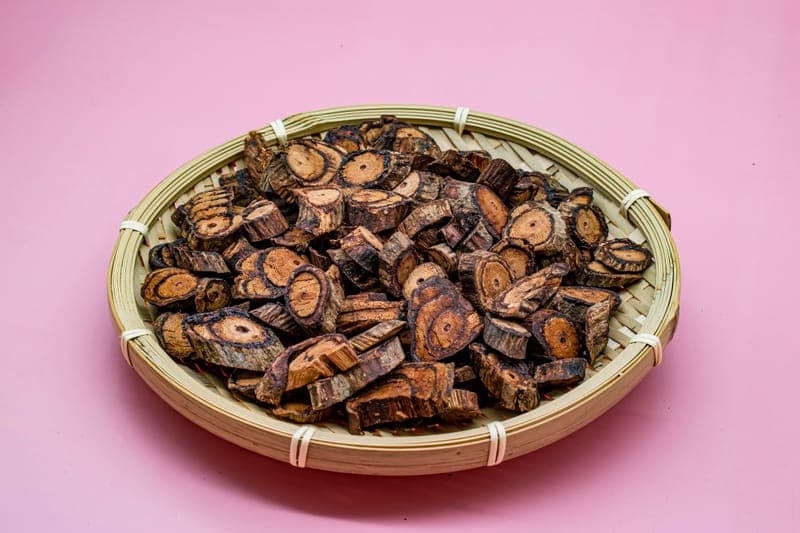
Spatholobus (Ji Xue Teng)
ji xue teng · ji xue teng
Spatholobus suberectus Dunn
Quick Answer
Chinese medicine identifies two distinct patterns that Spatholobus addresses: blood deficiency that cannot reach the limbs, and blood stagnation that traps what little blood there is. Its rare dual action of nourishing and moving blood at once may help with pale complexion, numbness, scanty painful periods, and dull headaches, especially when deficiency and stagnation coexist in the same person.
Curious which body type you are? Take the free 5-minute quiz.
Take the Free Quiz →Summary
A woody vine whose cross-section oozes a red sap resembling blood. This visual signature led to its primary use: nourishing blood while simultaneously keeping it circulating, a rare combination that makes it indispensable for patterns where deficiency and stagnation coexist.
TCM Properties
| Botanical Name | Spatholobus suberectus Dunn |
| Category | Blood Tonic |
| Temperature | Warm |
| Taste | Bitter, sweet |
| Channels Entered | Liver, Kidney |
| Classical Source | Bencao Gangmu Shiyi (1765 CE) |
| Safety Rating | Non-toxic |
Key Concept
Spatholobus (Ji Xue Teng)(鸡血藤)
Picture a woody vine that bleeds red sap when cut, and you understand why Chinese medicine named it chicken blood vine and turned to it for blood. The red sap signals the herb's affinity for blood, and the vine's dual sweet-and-bitter taste explains its rare talent: sweet nourishes blood while bitter keeps it flowing, so it can rebuild a deficient person without clogging them the way stickier blood tonics often do.
What This Herb Does
Nourishes blood without causing stagnation
Blood tonics tend to be sticky and cloying, which can worsen stagnation. Ji xue teng is unusual because it does both: the sweet taste nourishes blood, and the bitter taste keeps it flowing. This dual action makes it ideal for patterns where a person is blood deficient but also has sluggish circulation, a combination that is more common than it sounds.
Invigorates blood circulation while tonifying
Most blood-invigorating herbs are drying and dispersing, which can deplete a deficient person further. Ji xue teng avoids this problem because its nourishing sweet quality offsets the drying tendency of its bitter, moving quality. The result is a herb that improves circulation without sacrificing the body's reserves.
Relaxes tendons and unblocks meridians
The Liver governs tendons and ensures smooth energy flow. When liver blood is deficient, tendons become tight and meridians become restricted, producing numbness, tingling, or radiating pain. Ji xue teng nourishes the liver blood that tendons need while unblocking the meridians that carry energy through them.
Supports regular menstrual rhythm
Menstrual irregularity often involves both blood deficiency (not enough blood to sustain a normal cycle) and blood stagnation (the blood that is present does not flow smoothly). Ji xue teng addresses both sides of this equation, which is why it is one of the most frequently used herbs in menstrual formulas.
Commonly Used For
People with pale complexion and dull headaches from blood deficiency who also have numbness or tingling in the limbs
TCM Interpretation: Blood deficiency produces paleness, dizziness, and dull headaches. When it is accompanied by stagnation, the person also experiences numbness, tingling, or a pins-and-needles sensation, because the deficient blood is not reaching the extremities.
Why Spatholobus (Ji Xue Teng) Helps: Ji xue teng nourishes the blood to address the deficiency, while its moving quality ensures that the newly nourished blood actually reaches the limbs and head.
Women with irregular cycles, scanty flow, and menstrual pain with an empty, bearing-down sensation
TCM Interpretation: When blood is both deficient and stagnant, menstrual cycles become irregular. The flow is scanty because there is not enough blood, and painful because what blood there is does not move freely. The bearing-down sensation reflects the body struggling with insufficient yet stuck blood.
Why Spatholobus (Ji Xue Teng) Helps: By nourishing and moving blood simultaneously, ji xue teng addresses both the scantiness and the pain, supporting a more regular and comfortable cycle.
When Deficiency and Stagnation Coexist
Most blood herbs either nourish or move blood. Spatholobus does both, which is exactly what these mixed patterns need.
| If This Sounds Like You | The Signal | Start Here |
|---|---|---|
| Pale complexion and dull headaches with numbness or tingling in the limbs | Blood deficiency paired with stagnation, where deficient blood cannot reach the extremities. | Simmer 9 to 15g of sliced ji xue teng with dang gui and red dates in black chicken soup for two hours, twice weekly. |
| Irregular cycles with scanty flow, dark clots, and an empty bearing-down sensation | Both deficiency (scantiness) and stagnation (clots and pain) in the uterus. | Use ji xue teng in a menstrual formula for two cycles, and avoid during pregnancy or with active heavy bleeding. |
| Tight tendons and restricted movement with a pale tongue | Liver blood deficiency failing to nourish tendons, with mild stagnation in the meridians. | Combine ji xue teng with bone broth and gentle stretching, and consult a practitioner if numbness persists. |
Which Body Types Benefit Most
Not sure which type you are? Take the free 5-minute quiz.
Related Symptom Guides
How to Use
Simmer 9 to 15g of sliced ji xue teng vine in water for 30 minutes. The woody texture requires longer cooking than typical herbs. Combine with dang gui and red dates in black chicken soup for a blood-building meal.
Dosage: 9 to 15g per day in decoction.
Preparation Notes: This vine is woody and dense. Slice thinly and soak for 30 minutes before decoction. Extended simmering of 30 to 60 minutes is necessary to extract the active compounds from the tough vine material.
Dietary Advice
This vine is traditionally steeped in wine or simmered in soup for extended periods, as its woody texture requires patience to extract the active compounds. For a blood-building meal, combine with black chicken, dang gui, and red dates, simmered gently for two hours. The slow cooking allows the vine to release its red sap into the broth, which is where its blood-nourishing properties concentrate.
Food Pairings
Cautions
- ⚠Not suitable during pregnancy without professional guidance
- ⚠May increase menstrual flow. Use cautiously with heavy periods.
- ⚠Avoid in cases of active bleeding
- ⚠Quality matters. Look for vines with a deep red cross-section.
Frequently Asked Questions
Why is it called chicken blood vine?+
How is ji xue teng different from dang gui?+
Can ji xue teng help with numbness in the hands and feet?+
Which body type benefits most from ji xue teng?+
Related Herbs
Discover Your Eastern Type
Take our free 5-minute assessment to explore which body type best matches your current wellness patterns.
Take the Free Quiz→This article is for informational and educational purposes only and is not medical advice. Always consult a qualified healthcare professional before using any herb, especially if you are pregnant, nursing, or taking medication.