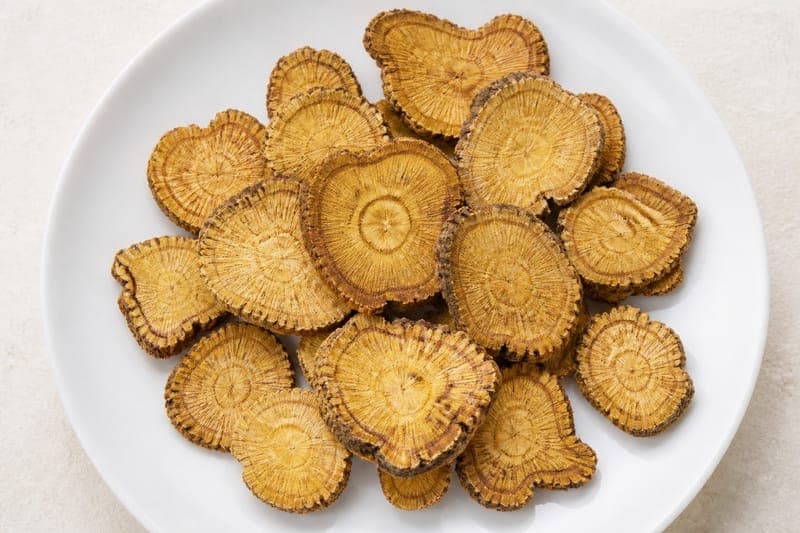
Sophora Root
ku shen · kǔ shēn
Sophora flavescens
Quick Answer
The most common TCM pattern behind skin that is red, oozing, and unbearably itchy is damp-heat surfacing through the blood, and Sophora Root is the most intensely bitter herb in the pharmacy that dries that dampness, clears that heat, and may help settle the inflammation through both internal decoction and external wash. Its power is matched by its harshness, which is why it is reserved for short, focused courses rather than daily use.
Curious which body type you are? Take the free 5-minute quiz.
Take the Free Quiz →Summary
One of the most intensely bitter herbs in the Chinese pharmacy. Sophora Root dries dampness, clears heat, and kills parasites, reaching areas that gentler cooling herbs cannot.
TCM Properties
| Botanical Name | Sophora flavescens |
| Category | Cooling Herb |
| Temperature | Cold |
| Taste | Bitter |
| Channels Entered | Heart, Liver, Stomach, Large Intestine, Bladder |
| Classical Source | Shennong Bencao Jing (circa 200 BCE) |
| Safety Rating | Use with caution |
Key Concept
Sophora Root(苦参)
Sophora Root functions as a deep-tissue heat extractor. Its extreme bitterness drives downward and dries dampness in places that gentler herbs cannot reach: the lower abdomen, the genital region, and the deep layers of the skin. When damp-heat has settled into these areas and produced discharge, oozing skin, or urinary burning, this is the herb that reaches in and pulls it out, though its intensity means it is always used in short, targeted courses.
What This Herb Does
Clears heat and dries dampness
The sheer bitterness of Sophora Root is its working mechanism. In TCM, bitter flavors descend and dry, and no herb in the standard pharmacy is bitterer than this one. For damp-heat that has settled deep into the tissues, where gentler herbs cannot reach, the intense descending action pulls the heat downward and out through the urine.
Kills parasites and relieves skin itching
Sophora Root has a traditional reputation for killing intestinal parasites and calming the intense itching that accompanies skin conditions like eczema and scabies. The same bitter, drying compounds that make it effective internally also work when applied as an external wash, which is why it appears in both oral and topical formulas for skin parasites.
Drains damp-heat from the lower body
When damp-heat collects in the lower abdomen and genital region, producing vaginal discharge, urinary burning, or swelling in the legs, Sophora Root targets that specific area through the Bladder and Large Intestine channels. Its drying nature is strong enough to address discharge that has resisted gentler approaches.
May support skin health through anti-inflammatory pathways
Modern research has identified matrine and oxymatrine, two alkaloids unique to Sophora, as compounds with significant anti-inflammatory and potential anti-allergic properties. These findings align with the herb's long-standing use for inflammatory skin patterns that involve both heat and dampness.
Commonly Used For
Damp-heat skin conditions with intense itching, oozing, and redness
TCM Interpretation: Skin that is red, oozing, and unbearably itchy is a hallmark of damp-heat surfacing through the blood. The dampness causes the oozing, the heat causes the redness, and the combination drives the itch. Sophora Root addresses both components through its bitter, cold, drying nature.
Why Sophora Root Helps: An external wash made from Sophora Root decoction may provide rapid relief of itching, while internal use in formula addresses the root. The dual approach is particularly effective for eczema flares that resist topical steroids.
Vaginal discharge that is yellow, thick, and burning, from lower body damp-heat
TCM Interpretation: Yellow, thick, burning vaginal discharge is a classic sign of damp-heat in the lower burner. The Liver channel wraps around the genitals, and when Liver damp-heat descends, it produces this specific type of discharge.
Why Sophora Root Helps: Sophora Root enters the Liver channel and directly targets the damp-heat producing the discharge. Combined with phellodendron and plantain seed, it forms the basis of several classic gynecological formulas for damp-heat patterns.
When to Use Sophora Root Internally vs Externally
Sophora Root can be taken as a decoction or applied as a wash. The right route depends on where the damp-heat sits.
| If This Sounds Like You | The Signal | Start Here |
|---|---|---|
| Red, oozing, intensely itchy skin on the surface | Damp-heat surfacing through the blood to the skin | External wash of 15-30g decoction, cooled and applied 2x daily |
| Yellow, burning discharge or urinary symptoms | Damp-heat collected in the lower burner | Internal decoction of 3-10g for 5-7 days, combined with phellodendron |
| Chronic itching with dry, flaky skin and no oozing | Blood deficiency or Yin deficiency generating wind, not damp-heat | Skip Sophora Root and use moistening herbs like lily bulb or rehmannia instead |
Which Body Types Benefit Most
Not sure which type you are? Take the free 5-minute quiz.
Related Symptom Guides
How to Use
Decoct 3-10g internally, or use as an external wash at 15-30g. Not suitable for food use due to extreme bitterness.
Dosage: 3-10g internal use. 15-30g for external wash.
Preparation Notes: Decoct for 15-20 minutes. For external wash, use a stronger concentration and let it cool before applying to skin. The taste is intensely bitter and may cause nausea in sensitive individuals.
Dietary Advice
Sophora Root is not a food-grade herb and should not be added to meals. It is used in short courses of decoction, typically 5 to 7 days, under the guidance of a practitioner. During use, avoid spicy, greasy, and sweet foods that may feed the damp-heat pattern. Drink plenty of water to help flush the cleared heat through urine.
Food Pairings
Cautions
- ⚠Not safe for use during pregnancy due to potential uterine stimulation
- ⚠May cause nausea and stomach discomfort due to extreme bitterness
- ⚠Avoid in Spleen and Stomach deficiency with cold signs
- ⚠Long-term use may injure Yin and dry the body excessively
- ⚠May interact with antiarrhythmic medications
Frequently Asked Questions
Can I take Sophora Root every day?+
How does Sophora Root help with eczema?+
Is Sophora Root the same as Sophora japonica?+
Which body type should avoid Sophora Root?+
Related Herbs
Discover Your Eastern Type
Take our free 5-minute assessment to explore which body type best matches your current wellness patterns.
Take the Free Quiz→This article is for informational and educational purposes only and is not medical advice. Always consult a qualified healthcare professional before using any herb, especially if you are pregnant, nursing, or taking medication.