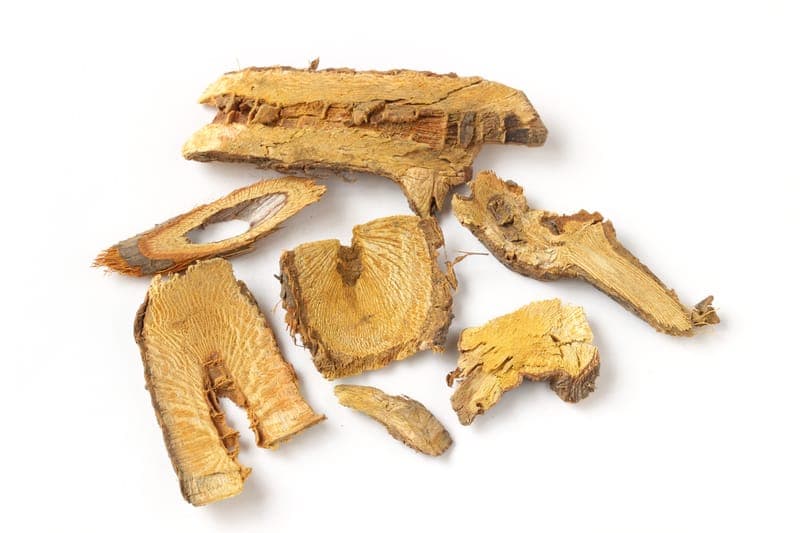
Japanese Knotweed (Hu Zhang)
hu zhang · hu zhang
Polygonum cuspidatum Siebold et Zucc.
Quick Answer
In Chinese medicine, Japanese Knotweed is most often linked to Liver heat with blood stasis, the combined pattern behind red eyes, throbbing temple headaches, and inflamed skin that does not clear with surface care. Its bitter cold nature descends rising heat while moving stagnant blood, and it may help reduce inflammatory flare-ups at both the liver and skin levels when guided by a practitioner.
Curious which body type you are? Take the free 5-minute quiz.
Take the Free Quiz →Summary
A tenacious root known in the West as a source of resveratrol. In Chinese medicine, its bitter, cold nature clears liver heat, promotes bile flow, and invigorates blood circulation, making it useful for inflammatory skin and liver patterns.
TCM Properties
| Botanical Name | Polygonum cuspidatum Siebold et Zucc. |
| Category | Cooling Herb |
| Temperature | Cold |
| Taste | Bitter |
| Channels Entered | Liver, Gallbladder, Lung |
| Classical Source | Mingyi Bielu (3rd century CE) |
| Safety Rating | Use with caution |
Key Concept
Japanese Knotweed(虎杖)
Japanese Knotweed produces its effect through a paired mechanism rarely found in a single herb: it descends liver heat while simultaneously moving stagnant blood. Liver heat rising upward causes red eyes and throbbing headaches, while the blood stasis beneath it traps heat in the skin and tissues, so clearing only one leaves the pattern to return. By acting on both at once, the herb may address inflammatory skin and liver flare-ups at their shared root.
What This Herb Does
Clears liver heat and reduces inflammation
Western research identified resveratrol in this plant, but Chinese medicine recognized its heat-clearing properties centuries earlier. The bitter, cold nature descends liver fire, which may manifest as red eyes, irritability, headaches, and skin eruptions. By clearing this heat at its source, hu zhang addresses the root rather than suppressing symptoms.
Promotes bile flow and supports gallbladder function
Liver heat often affects the gallbladder, its paired organ. When bile flow becomes sluggish, a person may experience right-side rib discomfort, a bitter taste in the mouth, and yellowing of the skin or eyes. Hu zhang enters the Gallbladder channel and encourages bile to move, which helps clear the heat pattern downstream.
Invigorates blood and reduces swelling
Heat and stagnant blood often feed each other. When blood stops flowing smoothly, localized heat builds up, producing redness, swelling, and pain. Hu zhang's bitter coldness clears the heat while its blood-moving quality resolves the stagnation, making it useful for inflammatory skin conditions and traumatic swelling.
Clears lung heat and resolves phlegm
Although primarily a liver herb, hu zhang also enters the Lung channel. Lung heat produces a cough with thick yellow phlegm, a dry throat, and sometimes chest discomfort. The cold nature of hu zhang can help clear this heat pattern when respiratory inflammation accompanies liver heat.
Commonly Used For
People with liver heat showing as red eyes, irritability, and recurring headaches
TCM Interpretation: Liver heat rises upward, producing symptoms in the head and face. The eyes become red and dry, the temper shortens, and headaches throb at the temples. This is the body's internal heat rising, not an external infection.
Why Japanese Knotweed (Hu Zhang) Helps: Hu zhang's bitter cold nature descends this rising heat, addressing the liver fire pattern at its source rather than treating each symptom separately.
People with inflammatory skin conditions involving redness and heat
TCM Interpretation: Red, hot, inflamed skin is a sign of heat in the blood level in TCM. The heat pushes outward through the skin, creating redness, swelling, and sometimes pus. Blood stagnation often underlies this, as trapped blood generates local heat.
Why Japanese Knotweed (Hu Zhang) Helps: By both clearing heat and moving stagnant blood, hu zhang addresses both the inflammatory redness and the underlying circulation problem that feeds it.
When Liver Heat and Blood Stasis Coexist
Japanese Knotweed is unusual because it clears heat and moves blood at once, which suits a specific combined pattern.
| If This Sounds Like You | The Signal | Start Here |
|---|---|---|
| Red eyes, irritability, and throbbing temple headaches | Liver fire rising upward without significant stasis | Pair with gentian or xia ku cao rather than relying on hu zhang alone |
| Red, hot, inflamed skin that does not clear with surface care | Blood heat with underlying stasis feeding the inflammation | Combined with blood-cooling and blood-moving herbs like sheng di and chi shao |
| Cold-type joint pain, pale complexion, or heavy menstrual flow | Cold stasis or deficiency where a bitter cold herb will worsen the pattern | Avoid hu zhang and warm the channels with herbs like gui zhi or ai ye |
Which Body Types Benefit Most
Not sure which type you are? Take the free 5-minute quiz.
Related Symptom Guides
How to Use
Simmer 9 to 15g of sliced hu zhang in water for 20 minutes. Strain and drink as tea, or combine with chrysanthemum and dandelion for a liver-clearing blend.
Dosage: 9 to 15g per day as decoction.
Preparation Notes: The root should be sliced thinly before decoction to release its active compounds. Avoid long storage once sliced, as the resveratrol content may degrade. A brief rinse before use is sufficient.
Dietary Advice
As a daily tea, a handful of sliced hu zhang steeped in hot water for fifteen minutes offers a bitter, grounding brew that may help clear low-grade heat. For a more palatable version, blend with chrysanthemum flowers and a teaspoon of honey after straining. Avoid taking on an empty stomach, as its bitter coldness may unsettle sensitive digestion.
Food Pairings
Cautions
- ⚠Not suitable during pregnancy
- ⚠May worsen spleen deficiency with loose stools
- ⚠Avoid in cold patterns without heat signs
- ⚠May interact with blood-thinning medications
Frequently Asked Questions
Is Japanese knotweed the same as the invasive weed?+
Does hu zhang contain resveratrol?+
Can hu zhang help with skin inflammation?+
Which body type benefits most from hu zhang?+
Related Herbs
Discover Your Eastern Type
Take our free 5-minute assessment to explore which body type best matches your current wellness patterns.
Take the Free Quiz→This article is for informational and educational purposes only and is not medical advice. Always consult a qualified healthcare professional before using any herb, especially if you are pregnant, nursing, or taking medication.